
According to a report released this year by the Uruguayan Chamber of Information Technology (Cuti), the percentage of women in the sector remains substantially lower than that of men. Seventy-one percent of students who enrolled in technology programs were men, and the remaining 29 percent were women.
For this reason, we at the School of Engineering decided to share the stories of female graduates in this field, to learn about their experiences, perspectives, and expectations.
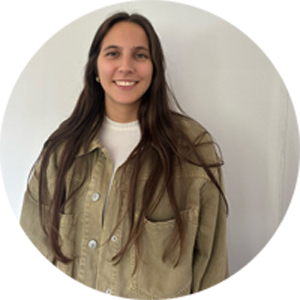
PAULA ESPINOSA – SYSTEMS ENGINEER
Paula is 23 years old and graduated with a degree in Systems Engineering in May of this year. She has been working since 2021 at 2innovate, a company that develops and provides SaaS solutions specializing in payment ecosystems for banks, fintech companies, and payment institutions. More specifically, she works as a developer at PayCorr, a division focused on improving the financial experiences of financial institutions’ customers across transactional channels.
 What inspired you to become an engineer?
First of all, I’ve always liked math, which gradually led me toward a career in science. Then, since my choice of major shouldn’t be based solely on the subjects I’d be studying, but also on my future career prospects, I had to try to imagine myself in that role throughout my life.
In engineering, I found the opportunity not only to immerse myself in the ever-evolving world of technology, but also to create solutions that can solve real-world problems and make a meaningful impact on the lives of people and businesses.
Was there a woman who influenced your decision?
Yes, my mother is a systems engineer and has been working in the healthcare field for many years. She always encouraged my interest in and enjoyment of problem-solving, and seeing the passion with which she practices her profession was truly inspiring. She also showed me that it’s possible to have a successful career while also being a mother and remaining deeply involved in family life.
Have you faced any challenges or barriers because you are a woman throughout your career?
My experience as a woman in the field of engineering is just beginning, and I feel that I have many opportunities ahead of me. Currently, and increasingly so, new areas of application are opening up.
I don't really feel like I've faced any gender barriers throughout my career so far. It's true that there were always very few of us women—no more than two or three per group—throughout my entire career.
When it comes to entering the workforce, I haven't felt any gender barriers either; perhaps the high demand for professionals in our market plays a role in that.
In your opinion, why is it important to have more women in the field of engineering?
I understand that the importance lies in achieving a better balance—so that the profession isn’t dominated by men—ensuring that the generation of ideas and solutions reflects a more comprehensive and diverse vision and perspective.
What do women bring to this field?
Women can bring different perspectives, creativity, planning and organizational skills, the ability to juggle multiple tasks and responsibilities at once, empathy, and conflict-resolution skills.
What advice would you give to young women who are considering this career?
I would advise you to learn more about what the degree program entails, the various specializations and fields of application available, and the many career opportunities you may encounter. You should know that this is a program that requires dedication, but that achieving your goals is entirely possible, and it allows for early entry into the workforce with good pay; in fact, it is highly recommended that you gain experience before earning your degree.
Have you noticed any changes or progress regarding gender equality in the field of engineering over the years?
Personally, I've noticed—at least in college—that the percentage of women is higher in the younger generations. When I started my degree program, if I recall correctly, there were about 10 women in the entire class. In my first-semester class, there were three of us.
How do you think we can encourage women to support and collaborate in this field?
I believe that communication, outreach, and the example set by role models are important. It is also essential for companies and organizations to foster an inclusive culture based on fairness, respect, recognition of skills, and equal opportunity.
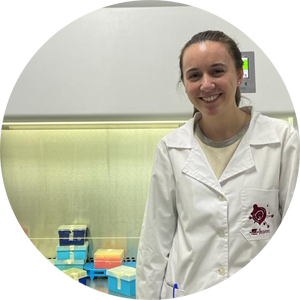
CECILIA CÓRDOBA – BIOTECHNOLOGY ENGINEER
Cecilia works in the Molecular Biology department of the Clinical Analysis Laboratory at the Military Hospital. She joined the team as an intern in the SARS-CoV-2 diagnostics department when the pandemic began, and has since continued to learn and work with additional techniques related to microbiological diagnostics;but in two months she is leaving for Spain to pursue a Ph.D.
Thanks to the support and recommendation of Dr. Lorena Betancor, professor of Protein Technologies, she applied for and was selected to receive a doctoral fellowship to conduct her thesis research at the CIC biomaGUNE Cooperative Research Center on Biomaterials in San Sebastián. “I am very grateful to Lorena and also very happy and excited to be able to start this new project and this new stage in my life, where the personal and the professional will intertwine more than ever,” says Cecilia.
 What inspired you to become an engineer? Was there a woman who influenced your decision?
I’ve always been passionate about biology; ever since I was very young, I’ve been curious about how certain organisms work—mostly animals, since that’s what I knew. Later on, while working on a high school project, we had to read a scientific article about how genetic engineering was changing the way we understand and interpret certain processes, leading to major advances in medicine, industry, and even the environment. From that moment on, I became more interested in that area of biology, which later led me to discover the Biotechnology Engineering program at Universidad ORT Uruguay. I also had the support of my family—especially my mother, who always encouraged me and told me that you have to do what you love most to be happy in life.
Have you faced any challenges or obstacles because you are a woman or throughout your career?
I consider myself privileged to say that, both during my studies and in the workplace, I have not encountered any barriers or particular challenges related to gender. I was fortunate to have classmates (now colleagues) in my cohort who were always on the same page, sharing the knowledge we were gaining, exchanging experiences, and always supporting one another during times that were difficult and stressful at the time—such as spending long hours studying in the library or working in the lab—which later turned out to be some of the best moments we shared.
In your opinion, why is it important to have more women in the field of biotechnology engineering? What do women bring to this field?
I believe that the presence of women in the field of biotechnology is extremely important. In my own case, my advisors for both of my final thesis projects were women—Mariana Ferrari, MSc, and Magdalena Ripoll, MSc—and each of them guided and supported me every step of the way, always with the utmost willingness to help. In fact, if it weren’t for Lorena Betancor, I wouldn’t have had the great opportunity I have right now—to go to another country to further my training in an area of biotechnology that I find extremely interesting and motivating.
I believe that both the University, as an educational institution, and the Biotechnology Laboratory are home to a large number of women—future engineers, master’s degree holders, and PhDs—who have come a long way in the field of science, consistently creating ever-better opportunities for future generations.
What advice would you give to young women who are considering a career in biotechnology?
If you like it or are curious, don't hesitate to give it a try. It takes dedication and effort, but I'm sure you'll love it and it will be worth it. Don't let questions like "Where will you be able to work with that degree?" or "What kind of engineering?" get you down.
Not long ago, I happened to meet a young woman who had just started studying biotechnology engineering. She had a lot of questions and was feeling uncertain, but she was delighted and excited when I told her about my experience as a student, realizing that there are plenty of career opportunities given the wide range of fields in which we can pursue our careers.
Have you noticed any changes or progress regarding gender equality in the field of engineering over the years?
Yes, even though there is still a long way to go, I believe that in recent years—at least in the field of biotechnology engineering—that gender gap is barely noticeable anymore.
How do you think we can foster support and collaboration among women in this field?
Based on my experience as an ORT student, I believe we should continue with the initiatives currently underway: motivating and providing opportunities for us to grow as women engineers in Uruguay and around the world.
FÁTIMA ALBORNOZ – TELECOMMUNICATIONS ENGINEER
Fatima works as an Analyst in UTE's Transmission Division; her role covers a range of responsibilities, including analyzing the grid in response to incidents and providing logistical support for the development and implementation of specific projects within the division.
 What inspired you to become a telecommunications engineer? Was there a woman who influenced your decision?
From a very young age, I discovered my passion for research and problem-solving. As I grew older, I realized that math was one of my strengths. I knew I was interested in engineering, but I wasn’t sure which field to choose. When it came time to enroll in college, I remember reviewing the curricula for two majors: Systems Engineering and Telecommunications Engineering. The latter caught my attention because of the combination of systems and other sciences like calculus and physics. I don’t have a specific female figure in mind who influenced me in making this decision. My choice was based on my interests and abilities.
Have you faced any challenges or barriers as a woman throughout your career?
In my experience, both during my studies and in my professional career, I don't feel that I've faced any challenges related to gender.
In your opinion, why is it important to have more women in the field of engineering? What do women bring to this field?
I believe that the contributions women make in the field of engineering—and in any area of knowledge—should not be viewed solely through a gender lens. I believe that women have the ability to take on any role they desire and that their participation in science and other disciplines enriches the field as a whole.
Every individual, regardless of gender, brings their own unique experience and perspective, which drives innovation and helps create solutions that are more inclusive and focused on the needs of society as a whole. It is important to recognize and value the diversity of voices and talents, as this fosters a richer and more equitable environment.
It is worth noting that the growing participation of women in the field of engineering can serve as an example and source of inspiration for other women who are considering entering this field. Seeing successful women in engineering roles can break down stereotypes and demonstrate that opportunities are available to everyone, regardless of gender.
What advice would you give to young women who are considering a career in engineering?
My advice is not to hesitate. Telecommunications Engineering is a degree program that provides many tools for professional development. It also offers a wide range of career opportunities, allowing you to find a field where you feel comfortable and can grow according to your interests.
Engineering provides a solid foundation of technical knowledge and analytical skills, which open doors in various industries and give you a wide range of career options.
I think it’s important to follow your interests when choosing a specialization within engineering. There are many options, and each one has its own challenges and opportunities, so it’s essential that you find the specialization that aligns with your interests and career goals.
Have you noticed any changes or progress regarding gender equality in the field of engineering over the years?
In recent years, there has been a gradual increase in the percentage of women studying engineering. I believe this is largely due to access to information and the promotional opportunities that exist today.
The dissemination of information about engineering and its various fields has helped women better understand the opportunities and challenges of this profession. For example, visits to high schools provide an opportunity to explore the world of engineering up close and see the potential it offers. That’s how I first came into contact with the field; I have a vivid memory of walking around the booths and “collecting” brochures with career plans.
In addition, for example, the celebration of Girls in ICT Day is an important event that raises awareness and highlights the importance of women’s inclusion in technology and science, with the goal of helping girls feel that a career in any scientific field is a real and valuable possibility.