Uruguayan doctors have identified a genetic disorder in a 4-year-old girl that is unknown in our country and the rest of the world, and which manifests itself through unusual symptoms.
The girl's name is Valentina; she turned 4 on April 16, and as her mother explained in an interview with the newspaper El País, “when she was two and a half, she began to fall frequently.”
“An MRI revealed that a part of my brain had been affected—the kind of damage that occurs in neurodegenerative diseases.”
All the tests indicated that Valentina had a mitochondrial disorder. To confirm this diagnosis, a full mitochondrial genome sequencing was performed at the Pasteur Institute in Montevideo.
According to the article in El País, no patient with that mutation had ever been treated before. Valentina’s condition was examined by Spanish doctors.
Pablo de Olavide University in Seville has carried out various research projects to test drugs on its cells that will help it fight the disease.
In order to conduct this research in Uruguay, a fibroblast culture had to be prepared and sent to Spain, where various drugs were tested until the right one was found.
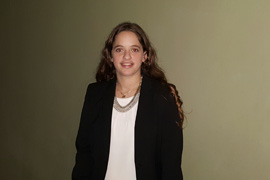
The laboratory selected to conduct the cell culture was the Biotechnology Laboratory at Universidad ORT Uruguay the process was supervised by Karina Krysztal, M.Sc.
It was a major challenge for her because, although she had some experience in the field of cell biology, she had never set up a primary culture before.
“When we were asked to collaborate on Valentina’s case, the head of the department and expert in the field was on maternity leave, and although I had experience, I had never performed a primary culture,” Karina explains.
“So I felt a great sense of responsibility, considering that it was something I had never done before, but above all because behind this case was a family facing a difficult diagnosis,” he adds.
Using a skin biopsy, her task was to culture fibroblast cells. When asked how she found that challenge, Karina smiles broadly: “It was difficult; I was nervous because I couldn’t afford to mess it up,” though it’s clear that despite the responsibility, she enjoyed the work.
“The process took me a month; I checked it every day, adjusted the nutrients, added nutrient solution, and kept it at a certain temperature”—and I always handled the culture with great care.
“Once I had the cell culture, Valentina’s father came to pick it up and send it to Spain,” Karina says.
Fortunately, the cell culture arrived safely in Spain; the necessary tests were conducted, and the best treatment for Valentina has already been found.