
Terms like “big data” and “data analysis” are appearing on the agenda with increasing frequency across all industries. But what do they mean?
When discussing data analysis, we can look back a long way. Perhaps the practice of analyzing data to gain new insights is as old as humanity itself. To understand this, we must start from the premise that data is analyzed in search of answers—ranging from how to advertise a product or service to the best time of year to plant wheat in order to maximize the harvest.
Throughout history, humans have relied on data to make the best possible decisions for the future. Therefore, the ability to interpret or analyze data has always been a tool for social development.
But then, why has data analysis become such a central part of the curricula for various university degree programs today, for example? The answer is that we are living in an era of the data revolution, driven by technological advances, and it is this abundance of data that is referred to as big data.
Decisions based on sound reasoning, not on impulse
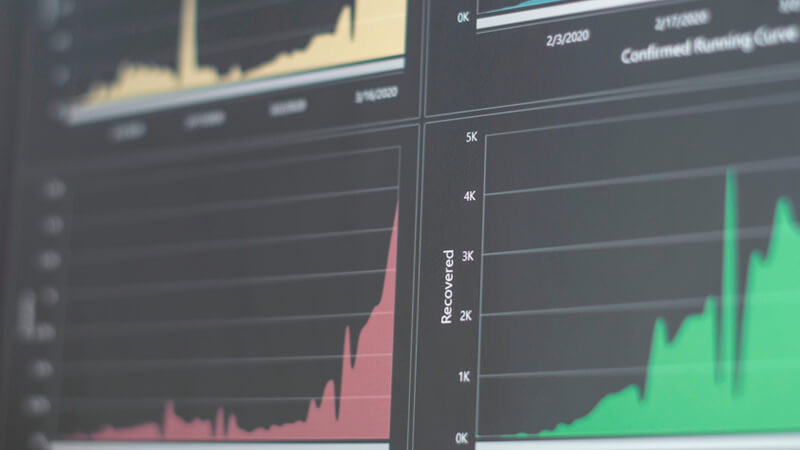 “In the time it takes to read this sentence, more information has already been generated than was produced from the year 0 to the year 2000,” says Carlos Álvarez, a professor at the Bachelor's Degree in Communication from Universidad ORT Uruguay, regarding the guidelines Journalism and Data Analytics and Innovation. According to him, this is thanks to the digital age we live in, which allows us to “keep a record of almost everything that is produced.” This density and enormous volume of data—both structured and unstructured—is what constitutes big data, and it continues to grow as technological advances change the way that data is collected, stored, and, of course, analyzed.
“Every time we browse the web, take a photo, make a purchase, or use our cell phone, we’re generating digital data. In a single day, each of us generates thousands of these ‘tiny’ data points,” notes Eduardo Mangarelli, dean of the Faculty of Engineering at ORT.
“Data is extremely important for any organization, because it allows us to make decisions rather than acting on hunches or impulses,” says Magnou.
He also adds that the purpose of data analytics is “to understand trends” in order to generate insights for decision-making, or “even to enable a machine or algorithm to take action autonomously.”
Although there are controversial and high-profile cases, such as that of Cambridge Analytica and Facebook, in which private information was sold for advertising purposes, the true purpose of data analysis is not to focus on the identifiable individual, but rather on the bigger picture—to understand trends among one or more audiences in order to tailor strategies based on their behavior. Based on this, the professor at the Faculty of Administration and Social Sciences at ORT, points out that data “is very important for every organization, whether in finance, marketing, operations, or sales,” since it allows for informed decision-making rather than acting on “gut feelings or impulses.”
COVID-19 data in “plain language”
 Today, Mangarelli explains, data analysis “is a key differentiator and driver of innovation for any company or organization,” and it is obviously also essential for effectively managing a global phenomenon that affects society as a whole, such as the COVID-19 pandemic.
To unlock the full potential of data, Magnou argues that it is essential for information to be communicated effectively so that the public can interpret it. To present this information in a simple and understandable way, visualization tools are used, such as those implemented to present pandemic data.
According to Álvarez, “what makes the current situation so critical is that we’re talking about lives—every piece of data relates to a person’s health,” highlighting the importance of communicating “interpretable” information to audiences after data collection. In this regard, Magnou adds that “during the pandemic, data visualization has been essential, whether for understanding ‘hard data’—such as the number of active cases, recoveries, and deaths—or more complex indicators like the Harvard Index.”
Data analysis is a key driver of differentiation and innovation for any company or organization.
Mangarelli.
Data + context = information
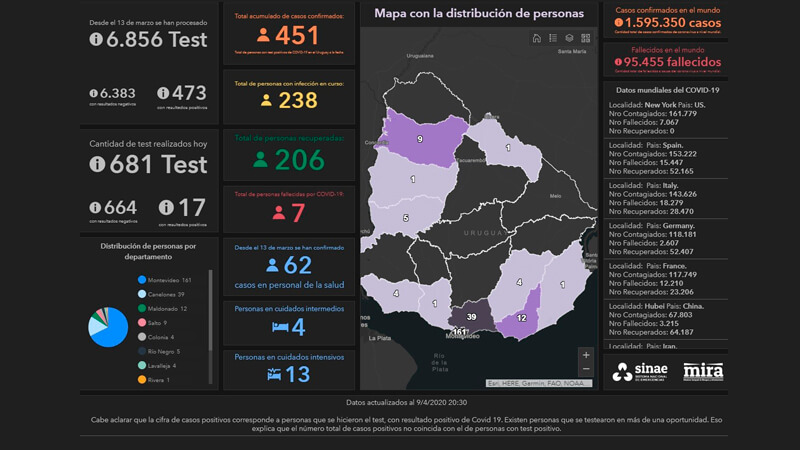 Since April 9, 2020, the Sinae publishes a daily data visualizer on COVID-19 across the country—provided by the Ministry of Public Health (MSP)—and some additional international data. This dashboard displays data such as new positive cases for the day, the cumulative total of confirmed cases, the total number of people currently infected, the total number of recoveries, deaths, cases linked to healthcare workers, data broken down by department, the number of tests performed, global data, and more.
The data provided by Sinae is collected, processed, and analyzed before it reaches the public. Magnou believes that this trend of data being shared in the media and on social media is a result of the pandemic: data analysis used to be “closely tied to the academic and business sectors,” but interpreting data is now on everyone’s agenda.
“Without a clear context, data is meaningful information to some and ‘just data’ to others,” explains Álvarez.
According to Mangarelli, “the pandemic accelerated processes at every level of organizations, leading to the rapid digitization of numerous processes; consequently, the data generated as a result prompted many organizations to ramp up their data analysis capabilities.”
For his part, Álvarez agrees that the pandemic brought data analysis into the spotlight, and within a short time, most people were speaking knowledgeably about the probability of infection, the need to flatten the curve, effectiveness rates, and other variables. But this makes sense because there is an understanding of the context: “Without a clear context, data is meaningful information for some and ‘just data’ for others,” explains the professor.
Decision-making requires information; information can be obtained if data can be interpreted; and data can be interpreted if the context is understood. On an issue of significant public interest that affects the entire population, data analysis has been key to keeping the public informed and navigating this pandemic as responsibly as possible.