It was in the early 19th century when the French chemist Nicéphore Niepce produced the first photographic images. Since then, photography has been at the forefront of countless advancements. Today, anyone can take a photo, save it, edit it, and share it with the world in a matter of minutes.
Now, what is the value of photography for those who pursue it professionally or consider it their greatest passion? This question is addressed by Lucía Gago, a student in the Bachelor of Arts in Communication with a concentration in Audiovisual Studies at Universidad ORT Uruguay; Natalie Nirenberg, a graduate of the same program; and Leonardo Barizzoni, a photographer and photography instructor at ORT’s School of Communication and Design.
-
Transforming reality from within
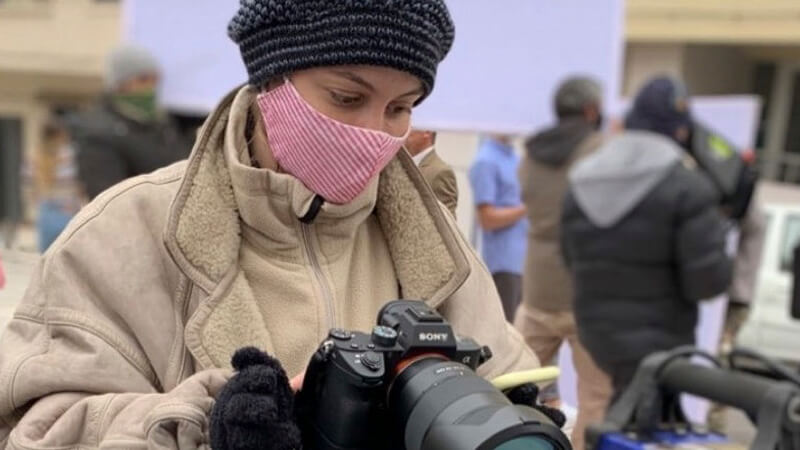 “I like to capture moments and carry them with me always,” explains Lucía Gago when asked why she chooses photography as a form of expression. “Malú,” as she calls herself, is 23 years old and is a student at the Bachelor's Degree in Communication with a Focus on Audiovisual Studies from ORT and works as a photographer.
She grew up surrounded by photos thanks to her parents, who always had a camera in hand. She got her first camera at age fourteen, and she hasn't stopped since.
“I remember putting together outfits with my friends and setting up makeshift photo studios,” she says. It was through these and other experiments that her first job opportunities in the field began to emerge.
Malú is currently pursuing a bachelor’s degree in Communication with a focus on Audiovisual Studies, and she believes the program allows her to hone her creativity and acquire valuable tools for her professional career: “We learn to interpret, analyze, and articulate ideas, not only through images but also through other forms of expression.”
When it comes to her future, the student says she is particularly interested in documentary filmmaking. “I’ve always wanted to get involved in this kind of filmmaking and use it as a platform for my ideas,” she explains.
And, for some time now, Malú has also been motivated to work toward greater participation by women in the audiovisual industry, especially in roles behind the camera: “I’d like to change the status quo from the inside out,” she concludes.
-
Finding beauty in simplicity
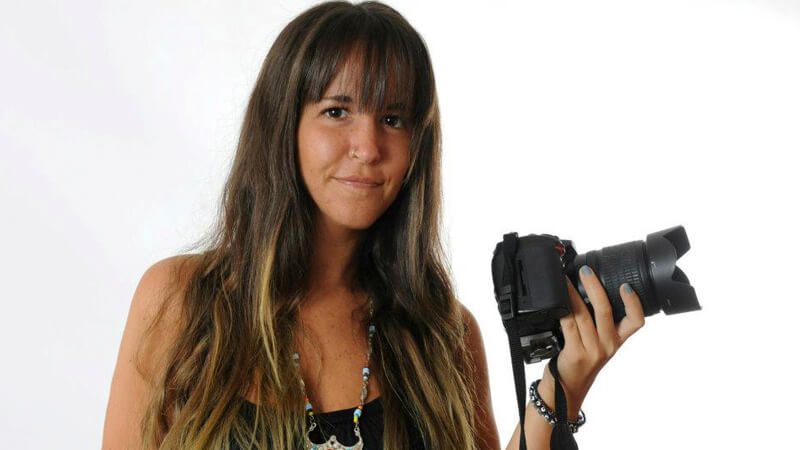 Natalie Nirenberg describes herself as a “passionate photographer.” Her introduction to the world of photography came through the Bachelor's Degree in Communication with a Focus on Audiovisual Studies from ORT, where she graduated: “I really enjoyed the photography course, and after taking it, I bought a professional camera so I could start experimenting with light, overexposure, black-and-white, and shadows.”
Soon after, Natalie joined a team of event photographers, with whom she worked for two years. “While it was fun, I realized I prefer to do more daring things, like foreshortened shots and artistic photos.” So, in 2013, she began photographing pregnant women and newborn babies. This made her feel free and allowed her to experiment with the techniques she loves most.
Today, the graduate focuses primarily on digital marketing, but she acknowledges that her knowledge and experience in photography are invaluable when it comes to creating content in any situation. “The important thing is to keep training your eye to take better photos, even if it’s just with your phone. There are no excuses,” she says.
When asked about the communicative role of photography, Natalie immediately cites the English film director Alfred Hitchcock. “He said that we should be able to deduce what is happening in an image or a film through the characters’ expressions or the image itself, using as little language as possible,” she explains.
When asked what matters most to her when she takes photos, the graduate reflects: “Sometimes, the simplest things are the most beautiful, and what we think says nothing actually says everything. That’s the beauty of photography—you have to take the plunge and not be afraid of the click”.

-
Teaching How to Look
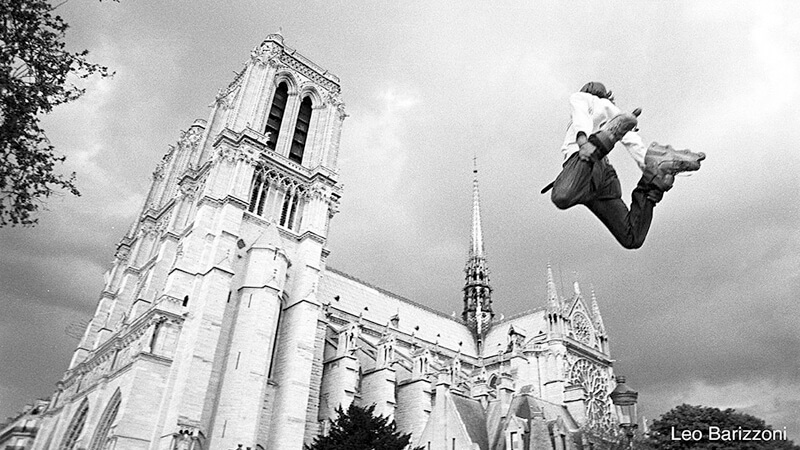
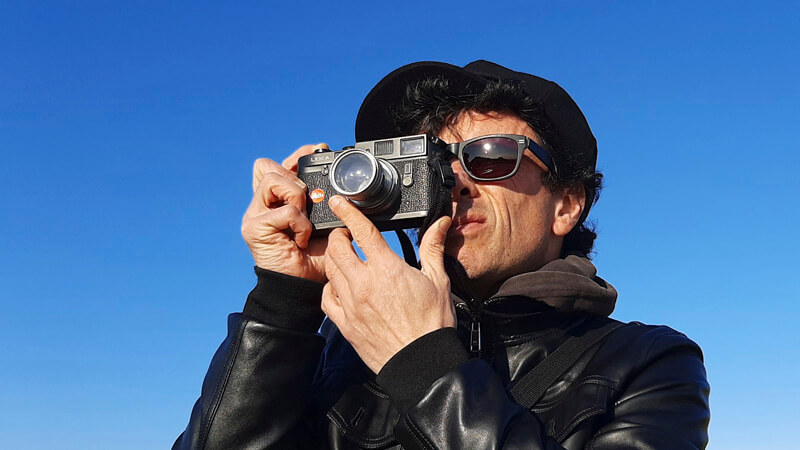 By chance. That’s how Leonardo (or “Leo,” as everyone knows him) Barizzoni, a photography instructor at ORT, got his start in the world of photography.
He had always loved music, and through this passion, he once came across—at the home of a friend of his brother-in-law—dozens of photographs of various musicians. He was fascinated, and shortly thereafter, he began a basic photography course at the Foto Club Uruguayo.
Once the course was over—taught by Jorge Ameal, who would later become his colleague—Leo had decided to devote himself fully to what had until then been just a hobby. “I felt that through photography I could express myself in a different and unique way,” he says.
“Since 1888, when the first Kodak camera for families was introduced with the slogan ‘You press the button, we do the rest,’ photography has become accessible to everyone,” says Leo, who believes we are now witnessing a new wave of democratization.
However, according to the professor, beyond this factor, great work continues to stand out for the same reason: the photographer’s eye, which is linked to their personality and the culture they have absorbed. That is why Leo believes it is essential to “teach people how to see.”
Furthermore, the renowned photographer is convinced that it is vital to convey the significance of photography and its power. “Through this medium, it is possible to express oneself, communicate, voice opinions, speak out, and, above all, create,” he explains.
When it comes to the future of his great passion, Leo believes that photography will continue to become more accessible, further fueling visual culture. While this prospect makes him feel uncertain in some ways, there is one thing he has no doubt about: “There will always be a need for a keen eye behind the lens. There will always be a need for well-told stories,” he concludes.