The problem of not knowing the correct size is even bigger than we think, since sizes can vary not only from store to store, but also among products within the same store.
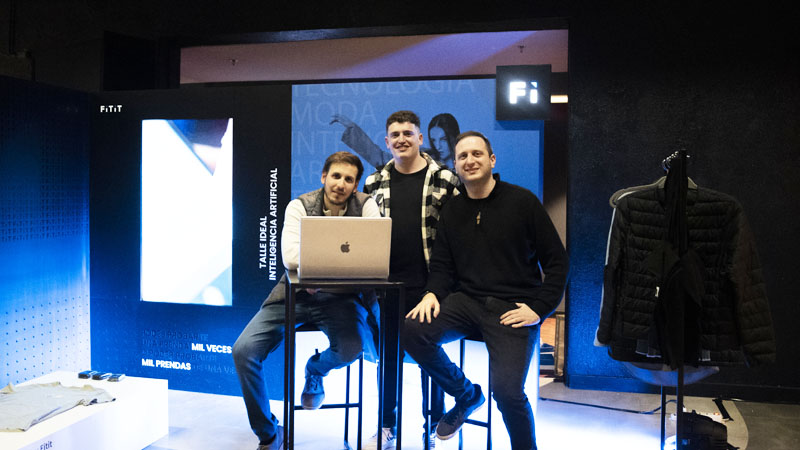
That is why Fitit was created—a startup founded by Alan Rytt, a graduate of the Specialization Diploma in Big Data Analytics and the Master’s in Big Data, along with two partners: Dan Bzurovski, a graduate of the Bachelor’s in Multimedia Design program at Universidad ORT Uruguay, and Daniel Bella.
The idea came about because we saw a need in the market; one of my partners owns a clothing store and was constantly receiving returns due to size exchanges.
Alan.
“When we started, the three of us were working on other things and would get together on Monday nights to brainstorm ideas for solving this problem. We had a whiteboard where we’d jot down possible solutions. Today, all three of us are dedicated to this project, and the company now has ,” he adds.
The company is looking to achieve three goals: increase online conversions, reduce clothing returns, and improve the user experience.
They also aim to have a positive environmental impact. With fewer returns, CO2 emissions resulting from the transport of clothing are reduced.
With this initiative, they won the Innovative Entrepreneurs Award from the National Agency for Research and Innovation (ANII), which enabled them to establish themselves and grow in the market.
Artificial Intelligence for Shopping
“What we do is apply artificial intelligence to a product that fits the user well. To do this, the user simply takes a photo of a garment they like and how it fits, and our artificial intelligence takes into account their preferred measurements and the garment’s characteristics. After analyzing this data using multiple internal business rules, it suggests the ideal size in real time, ”Alan explains about how Fitit works.
Photos are automatically saved to a virtual closet so that when you browse different online clothing retailers that use this solution, you’ll automatically see your ideal size. One photo per product category is all it takes to generate all the recommendations.
We use cross-store technology, so if a user visits one store and then another, we automatically recommend the size based on the clothing they’re currently viewing—they don’t have to re-enter their measurements into the system.
“It’s very different from how things are done now, where customers have to measure themselves to figure out their size—and that’s not the right approach, because it doesn’t take into account how they like to wear their clothes. We make product-to-product recommendations and tell them in real time what size they are for the item they’re viewing, thereby boosting online sales.”
“Providing a better shopping experience ultimately boosts online conversions. Retailers want to increase sales on their e-commerce sites, and we make that possible by helping customers find their perfect size in a practical and simple way.”
Fitit is classified as a white-label solution because it operates as part of an e-commerce platform; it is not an app that users need to download, but rather is embedded within each company’s website.
https://www.youtube.com/watch?v=BrZDg1Pkepo
Expanding into other countries
Although Fitit is already up and running in Uruguay and in various clothing stores, it is looking to expand into international markets and larger markets, as this is a global issue.
“We’re in talks with multi-brand and multinational companies, as our goal is for them to bring us along to other markets where they’re established and solve this problem with the same precision we have today in Uruguay,” says Alan
The Master's in Big Data as a starting point
Earning the diploma and then going on to complete the master’s degree gave Alan a solid foundation to handle all aspects of the artificial intelligence behind this startup, but it also sparked his interest in the subject and helped him build something innovative.
“Big data is already everywhere; the key is for companies to understand its importance and use it to their advantage,” explains Alan, adding, “Analyzing big data is a powerful and essential tool needed to shift a company’s focus from a traditional model to a data-driven one.”