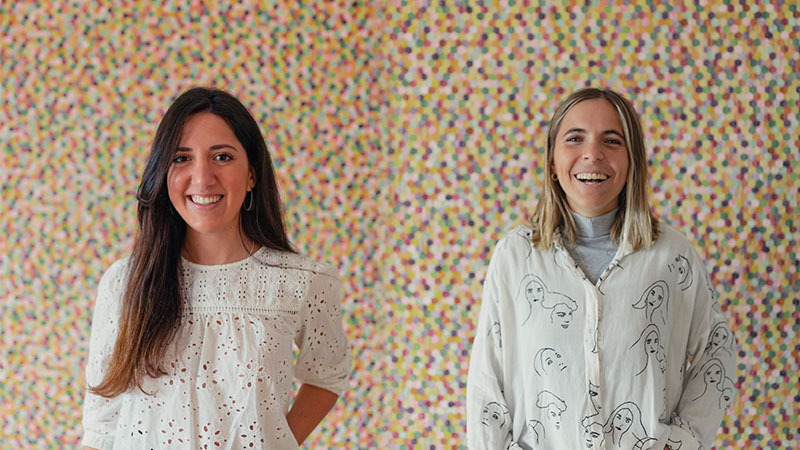
Both work in the technology sector but in different fields. Lucila is a Team Leader at Qualabs, a company that provides video and streaming solutions. Carolyn, meanwhile, is a Technical Manager at Create Thrive, a company that focuses on designing and developing software solutions using various technologies.
What was it like breaking into the industry? Was it easy for you to enter the job market?
Lucila: Yes, A degree in Systems is a degree that opens the doors to the working world from the very start. Zero unemployment is a reality—it’s rare to say this, but companies are looking for you. It’s very common for them to contact you through LinkedIn. I started working in my third year of college and was one of the last in my class to do so. Plus, the program is designed to make that possible; it’s very well-rounded because what you learn in school you apply at work and vice versa—they feed into each other. It’s also important to note that we both work in companies in different industries. This degree allows you to join very large corporations or a startup in any industry. The best approach is to try different things and see what you like. I started at IBM and now I’m at a rapidly growing company where I face new challenges.
Carolyn: I entered the workforce right out of high school, and it’s amazing how much you learn. I highly recommend it because you gain knowledge that helps you in various college courses. The job market is huge, so you have to be smart about making the right choice.
Both are team leaders; it's not that common to see young women in that role.
Lucila: It’s a role I’ve always wanted, which is why I chose to major in Information Systems. I enjoy management, building relationships with clients, and understanding their needs. I didn’t expect to take on this role so young, but I’m trying to make the most of this opportunity by developing soft skills to work with the team. Being a woman or a young person in the industry makes the biggest difference when dealing with certain clients from different cultures or with different mindsets; you don’t really feel it in your day-to-day work with your colleagues.
Carolyn: I agree that this degree program helped us develop soft skills. Then, our work provides us with more experience and new challenges.
"Professionally, it's a great field—you never get bored, and you learn something new every day."
While in college, you founded the Techie Girls community. What was your goal, and what did you learn from that experience?
Carolyn: We’re creating a space to break down stereotypes, to showcase women in the tech industry and female entrepreneurs.
Lucila: When we started college, there were four of us women in a class of 30 men, so we immediately felt a connection. The Techie Girls group was always about sharing our experiences throughout college.
You’ve had the opportunity to share your experiences as graduates with a bachelor’s degree in Systems Engineering with high school students. What points do you emphasize during those talks?
Lucila: What I like to mention most when I talk about the degree is that it allows you to work at any company, in any industry, and that you can bring any idea to life. The possibilities are endless.
Carolyn: In my experience, I’ll warn you that the beginning can be tough, but it teaches you not to give up, and once you understand the mindset, it’s amazing where technology can take you. Plus, I’ll tell you that professionally, it’s a fantastic field—you never get bored, and you learn something new every day.
What skills did the university teach you that you apply in your work?
Carolyn: She taught me how to solve problems and come up with solutions, not to give up, and to be responsible.
Lucila: Teamwork is an important skill—something that’s highly valued in the industry. You need soft skills and an understanding of others’ strengths and weaknesses for teamwork to be effective.
You worked together on your final thesis project. What was it about, and how did that go?
Lucila: We’re working with Sonda, a Chilean multinational company, on the development of an incident management platform for incidents generated by IoT (Internet of Things) devices. The opportunity arose during the Project Fair, right in March when the pandemic began, so everything was done online. During the final project phase, you learn a lot—for example, how to manage a real client, from understanding their needs to making meetings more effective.
Carolyn: I’d like to emphasize that point—that throughout the project, we saw how we were applying everything we’d learned during our studies.