For the past 10 years, Heguy has been a member of the administrative team at the Lycée Français Jules Supervielle, an institution she joined in 2005 as a teacher.
Was the health crisis an opportunity to modernize education? Or are we still facing the same challenges and problems we had before the pandemic?
Educational changes are slow to take effect, but this time there was no alternative but to try to adapt as quickly as possible to the situation we were facing. Amid the urgency, through trial and error, educational institutions learned, adapted, and built new approaches to address the various challenges posed by the COVID-19 pandemic.
The health crisis made it necessary to rethink teaching strategies and methodologies, while also increasing reliance on technology and digital resources.
Other challenges and issues arose—both social and educational—that highlighted the strengths and weaknesses of the education systems.
Without a doubt, the situation brought about by the pandemic served as a major catalyst for the implementation of innovative practices in various learning environments, where new ways of teaching, learning, and interacting were explored.
As we return to in-person learning, the challenge is to identify, integrate, and sustain over time those practices that have the potential to positively impact student learning.
After two years of COVID-19, what lessons have we learned? Of all the measures we’ve implemented and lessons we’ve learned, which ones can we continue to apply in the classroom in the future?
After two years marked by periods without in-person classes, the lessons learned are varied. Digital technologies opened up many possibilities in terms of teaching, learning, student support, and communication. They enabled the implementation of activities and practices that had previously been little explored but proved to be effective—and that can or should be maintained as part of a blended approach integrated into classroom work.
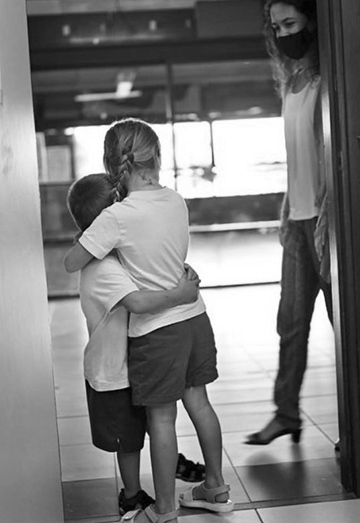 However, for younger children, in-person interaction is irreplaceable. Digital technologies made it possible to stay in touch, maintain connections, and even facilitate some learning, but they could not replace the essential nature of interacting with others and sharing experiences—especially when it comes to the development of social-emotional skills.
We emphasize the importance of teacher training and ongoing professional development, with programs that encourage innovation and address the skills needed to teach in today’s world. In this regard, teachers’ digital skills were a key factor in teaching and planning activities during distance learning.
We can also recognize the value of collaborative work among teachers, but also among students. The importance of emotional support, guidance, and collective learning. Networking, distributed leadership within institutions, and teachers’ leadership within their own groups. We must continue to uphold and nurture all these positive aspects that were strengthened during the health crisis.
And what, exactly, should we definitely stop doing in class?
Rather than thinking or talking about what we should stop doing in the classroom, I believe it is more constructive and appropriate to look ahead and focus on what we do need to implement and carry out in order to continue improving and adapting our students’ learning.
In today's world, with the constant increase in available information, lifelong learning and the ability to learn how to learn are becoming increasingly important. Active learning—focused on real-world problems and situations—is essential. In particular, this should be achieved through projects that motivate students, encourage collaboration in finding solutions, and foster knowledge, attitudes, and skills.
It is essential to prioritize a competency-based approach that recognizes the importance of transdisciplinarity and addresses student diversity in a broad sense, acknowledging that not all students learn in the same way or at the same pace.
Thinking about the students who experienced the closure of schools and that emergency remote learning, what distinctive and positive traits do you think they will have in 20 years’ time, compared to other generations?
From every experience, whether good or bad, we can take away a lesson, something we’ve learned… Today’s students have experienced the closure of educational institutions and the emergency implementation of distance learning.
Overall, and depending on their age, they demonstrated a remarkable ability to adapt to the new situations they encountered. Even the youngest students learned to alternate between independent study at home and virtual activities with teachers and classmates.
That ability to adapt quickly to change is what allowed us to keep moving forward despite social distancing. At a different pace, to be sure, but we found a way to keep going despite the challenges.
That is one of the key distinguishing features and one of the most important lessons we must instill in our students. We must prepare them for a future that may be very different from what we can imagine today. We must prepare them so that they are ready. We must educate them to embrace change and constant transformation.
Are there any areas of knowledge or skills that students have not developed as a result of the pandemic, school closures, and the lack of in-person instruction?
I prefer to believe that it isn't, because that is where our responsibility and our commitment lie, both as educators and as a society.
Although the periods during which our schools were closed were relatively short compared to other countries, during the transition to distance learning we had to set priorities, adapt, make decisions, and work with what was available.
As we return to in-person learning and in light of the evidence regarding student achievement, we must continue to reflect on our practices and assess whether what we are proposing is appropriate after two years of remote learning.
Hence the importance of working in cycles, fostering coordination across different levels, identifying outstanding tasks so they can be addressed, as well as collaborating collectively with shared responsibilities and flexibility based on needs and circumstances.
What do you think teachers should focus on today in order to address the consequences of pandemic-era education?
Not all students experienced the pandemic in the same way, nor did they face the same challenges—whether academic, social, or emotional. From one household to the next, the realities varied greatly.
Addressing students’ emotional needs and their individual learning journeys are two essential aspects that all educators must prioritize. Even if teaching approaches are highly engaging, without solid emotional support and personalized guidance tailored to each student’s needs and characteristics, it is unlikely that students will be able to achieve meaningful learning and develop to their full potential.
Furthermore, after these two very unusual years, it has become essential for teachers to implement a differentiated approach to teaching that takes into account students’ interests and motivations, while respecting their individual pace, rhythm, knowledge, and skills.
Let’s remain positive, optimistic, and resilient in our approach and work as teachers and educators.