Hurricane Georges swept through the Caribbean in September 1998, leaving more than 600 people dead and causing nearly $6 billion in damage. It was the first hurricane of that season to reach Category 3 status, affecting 10 areas across countries, islands, and states.
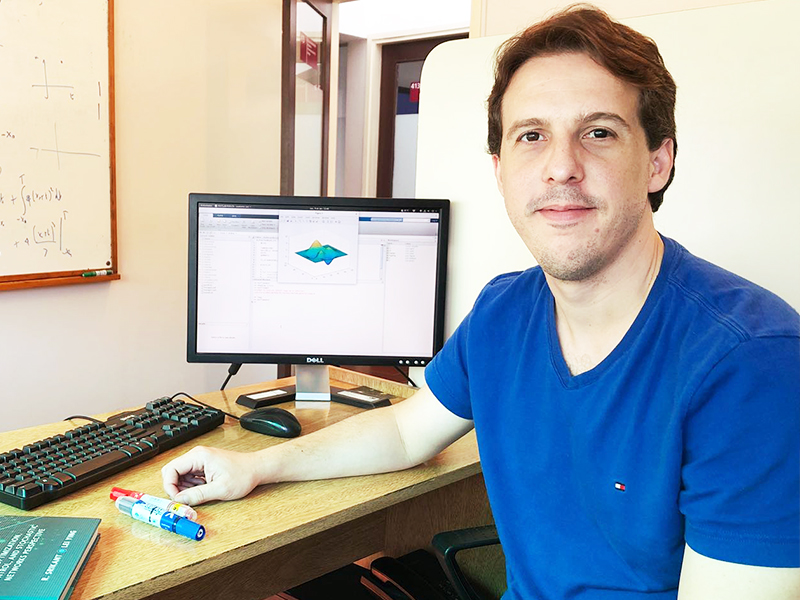
While outside the wind was gusting at nearly 200 kilometers per hour, in the cafeteria of a school in Puerto Plata, Dominican Republic, a hundred young people were solving six problems by candlelight as part of the Ibero-American Mathematical Olympiad, designed for high school students. Among them was electrical engineer Andrés Ferragut, now an associate professor in the Data Networks department and a researcher at Universidad ORT Uruguay, who was one of the three members of the team—originally there were four, but one never made it to the destination due to flight cancellations caused by the hurricane—representing Uruguay.
At that competition, which took place under unusual circumstances, Ferragut achieved his greatest success at the international level: a bronze medal. “When I was a senior in high school, I participated in the Southern Cone Math Olympiad, and I also competed in the first International Math Olympiad Uruguay ever sent a team to, which was held in 1997 in Mar Plata, Argentina. I always ended up in the middle of the pack, just like most of my classmates, because our preparation couldn’t compare to that of other countries,” he recalls today.
Military training in mathematics
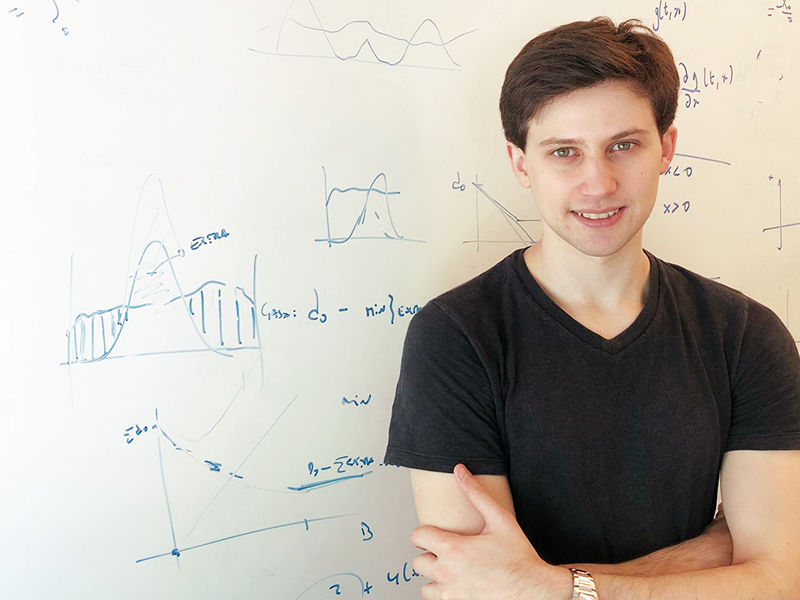
Diego Goldsztajn, a telecommunications engineer who graduated from ORT and serves as a research teaching assistant in the university’s Applied Mathematics for Telecommunications and Energy group, also has an Olympic background and agrees with his colleague that the problems on international exams are designed to distinguish Eastern Europeans, Chinese, and Americans, who always manage to pull ahead of participants from other countries due to their talent and training.
ORT Supports the Olympiad Participants Once Again
For the second year, ORT will host these workshops organized by Com-Partida. While their main objective is to provide young people with the tools to tackle the types of problems encountered in the Olympiads, they undoubtedly serve as a preparatory step for the national finals, which will take place on October 28 for all high school levels.
They are also useful for high school students who will be attending the Ibero-American Mathematical Olympiad in Spain and Portugal from September 21 to 29.
This year, the workshops will be held on August 2 and 9, from 5:00 p.m. to 7:30 p.m. Goldsztajn is one of the teachers who will lead them, along with members of Com-Partida. High school students who wish to prepare for these workshops can get more information and register through Com-Partida. The contact email is: lacompartida@gmail.com.
The winner of the upcoming local Olympiad will also earn the opportunity to pursue an undergraduate degree with a 100% scholarship at Universidad ORT Uruguay.
What's more, Goldsztajn notes, there is a widespread belief in the community that Americans are trained at West Point, the country's military academy.
In 2011, this 24-year-old engineer received an honorable mention at the Ibero-American Mathematical Olympiad in Costa Rica, and in 2012 he won a bronze medal at the Asia-Pacific Mathematical Olympiad. He also won two gold medals at the national level, one of which qualified him for the International Olympiad in Amsterdam, the Netherlands, in 2011.
Beyond their individual performances at these global events, both Ferragut and Goldsztajn agree that it is less a competition against the other participants and more a personal challenge.
What they value most about these competitions isn’t the prizes, but the experience. “The Olympiads helped me in my career because of the attitude they fostered and my enjoyment of solving challenging problems. It’s something that those of us in research hold onto—that spark of curiosity, of tackling something when you don’t know the answer. In research, it’s even harder because you don’t know if it can be solved. In an Olympiad, the problems—whether easy or hard—all have a solution,” explains Ferragut.
The Importance of Word of Mouth
Despite all the benefits that participating in academic competitions offered high school students, word of mouth was what historically ensured that national competitions always had participants.
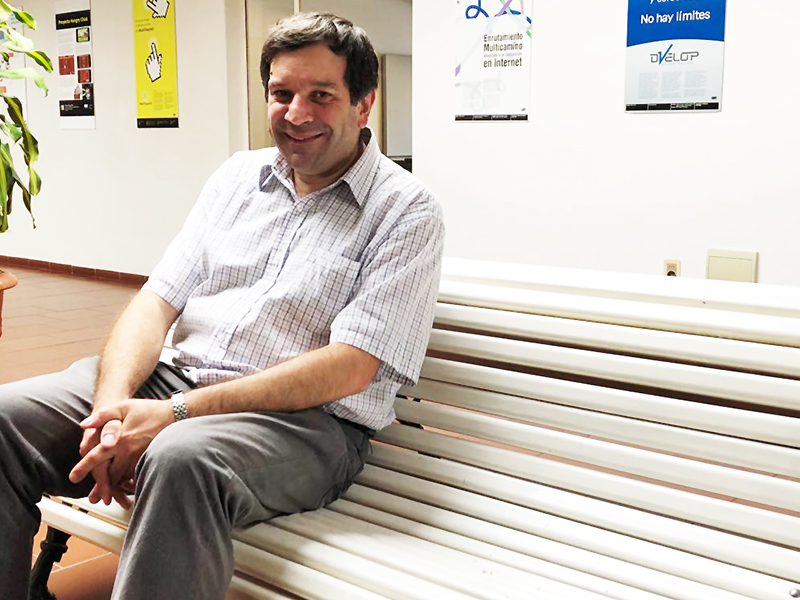
In 1987, electrical engineer Freddy Rabin, a professor at ORT who coordinates all mathematics courses offered at the university’s School of Engineering, had his first experience.
“I found out from a teacher I was lucky enough to have. The Ministry of Education and Culture (MEC) was in charge of preparing students for the National Math Olympiad that year, which was held in Salto and Paysandú. They brought together 10 of us and trained us for a month,” Rabín explains.
Five years later, however, the MEC distanced itself from those training sessions, but the teachers in charge—who viewed problem-solving as the most important tool for learning mathematics—formed Com-Partida de Matemática del Uruguay, an educational project launched in 1992 at the initiative of that group of mathematics teachers.
“From that point on, there was a push to bring in new people, and what’s more, Com-Partida had the necessary connections to enable Uruguay to begin participating in regional and world championships,” explains Ferragut.
Strength in numbers
Several decades after the creation of Com-Partida, efforts began to focus on establishing robust preparatory workshops with broader and more effective outreach. In this regard, 2017 marked the first year that these workshops were offered to high school students at Universidad ORT Uruguay.
The idea came from Com-Partida. Leonardo Lois, a member of that group, contacted the university to see if there was a possibility of holding joint workshops, Rabín explains. According to the professor, the partnership came about because ORT saw an opportunity to help young people develop their skills in mathematics.
Ferragut, for his part, highlights the fact that a university is getting involved and offering workshops. “It’s also good to encourage participation in the Olympiads, because it helps you think outside the box when solving certain problems. Luckily, there’s a bit more awareness today, because there are Physics and Chemistry Olympiads, and there’s a community working on these things. I also think the world’s view of nerds has improved… I don’t know if we owe it to technological advances or to The Big Bang Theory, but it’s something that helps,” he adds.