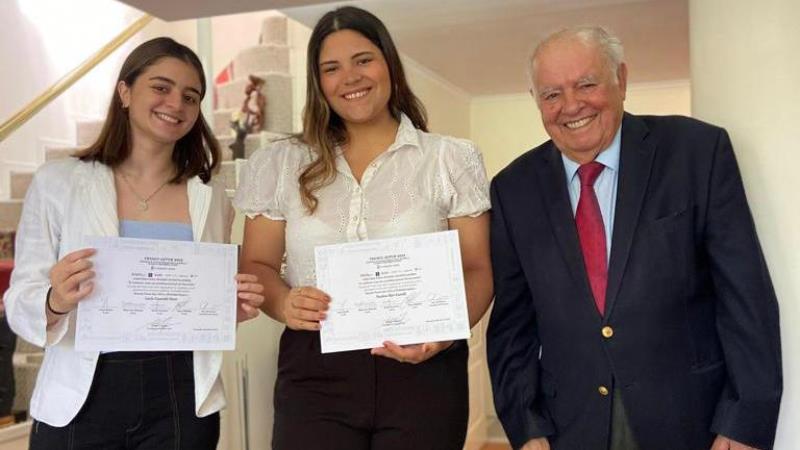
What is the 2022 Astur Prize, and what does winning it entail?
The 2022 Astur Prize was awarded based on a research project proposed by the Astur Foundation, led by its president, Enrique Iglesias, as part of the Call for Proposals for Young Researchers on Public Initiatives for Development Based on Applied Knowledge. The central theme of the proposal was based on the motto “The environment as a multidimensional pillar of development.”
Receiving the award was very rewarding after all the hard work we had put in. The graduation ceremony, held at the Fundación Astur, gave us the opportunity to meet various professionals in the field who had extensive academic training. During the ceremony, the fact that the winners were young people with a strong commitment and passion for this field—which is of such great importance today—was highlighted and praised.
What did the proposed project entail?
The project presented involved the development of a public policy for the implementation of smart waste bins in Montevideo. The concept of smart waste bins was inspired by those already in use in Spain. They were designed with the necessary modifications to be implemented in Uruguay.
To enable the bottle container to be disposed of, the container would feature a QR code scanner located on the outside of the container. Subsequently, a metal ring would open automatically if the scanned barcode identifies the container as eligible for disposal. Otherwise, the metal ring would remain closed, preventing the bottle from being disposed of in any way. In addition, to dispose of the bottle, the user must enter their ID number on a keypad located on the outside of the container. This records the points, which can then be redeemed at various companies and organizations.
The logic behind the containers is based on the implementation of a return and reward system. After disposing of waste—primarily plastic bottles—users receive a reward. The aim of this system is to encourage people to dispose of waste in the proper places. A key focus of the study was on the subsequent reuse of the containers, rather than limiting the system solely to their recovery.
What are its prospects for development? How and in what ways can it be implemented?
Throughout the study, it was shown how various European countries have already implemented the use of smart waste bins in their cities. As discussed, certain conditions must be in place for their implementation, including support from the government and relevant organizations.
In general terms, and based on the fieldwork conducted, no major obstacles were encountered among the companies surveyed, and some even expressed a willingness to collaborate.
How did this project come about?
When we read the details of the Astur Prize proposal, we found that its format was very similar to that of the required assignments for ORT, which we complete each semester for every subject.
The training that ORT University has provided us throughout our studies has allowed us to view this project as a challenging opportunity rather than an impossible task.
Furthermore, environmental studies have always been a central focus of the program, so delving into the subject proved to be extremely interesting and helpful as we continued to forge our path.
What was the research process like?
The research process was arduous and thorough; a project in the environmental field requires extensive field research. We delved into theoretical material, drawing on sources such as professional articles and digital libraries, and analyzed existing data, among other tasks. In addition, various research techniques were employed, such as interviews. A visit was also made to the Ecopet recycling plant in Pando, where the team toured the facility and gained an understanding of the entire PET plastic recycling process; this was a crucial aspect of the project, as was securing the support of the plant.
What skills did the Bachelor's degree in International Studies provide you with to carry out this type of project?
What we learned during our Bachelor's degree in International Studies was a vital tool that helped us take the plunge and enter the competition.
Having completed numerous required assignments in the form of essays and case studies, we saw this project as an opportunity for growth, both personally and professionally.
Furthermore, thanks to the wide range of topics covered in the program ( which always maintains an international focus), we felt we had the necessary tools to delve into the field of environmental studies, and that doing so would also contribute to our education. Staying informed about current issues that are so relevant to the 21st century is of paramount importance to our studies.
The Bachelor's Degree in International Studies gave us the confidence to trust in our abilities and instilled in us the values of teamwork, discipline, and perseverance in our work.
She showed us—and continues to show us—that hard work pays off, and that it’s important not to give up. Believing that we could take on this challenge was the best decision we could have made, because it allowed us to make the most of and enjoy every stage of the competition.
The ASTUR Foundation published a book featuring the winning entries. You can read it here.