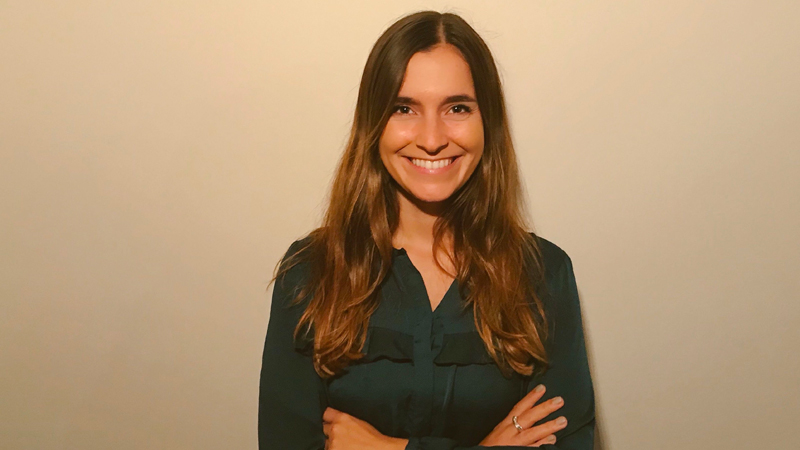
From her teenage years, she knew that her career would be dedicated to the pursuit of a more equitable world. Eventually, that goal became the focus of both her personal and professional life.
Today, Camila García Torighelli, a graduate of the Bachelor’s Degree in Communication with a Corporate Focus from Universidad ORT Uruguay, serves as Brand Communications Manager at Oxfam Intermón. This is a non-governmental organization that works every day to reduce social and economic inequalities worldwide.
In this interview, García Torighelli discusses how his interest in social issues developed, the challenges he currently faces in his work, and his memories of his time at ORT.
How did the opportunity to join the Oxfam Intermón team come about?
Five years ago, I went to Italy to pursue a master’s degree in International Development and Cooperation at the Università Cattolica del Sacro Cuore. While writing my thesis in Milan, I applied for many positions that interested me at nongovernmental organizations around the world. As fate would have it, I was selected to work at the Oxfam Intermón offices in Barcelona.
I started out as a marketing and communications specialist; shortly thereafter, I became a project manager, and I also had the opportunity to open Oxfam’s office in Argentina. A year and a half ago, after wrapping up that phase of my work between Buenos Aires and Barcelona, I sought a new challenge and applied for the position of Brand Communications Manager for all of Spain, and I was selected.
By the time I was 18, I knew exactly what I wanted to do: communication would be the tool I would use to help eradicate poverty.
What do you find most challenging and most motivating about joining an organization like Oxfam Intermón?
Oxfam Intermón exists because poverty exists. We are an organization made up of people who are convinced that poverty can be eradicated by tackling the root causes of the problem and empowering those who suffer from it. Every day, in my role in Communications, I work to reduce the economic and social inequalities that cause poverty around the world. I love my job; it’s a great privilege, but it’s also a great responsibility.
Those of us who work in NGOsare constantly confronted with harrowing stories. The challenge is to work with professionalism, respect, and dedication, even in the most difficult circumstances, without losing our empathy, compassion, and sensitivity.
What motivates me is knowing that every day, through my work as a brand and communications manager, I’m making a positive impact on the lives of millions of people.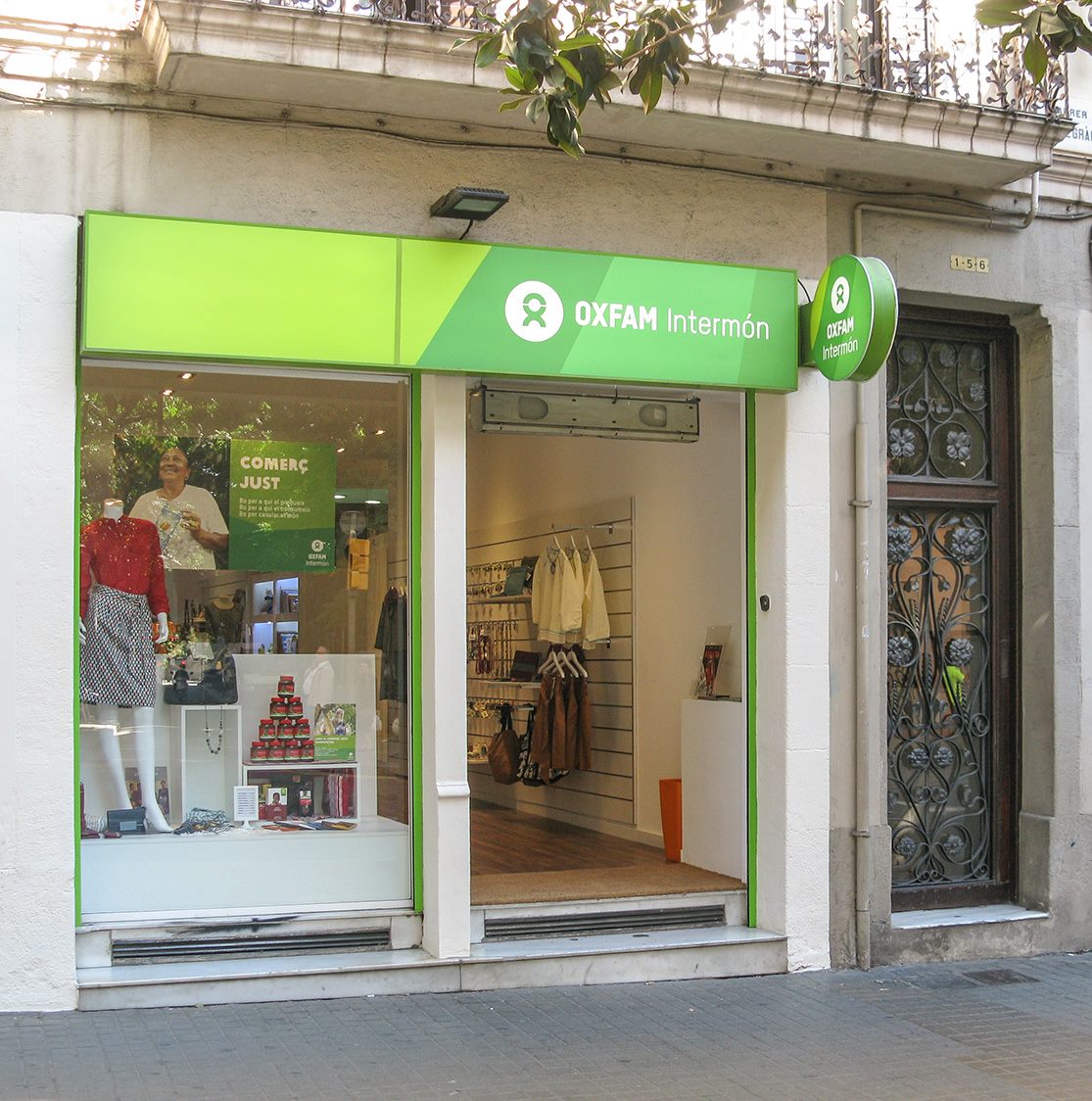
How did your interest in social issues—and, specifically, in corporate communication within social organizations—develop during your professional career?
I have been volunteering with social organizations since I was 17, primarily working with women and children who are vulnerable or socially excluded. From a very young age, I was determined to do everything in my power to create a more equitable world.
On the other hand, I’ve always been passionate about communication. I tried to put everything that was happening around me into writing, because I believed that once it was written down somewhere, those things existed and something could be done to change them.
By the time I was 18, I knew exactly what I wanted to do: communication would be the tool I would use to help eradicate poverty.
What was it like to make the decision to move to Europe to continue practicing your profession?
I'm a very curious and restless person, and migration is part of my family and my DNA. In fact, ever since I was little, I've wanted to live in another country.
My first big opportunity came when I was 20, when I won a scholarship and spent a year living in New York. That experience marked a turning point in my life. Living abroad allowed me to meet and form strong bonds with people from cultures, religions, and ethnic backgrounds very different from my own.
When I came back, I was left wanting more, and after I finished my degree, I decided to pursue a master’s degree in Italy to further specialize in social development. So I applied for a scholarship again and went there.
I'm 30 years old now, and I've lived in five countries. Living abroad has been incredibly enriching for me, both professionally and personally.
During the early months of the pandemic, you worked remotely from Uruguay to Spain, dealing with social issues that were exacerbated by the situation. What was that experience like, and which of your skills did you have to put to the test?
I was lucky enough to find myself stranded in Uruguay nearly five years after moving there, and it was a unique experience. It made me appreciate my country, my family, and my Uruguayan friends all over again. I think we’ve all grown a lot through this pandemic.
In my case, I continued to realize that distance is no excuse for achieving our goals. I took the opportunity to work remotely from 10,000 kilometers away—despite a five-hour time difference—and volunteer in Uruguay. There’s plenty you can get done in a 24-hour day, but you have to get up early.
What motivates me is knowing that every day, through my work as a brand and communications manager, I’m making a positive impact on the lives of millions of people.
Howdo you remember your time at ORT, and which skills you acquired during your studies do you apply on a daily basis?
College gave me the essential tools to launch my career, as well as friends who are now like family to me and professors who continue to serve as role models.
The first time I heard about corporate or business communication was from Virginia Silva (academic coordinator of Communication at ORT), my professor and thesis advisor. I had no idea what she was talking about. I never imagined that not only would I be one of the first graduates of the Bachelor’s Degree in Communication with a Corporate Focus, but that it would become my great passion. When I was studying at ORT, terms like“branding,”“media relations,”“digital communication,”“internal communication,”and“public relations”were just course titles. Today, they are my areas of work.
What are your career goals for the future?
I’d like to continue specializing in development, project management, and communications at international NGOs, or perhaps by leading an NGO or foundation. I’m not sure whether that will be in Spain or another country, but I always want to work to give a voice to those who don’t have one today.
What kind of legacy would you like to leave through your work?
I would like to leave behind a world that is more just than the one I found.