Some of the benefits for the European Union under the Mercosur-European Union Free Trade Agreement include tariff savings, increased exports for businesses, and access to public procurement. For Mercosur, one of the main benefits is access to a market of 513 million people with strong purchasing power.
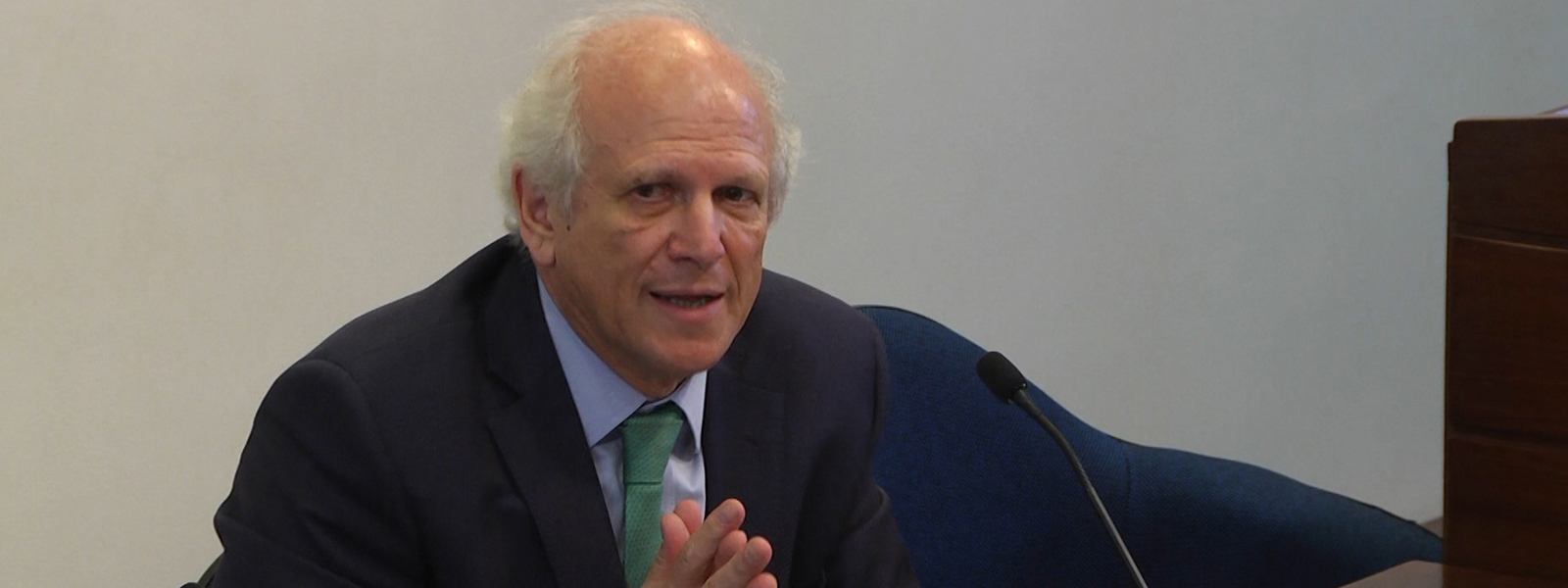
This was stated by Dr. Carlos Malamud, who has been selected by Esglobal as one of the 50 most influential Ibero-American intellectuals, during the conference “The Past, Present, and Future of the European Union–Mercosur Agreement.” The event took place on Thursday, October 10, 2019, at the Faculty of Administration and Social Sciences at Universidad ORT Uruguay. It was part of a series of conferences organized by the Department of International Studies.
Malamud is a senior researcher at the Elcano Royal Institute, a professor of American History at the National University of Distance Education (UNED), and a member of the National Academy of History of Argentina.
A mixed and imperfect treaty
“Negotiations between the European Union and Mercosur have dragged on for 20 years. The treaty—which, in theory, both sides have so eagerly sought—could be signed today but not before, and it probably won’t be signed tomorrow either. In other words, if in the coming months, for some reason, the treaty derails, the chances of salvaging it are slim,” the researcher noted, adding that circumstances are fluid, so the years of negotiations should not be viewed “as a snapshot.”
Malamud highlighted the mutual interest in implementing the agreement: “Europe needs Latin America, and Latin America needs Europe.” However, “the problem is that Europe isn’t clear on what it wants from Latin America”—and vice versa.
“Contrary to what many people believe, this treaty is neither left-wing nor right-wing, ”said Malamud, who described the agreement as a mixed and imperfect treaty: mixed in the sense that it is not merely a free trade agreement but encompasses commercial, political, and operational aspects. It is imperfect because, “the broader and deeper the negotiations, the more complicated it is to reach an agreement.”
Winners and Losers
“All treaties of this nature are imperfect due to the many pieces that need to be put together, the number of issues to consider, and the number of stakeholders involved. When an agreement of this nature is finalized, there are winners and losers,” said Malamud.
In particular, the European Union–Mercosur agreement faced several setbacks. During the negotiation process, “the European Union spoke with one voice,” while each Mercosur country had “its own agenda.” In 2004, the agreement was on the verge of being finalized, but this did not happen. Negotiations were suspended and resumed in 2010: “This happened largely thanks to Spain’s efforts and pressure.”
“In this context, many are wondering whether this agreement will facilitate the much-needed reform of the regional integration framework. What is certain is that the signing of this treaty has paved the way—and will continue to do so—for the signing of new treaties, ”Malamud concluded.