The digital art exhibition by architect Gastón Boero, currently on display in the lobby of ORT’s School of Architecture, offers various perspectives from which to draw conclusions about the exhibition.
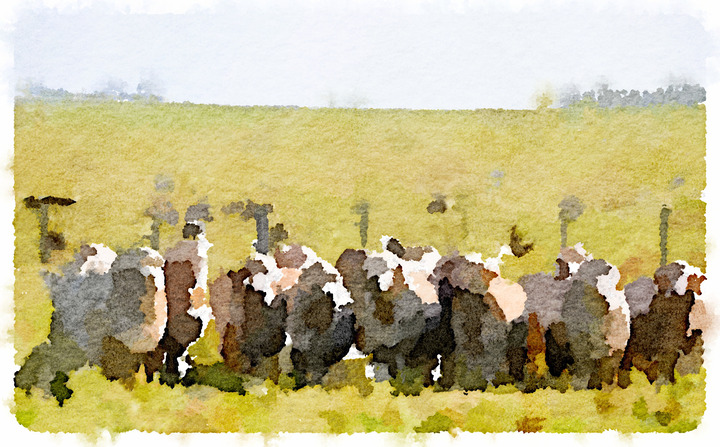
At first glance, almost instinctively, the author introduces a theme that emerges from the very surface of the works: an exploration of habits, customs, and perspectives deeply rooted in national identity, such as the countryside and the beach.
With a personal and engaging sense of humor—at once slightly ironic and casual, as revealed in the very title of the exhibition—he invites us to join him on a journey through a range of perspectives that are sure to resonate with Uruguayans on a cultural level. From those situations—set within settings common to society—that comfort us as familiar, almost traditional, as part of the experiences we treasure as life’s moments.
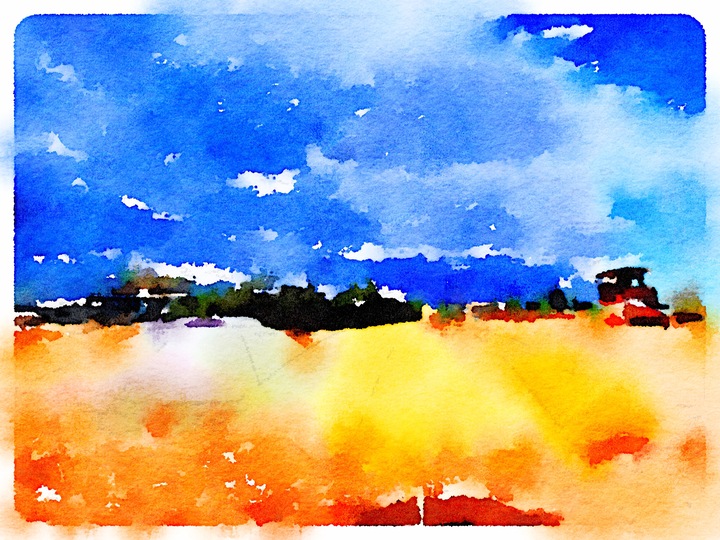
Through a personalized title for each piece, Boero speaks to the everyday, using simple phrases that could be on anyone’s lips, thereby enhancing the viewer’s sense of ownership and identification with each work.
From another perspective, the use of digital techniques to explore artistic expression serves as a tool that brings a sense of renewal to the presentation of that traditional identity; today, our eyes are accustomed to satellite photos from digital platforms, advertising images, and clusters of pixels whose sense of wholeness is often not apparent at first glance.
Given our understanding of the author’s personality, this sense of updating expression is evident and undeniable; he uses it not only as a generative tool in itself, but also as a catalyst for ideas and a driving force in the creation of images; this factor is highly stimulating in all creative activity… like an unstoppable contagion, one image will lead us to the next, and so the dynamic will continue, in a chain of events that at times may threaten to have no final link.
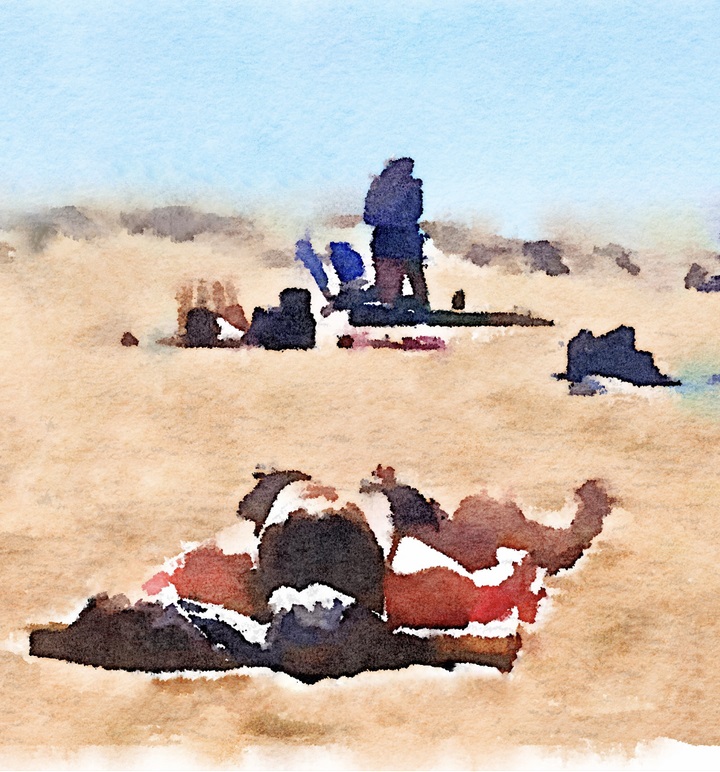
Paradoxically, it is also a body of work that draws us toward Impressionist or Post-Impressionist interpretations: the overall effect of each piece speaks to us of the dematerialization of the model into patches and colors—symbols of light and shadow that assert their independence from the preliminary sketch, that speak to the freedom of the pigment in the face of the limitations of the line; the occasion invites us to imagine a fictional visit by Monet to our fields and beaches, to envision that any of our landscapes might possess the spirit of Giverny.
At the same time, when we look closely at these tiny details, we often discover a pointillist spirit—the spirit of using colors in minuscule chromatic dots that, when placed side by side, work together on our retinas to create that expressive whole: perhaps Seurat would have found his *Grande Jatte* in our rivers and streams on a Sunday afternoon.
For many, including myself, this back-and-forth through time likely results in a stimulating game—the kind that sparks a desire to create and express oneself, regardless of technique, foundation, motive, or discipline… After all, as Klimt once said from his throne at the Vienna Secession:
To every age its art, to every art its freedom…
Architect Jorge Migues.
September 2023.