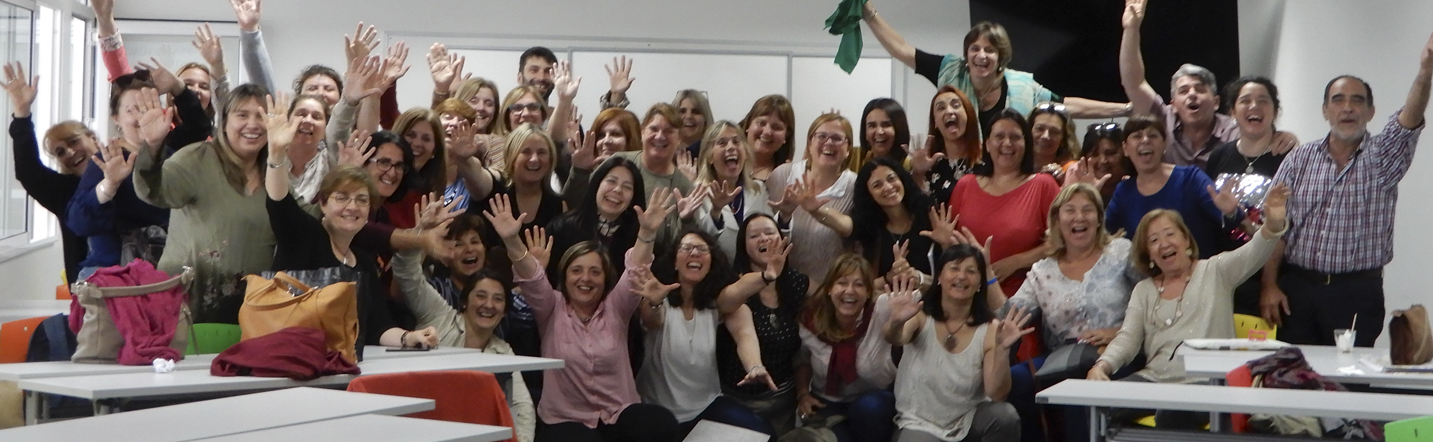
Motivated, committed, and enthusiastic. Fifty school principals from across the country, representing the four subsystems of the National Public Education Administration (ANEP), are currently enrolled in the Diploma in Educational Planning and Management at Universidad ORT Uruguay.
In May 2018, the Institute of Education won a contract through the Ceibal Plan to develop the graduate program, in collaboration with the Global Learning Network.
This is a one-year blended-learning program that prepares graduates to design, propose, and implement organizational assessments and improvement plans.
At the end of the first semester, the feedback has been overwhelmingly positive, both from the academic coordinators and from the students—who are already seeing changes in their daily practice after just a few months of classes.
Education: A Tool for Change
“Higher education is essential for our professional development and for helping the next generation build a better and more just society,” said Wilson da Rosa, one of the students in the diploma program. He is a preschool and elementary school teacher and currently serves as principal of School No. 157 in Tacuarembó.
She decided to apply for the graduate program because she believes in education as a “fundamental tool” for social change and because she believes that professional growth “leads to improved practices and educational equity for vulnerable populations.”
Da Rosa, who has more than 20 years of teaching experience, noted that the diploma made her rethink the concepts she had learned in the past.
As the first semester draws to a close, he said that the course has been “very enriching”: “The various approaches, methods, and strategies presented were very meaningful. The contributions from my classmates, as well as the academic framework and faculty support, have been essential.”
A graduate program that exceeds expectations
“The diploma exceeded all my expectations,” said María Rosa Castiglia, principal of Liceo 48 in Montevideo, adding that she found “a high standard and a great deal of professionalism.”
The graduate program provided him with a methodology to rely on. Although there were a number of areas that weren’t his strong suit, as he progressed through the modules and assessments, he noticed that he was incorporating certain concepts into his daily practice. For example, the tools related to methodology and case studies.
“I realize that research isn’t a short-term endeavor; it’s a skill that you develop over the medium and long term,” Castiglia explained. In his view, he wouldn’t have understood that had he not taken the course.
Learning with and from others
“Excellent.” That’s how Isabela Urdampilleta described the Diploma in Educational Planning and Management. In addition to the up-to-date reading list, the director of the Florida Teacher Training Institute highlighted the collaborative learning and interaction between teachers and classmates that takes place during classes.
The diversity in the students’ educational backgrounds and work experience is another aspect he viewed as positive. The reason is that it provides them with an opportunity to learn about different realities and stay informed about the current state of education in Uruguay.
For her, the graduate program represented an opportunity for “academic growth and professional development.” Although she still has “a great deal to learn,” she noted that it has been a time to reflect on, review, and rethink her day-to-day practice as a principal.
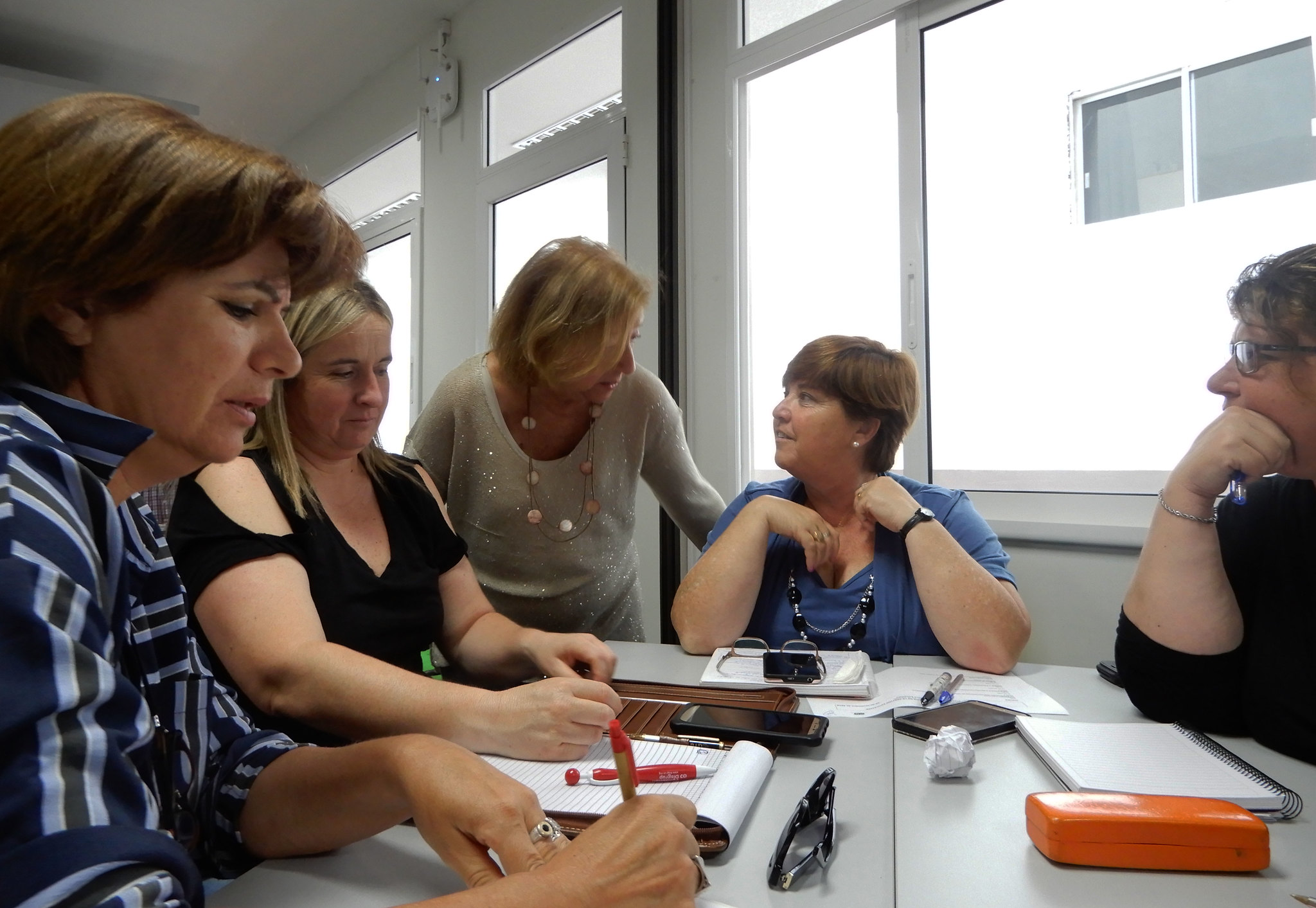
Students in the Diploma Program in Educational Planning and Management during an in-person class on Strategic Planning in Educational Management—taught by Inés Aguerrondo and Rosana Sampedro in November 2018.
A solid and up-to-date proposal
“The Diploma in Educational Planning and Management is characterized by a dynamic approach that combines a theoretical examination of topics related to educational management with the practical application of specific tools for planning and leadership development,” said Andrea Tejera, M.A., academic coordinator of the Diploma in Educational Planning and Management.
According to what he said, this edition of the graduate program is integrating the key concepts developed by the Global Learning Network. It is also drawing on the management and planning tools that students already had at their disposal, as well as the databases of innovations and research compiled by Plan Ceibal and the Global Learning Network.
“What’s interesting about this program is that it includes 50 active principals from the four ANEP subsystems across the country,” Tejera noted. In his view, the intersection between the common competencies shared by students and the specific characteristics of the institutions they lead generates “enormous value” for analyses related to educational management. It also helps establish collaborative networks and drive improvements in the education system.
For the coordinator, the opportunity to coordinate efforts with the Ceibal Plan and the Global Learning Network creates “a positive environment for organizational learning” for all the institutions involved.
A “highly positive” assessment
“We are wrapping up the first semester of the first cohort, and the results have been very positive,” Tejera said, noting that the students’ reflections and work have been of “high quality.”
At the same time, she was enthusiastic because, in most cases, the concepts and tools covered in class are already having an impact on the students’ practice.
“The participants’ enthusiasm, commitment, and motivation are no less impressive,” added Tejera, who highlighted the students’ ability to balance their demanding work schedules with the demands of the program.
Despite the busy schedules and wide range of responsibilities of the directors involved in the program, there has been no change in the number of students: 50 began the courses on July 20, and as of late December, 50 are still enrolled.
The Global Learning Network is currently in the process of selecting students to participate in the second cohort of the diploma program, which will begin in early 2019.