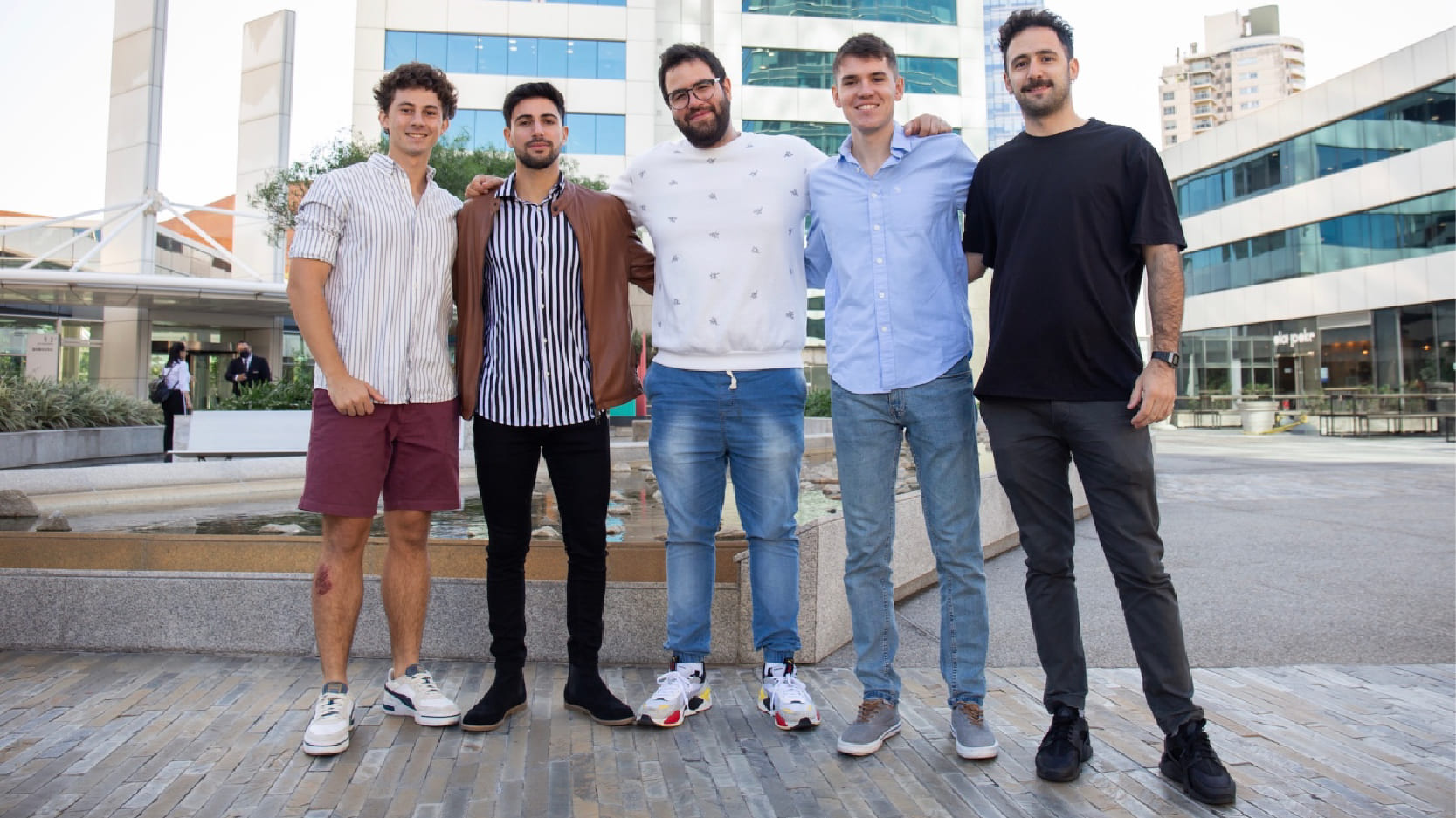
Strike is a platform that offers cybersecurity solutions to large and small businesses, automating administrative processes through technology to facilitate a connection that has existed for many years: that between companies and ethical hackers (known as“strikers,” as they call them), to identify potential vulnerabilities in their systems. In other words: it is “a revolutionary cybersecurity service that challenges the rules of an outdated market,” as they describe themselves on their own website.
“Facu (López, VP of Operations anda systems engineering student at ORT) and I met Santi (Rosenblatt, founder and CEO) at a dinner. We hit it off right away; he saw potential in us and told us a bit about his work and his projects, and we jumped at the chance because we were both looking for jobs. We stayed in touch, and two days later we met up to talk about Strike,” says Tomás De Angelis, the company’s VP of Engineering and a graduate of ORT’s Systems Engineering Assistant program.
Santiago Rosenblatt holds a degree in Systems Engineering from ORT and has been a hacker for nearly 20 years, according to an interview with TechCrunch. He also has experience working in cybersecurity at various companies in Latin America, including Pedidos Ya, where he served as Head of Application Security. Based on his experience, “he identified the cybersecurity problem and the way to solve it,” says Tomás.
What problem was identified?
“The model is outdated,” according to Tomás, because the process for conducting penetration testing isn’t integrated with the latest technologies and is too bureaucratic to be practical: a penetration test can cost over $20,000, communication is slow, and it takes a long time to receive the findings after the test is completed. This means that only large companies can afford to do it, but no more than two or three times a year, even though new content and new productions are constantly being created.
According to Diego Levinsky, Head of Marketing at Strike and a graduate of the Bachelor’s program in Communication with a focus on Advertising and Marketing at ORT, it is assumed that a hacker possesses the technical expertise in cybersecurity precisely because they have the skills to bypass it—which is why companies want to partner with hackers to provide solutions and help identify vulnerabilities in their systems. “This process has been around for many years; the problem is that the barriers between a company and a hacker are enormous. In between, there are thousands of calls and forms to fill out, which make the service more expensive and slower, just so an ethical hacker can hack into your system for two weeks,” he explains.
What Strike does is break down those barriers to entry by automating them through a subscription model that enables continuous testing in parallel with client development, using Strikers.
Ethical hacker or striker
“What are they?”“People who try to uncover vulnerabilities and issues in companies’ platforms so they can report them and the companies can fix them,”explains Tomás.
“It hacks you, but instead of profiting from it, it alerts you,” adds Diego.
Beyond the negative connotations often associated with the terms “hacker” or “hacking”—due to the common perception that such activities are illegal and malicious—Strike facilitates connections between companies and strikers to prevent (unethical) hackers from gaining access to their computer systems.
“They’re proactive and reach out through LinkedIn, for example. At first, we contacted them, but now they’re the ones reaching out to work with us because they’re drawn to the project,” says the VP of Engineering. There’s even a waiting list of more than 100 ethical hackers eager to join the Strikers community, which is led and managed by a Head of Strikers.
The assignment of account managers is not arbitrary; rather, it depends on factors such as the programming language each client uses and the specific technology they work with, among other variables. “If the company is in the crypto space, we’ll assign an account manager who has a solid understanding of crypto technology, which will yield much better results than an account manager who has never worked with crypto in their life,” he says.
Seed capital

The investment round, led by Greyhound Capital and backed by other angel investors who contributed the remaining $5.4 million, was announced in late 2021 and was finalized in early April of this year.
“The news just happened to coincide with our public launch, which doubled the impact and generated tremendous interest from potential customers,” says Diego.
The investment capital is undoubtedly a driving force behind the growth of the Strike community and the company’s positioning in the region, but what Strike representatives emphasize most is the experience and expertise that each collaborating investor brings to the table.
—Are you aiming to become a unicorn?
—Yes, of course. And we hope our mascot Striky will be with us on Wall Street when that happens.