Bruno Gili and Camila Jodal, professors at ORT’s School of Business and Social Sciences, and Hernán González (aka Cooptrol), a professor at the School of Communication and Design, participated in the panel discussion “#Jugados: Transformation Takes Work” at Smart Talent Day, which took place on September 1 at Kibón.
Drawing on their experiences in the fields of finance and music, the three university professors told the audience that the integration of new technologies into their respective fields was key to their success.
After the event, Gili, Jodal, and González shared their perspectives on technological transformation and offered some advice to the ORT students.
Bruno Gili, professor of Financial Planning and instructor of Introduction to Comprehensive Risk Management and Planning and Budgeting in the School of Administration and Social Sciences.
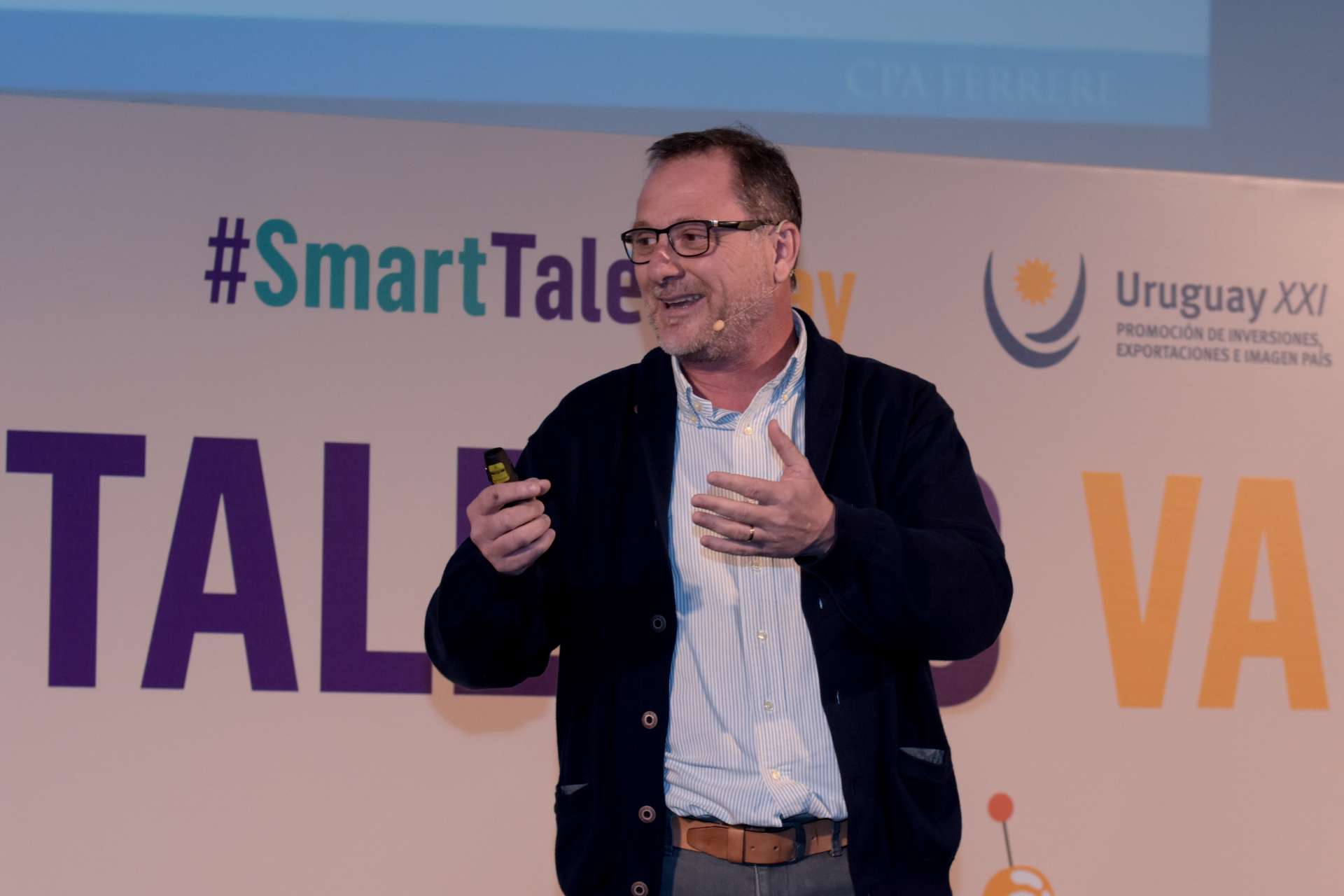
Do you think that companies and self-employed workers in Uruguay are taking steps to incorporate new technologies into the financial sector? Are they successfully adapting to these new technologies?
In recent years, companies and self-employed individuals have begun to recognize the importance of new technologies in finance. We are seeing initiatives to adopt technologies that automate transactional processes, increase automation, and even integrate with external platforms to gather relevant data.
In a highly volatile and uncertain world, the ability to process internal and external data quickly and reliably for decision-making is key. I believe we still have a way to go, but I envision the most dynamic companies focusing on tackling these challenges with the help of the new technologies available.
What are the main pieces of advice you give your students on how to use new technologies to achieve success?
It is impossible to imagine that current and future generations do not have a deep understanding of how to use new technologies in their professional practice. Artificial intelligence, machine learning, data science, blockchain, and so on are concepts they must grasp in order to understand their field and apply it in a way that adds value to their work.
Hernán González, instructor in the Production Workshop at the School of Communication and Design.
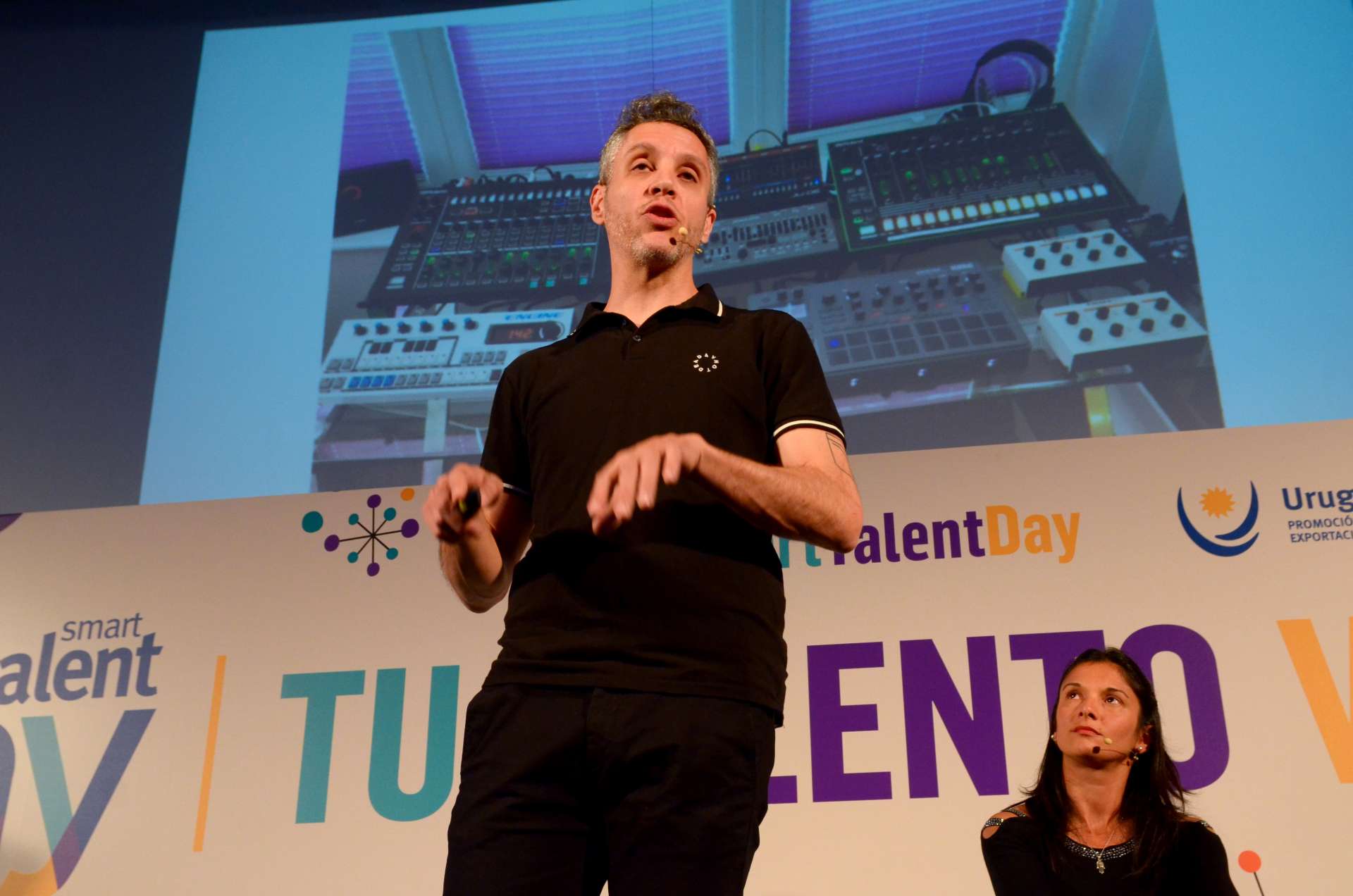
How do you manage to integrate the elements you’ve been using for nearly 20 years—since you launched your Cooptrol project—with new technologies? Do you think achieving that balance is essential to success?
Today, old and new technologies are being combined across all sectors and around the world; people use both interchangeably. I think the debate over which is better—the old or the new—is now obsolete. It’s a matter of personal preference and aesthetics, because different technologies produce different results.
Some music sounds better on vinyl, and certain genres even reach a wider audience in that format, because it requires people to go out of their way to get the music—which has to do with the musical style and individual tastes.
As for making music, I still use what are called drum machines or synthesizers—which is what people have always used to make music. When computers came along, I got into that world and ended up even writing software for making music.
I got a lot out of creating visuals and interactive systems, but I never stopped using machines and synthesizers. In fact, those electronic musical instruments communicate via a protocol called MIDI, which was created in 1983 and is still in use today.
How can you achieve success by using new technologies in your industry?
The most important thing is to be aware of all the software and hardware options available so you can choose freely and achieve the musical, aesthetic, and artistic results you want. It takes a long time to learn about the different options and understand how they work. Sometimes, people feel limited because they don’t know everything; they need to spend time staying informed, reading websites, blogs, and so on.
The other thing is that technology must always be at your service, under your control, and you mustn't let the mere whim of wanting to use a particular technology lead you to end up creating something that isn't what you intended artistically.
It’s very easy to fall into that trap: buying a piece of equipment and wanting to use it at all costs, only to have the musical result—which is what matters most—take a back seat. While technology is useful, it must remain at our service so as not to distract us from the fundamental goal.
New technologies like artificial intelligence and machine learning are already replacing human labor. To be honest, I never thought this would happen in the music industry, but it’s happening.
Many companies are already developing programs that compose music automatically, so what we need to do is integrate them into our professional artistic work and incorporate all that research, so we don’t get left behind and can remain competitive in the music market, which is vast and highly saturated. If you want to make a living from music, you have to understand that all these technologies are just as much a part of music as a traditional musical instrument.
Camila Jodal, professor of Financial Economics and Capital Markets in the School of Business and Social Sciences.
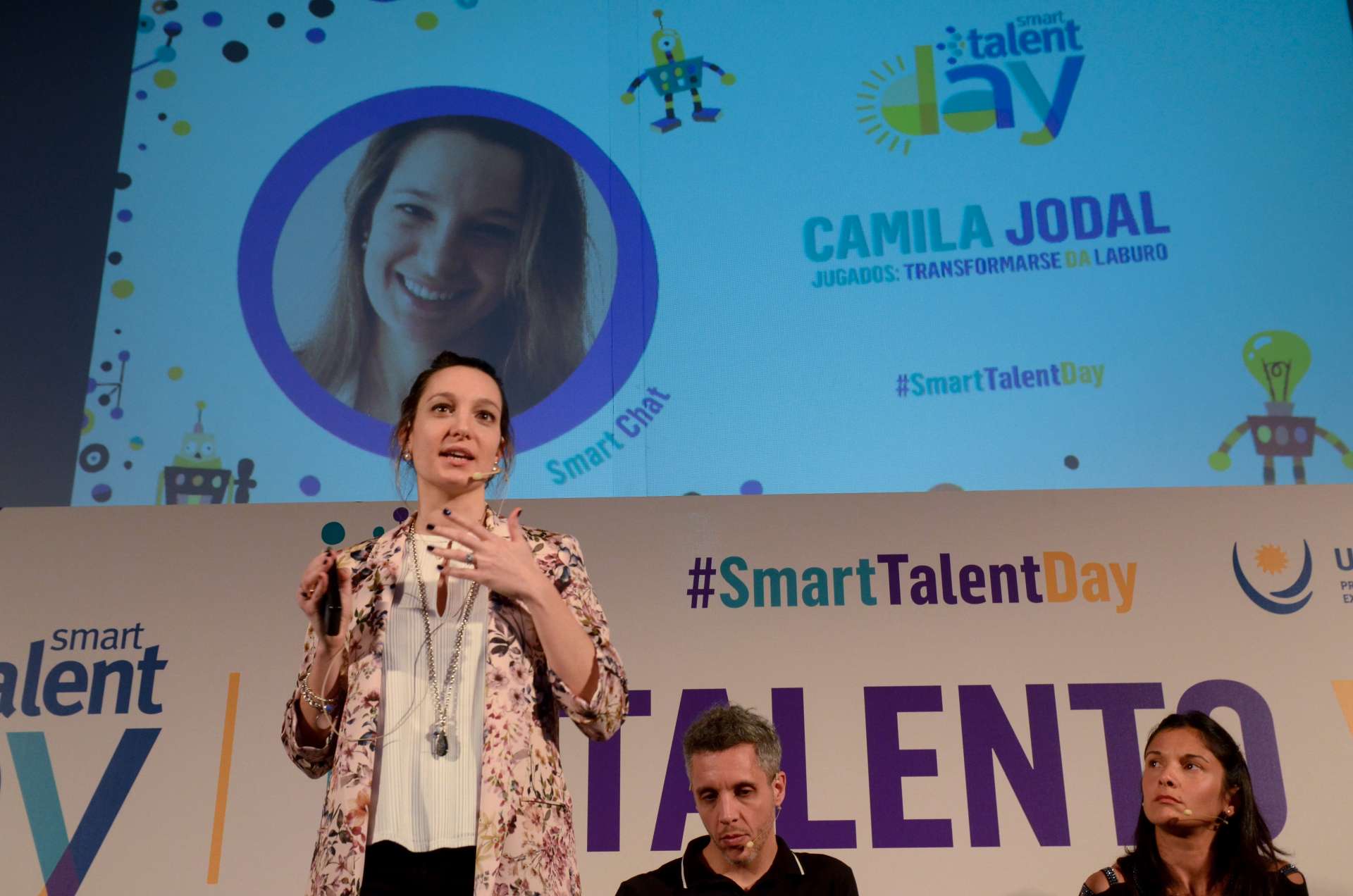
What impact do technologies have on the financial industry, and what do you think are the main challenges facing companies in the financial sector?
Financial institutions are adapting to the new landscape of digital transformation, which includes fintech. New technologies such as artificial intelligence, machine learning, chatbots, robo-advisory, and blockchain, among others, are emerging in isolation and bringing about major changes in the way services are delivered.
Today, financial institutions offer a wider range of services to their customers. Tasks that used to be very labor-intensive and bureaucratic—such as visiting a bank branch to check an account statement or make an investment—can now be handled via a smartphone. Technology has streamlined the financial sector, giving more and more people greater access to a wider range of services at lower costs.
As for the challenges, I believe that financial companies today need to transform themselves into technology companies in order to provide their users with the type and form of service they demand today.
Another very important aspect to consider when transitioning to fintech is ensuring compliance with regulations and new fiscal transparency requirements. This presents a highly complex challenge: striking a balance between a wide range of factors, including user experience, know-your-customer (KYC) requirements, anti-money laundering (AML) measures, and technological advancements, among others.
I believe that in many sectors of the financial industry, we are seeing companies—and even the government—increasingly adopt new technologies, which has led to significant progress in recent years.
The banking sector is one of the industries that is most rapidly adopting digital transformation technologies to adapt to the changing market. Uruguay has made significant progress in financial inclusion by leveraging technology and fostering the growth of fintech companies. There has been a sharp increase in the use of debit cards and bank transfers in recent years. Fintech companies play—and have played—a key role in addressing this challenge.
In any case, Uruguay, in particular, does not have a population that is particularly involved in finance.
There is still much room for growth at the local level. Financial literacy at the community level can only be achieved through ongoing education on the subject.
What are the main pieces of advice you give your students on how to use new technologies to achieve success?
Leveraging technology to globalize services from Uruguay. Today, we have the ability to reach a wider audience simply by delivering services through online applications or digital interfaces. This is an opportunity that previous generations did not have, and in markets as small as ours, it is a key factor for success.
On the other hand, it’s important to recognize that most of the technologies we use today are digitized versions of what were once manual or analog processes. Understanding the needs that led us to digitize or adopt technology helps us identify where further advancements might be needed.