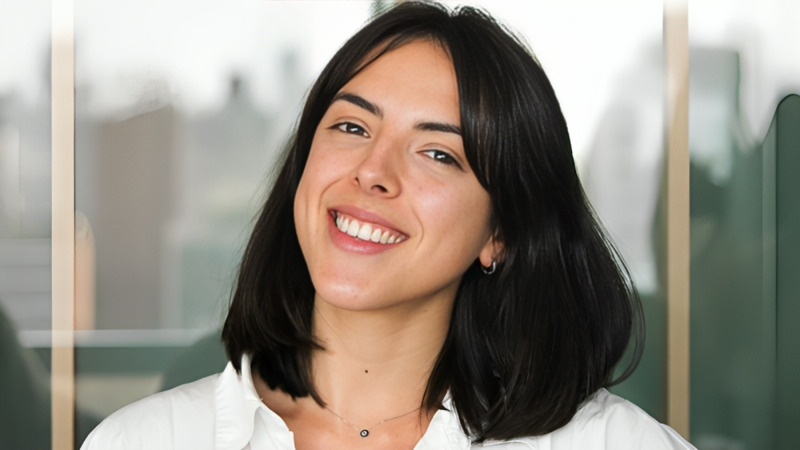
Josefina is currently in Germany, where she is about to complete a Master’s degree in Management in Construction & Real Estate at the Hochschule für Technik und Wirtschaft Berlin University of Applied Sciences (HTW Berlin). This program is part of a dual degree program in collaboration with Metropolia University of Applied Sciences in Helsinki, Finland, where she spent the first year of her master’s program.
In addition to his studies in construction management for architectural and infrastructure projects, he worked with the company KONE in the Technology and Innovation department, implementing BIM in international projects. There, he also collaborated with Aalto University in Finland on a project aimed at automating building certifications for Smart Buildings using BIM technologies and models.
To learn more about her journey from Uruguay to Europe and how her education at Universidad ORT Uruguay has prepared Universidad ORT Uruguay to tackle major challenges and seize opportunities on the international stage, we spoke with Josefina from Berlin.
How would you describe your experience studying architecture at Universidad ORT Uruguay how did it influence your professional career?
My experience studying at ORT was very positive. I really enjoyed the program, especially because our class formed a very close-knit group—we still keep in touch to this day. The Architecture program has its challenges and is quite demanding, but there’s also a lot of teamwork, which makes it more bearable.
At Universidad ORT Uruguay I learned a lot about how to organize myself and prioritize my responsibilities, and above all, how to be more competitive in my field. I believe that the rigorous and disciplined education I received at ORT played a major role in my achievements.
College taught me the discipline that still serves me well today.
The international focus of the architecture program at Universidad ORT Uruguay is also excellent. From the moment we started the program, we knew there were opportunities abroad. The architecture program at ORT offers a one-semester international exchange anywhere in the world (with universities with which ORT has agreements).
During my exchange program in Spain, for example, we had classmates from Germany, Canada, England, and Sweden, and in my opinion, there was no difference in academic standards. For me, the exchange experience made me realize that it was feasible to seek opportunities in Europe.
Through these exchanges, you realize that the knowledge and professional training provided by ORT is on par with that of architecture schools in Europe.
After your time in Spain, you decided to move to Helsinki, Finland, to pursue your master’s degree. What motivated you to choose that destination, and what was your experience like at Metropolia University of Applied Sciences?
I had decided to pursue my master’s degree in Germany because it has a large construction industry, which meant more opportunities. I then found a master’s program in Management in Construction and Real Estate that I really liked, but it required me to spend the first year studying and living in Helsinki, Finland, and the second year in Berlin, Germany.
I found the idea of living in Finland for a year interesting, even though it wasn’t part of my original plans—mostly out of curiosity about what it would be like to live in such a different country. I was pleasantly surprised to discover that Finland is extremely advanced in the fields of construction technology and prefabricated and wood-based construction methods.
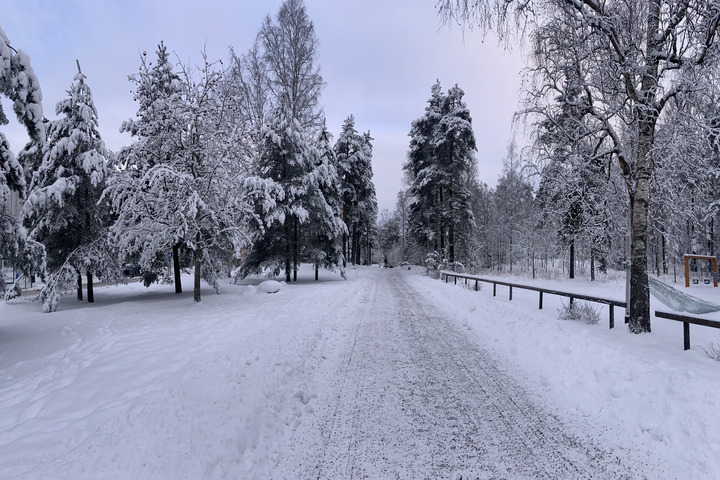
Until I was accepted, I didn’t know much about Finland. It’s not a country you hear talked about as much as Germany. I think that when I made the decision, I wasn’t fully aware of what it meant to move to a country so far north with such a different culture. I admit that during the first few months, I had a hard time adjusting to the endless winter, but in the end, it turned out to be a wonderful experience.
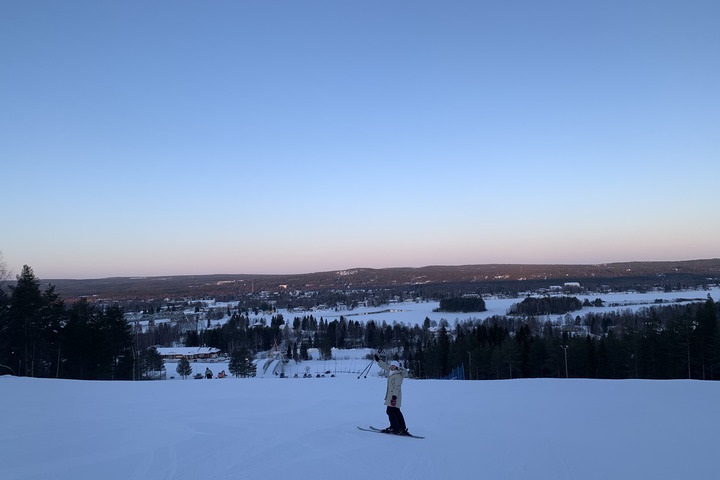
Finland is a small country with just over 5 million inhabitants—not much larger than our own country. And even though they’re very advanced in so many ways, I think we still share a lot with Uruguay, such as a culture of calm, humble, and friendly people. Helsinki is a small city where everyone ends up knowing each other—much like Uruguay.
Working on international projects with KONE sounds really interesting. What was that experience like, and how do you think your education at the School of Architecture has influenced your ability to tackle projects of that scale?
It was a great experience! I thought it would be difficult to make the transition from architecture and residential projects to large-scale and infrastructure projects, but it turned out not to be that hard. I think having a solid foundation of knowledge prepares you well for anything.
I was working with Building Information Modeling (BIM), directly with the global BIM team. As a result, I began participating in international projects where the BIM model was being used for construction and the subsequent handover of documentation.
I also provided internal consulting services for projects with specific BIM requirements. And, in collaboration with the codes and standards department, I helped develop national BIM plans in several European countries.
- You might also find this article interesting: “Benefits of BIM: 7 Reasons to Work with Building Information Modeling”
And how did this work fit in with your master's program and your final project?
I had the opportunity to complete my final project—my thesis—with KONE, in collaboration with Aalto University. I worked on it remotely from Berlin while I was taking the last two semesters of my master’s program.
For me, this was a very interesting project because we worked with a new European Union regulation for smart buildings (Smart Readiness Indicator for buildings). The goal of the project was to develop a program that would enable the remote certification of buildings using the BIM model.
This was the first attempt to assess the “smart readiness” of buildings using only the BIM model. In the future, it is expected that this type of certification will be conducted entirely online, using the BIM model.
In Finland, the first signs of the future are already visible; this year, they passed a regulation requiring that building permits be based on a BIM model.
What about the future? How do you think all these experiences will shape your future? What plans are you considering? Going back to Uruguay?
The master’s degree opened the door to several opportunities in Europe, and I was lucky enough to have more than one option to choose from. I decided to accept an offer in Finland, so my adventure in the north continues for a little while longer. In the future, I’d like to return to Uruguay; I believe there are also good opportunities there and very capable people. I think it’s worth noting that, even though we’re a small country, we have a very high academic and professional standard. In my experience, we’re on par with any professional in Finland or Germany.
And a word of advice for anyone thinking about studying abroad: go for it—don’t be afraid; there are plenty of exciting opportunities out there. Universidad ORT Uruguay prepares Universidad ORT Uruguay to be on the same academic level as other European institutions.
Congratulations and thank you very much, Josefina!
This interview highlights the inspiring career of architect Josefina Pallas and how her education at Universidad ORT Uruguay has prepared Universidad ORT Uruguay to tackle challenges and seize opportunities on the international stage.
His experience demonstrates the value of discipline, an open mind, and a high-quality education in a world-class architectural career. As Josefina shows us, education and dedication can pave the way for tackling ambitious projects in different corners of the world.