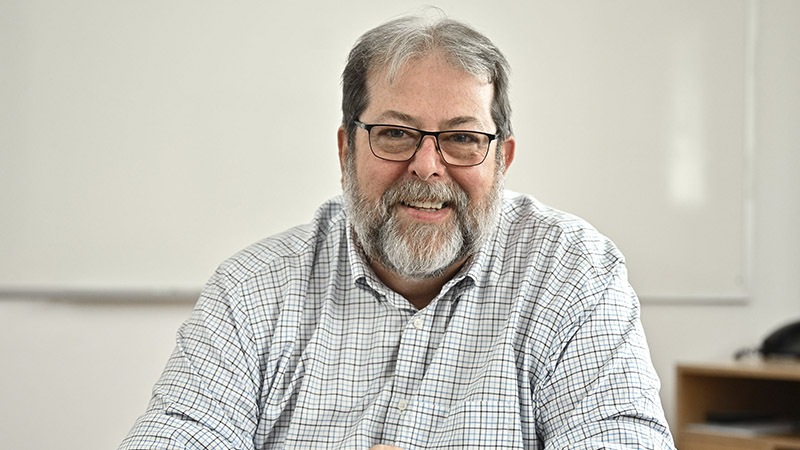
From the classrooms of Uruguay to the global stage, Dr. Gabriel Díaz Maggioli is once again making his mark. In November 2025, TESOL International Association —the world’s most influential organization dedicated to the teaching of English as a second language—elected the professor from the ORT Institute of Education as its next president.
His appointment marks a historic milestone: he is the first Latin American not residing in the United States to serve as president of the TESOL International Association—a professional network with more than 13,000 members in over 150 countries, whose mission is to promote professional development, research, and international cooperation among English language teachers.
When he takes office in 2026, he will also become the first person to have served as president of both TESOL and the International Association of Teachers of English as a Foreign Language (IATEFL), another major global association in the field.
In an interview with Díaz Maggioli, he reflected on this unprecedented event, which marks a new chapter in global leadership in the field of language education.
What does it mean to have been elected president of TESOL?
Being elected president of TESOL is a tremendous honor and a profound responsibility. TESOL has been a community that has supported me throughout my entire career, offering me opportunities for learning, exchange, and growth.
That is why I see this not as a personal honor, but as an opportunity to serve: to give back to the profession what it has given me, and to help ensure that more teachers around the world can advance professionally under equitable conditions.
Furthermore, this election holds strong symbolic significance. TESOL is celebrating its 60th anniversary, and in all that time, only one person of Latin American descent has served as president: Dr. Luciana de Oliveira, who has been living and working in the United States for more than three decades.
My election as the first Latin American not residing in the United States, coming immediately after the election of the first African president not residing in the United States, Dr. Efion Okong, marks a profound change in the organization’s history.
It is a recognition that knowledge and leadership also thrive in the Global South, and that situated pedagogies have much to contribute to English language teaching and teacher professional development.
How do you feel about the historic achievement of becoming the first person to serve as president of both TESOL and IATEFL?
I approach this with joy, humility, and gratitude. Having played an active role in both organizations and now becoming the first person to be elected to lead both fills me with hope.
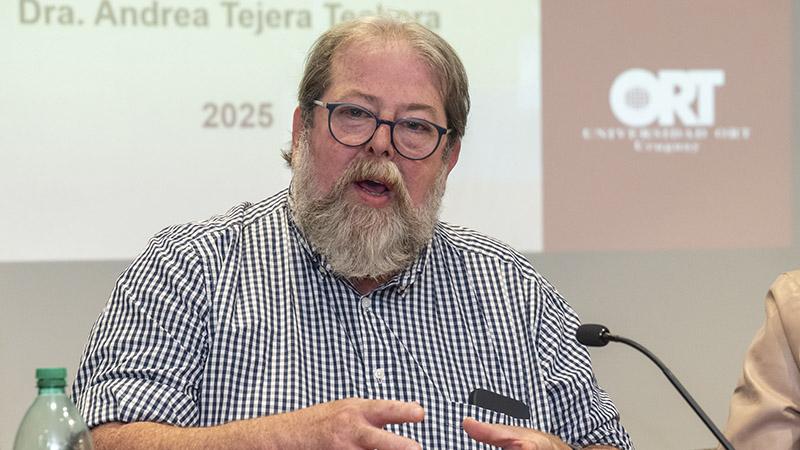
TESOL and IATEFL are cornerstones of the field of English language teaching. The fact that both organizations have placed their trust in a professional from the Global South demonstrates that the international community increasingly values diversity of perspectives and backgrounds.
This dual leadership symbolizes a bridge between educational traditions: between the North and the South, between contexts of abundance and those of creativity in the face of adversity. It also reflects the need to decolonize the profession—that is, to recognize that the best pedagogical ideas do not originate solely in the major academic centers of the North, but also in the classrooms where teachers work day in and day out, with limited resources, commitment, and passion.
My goal is to help build a TESOL that listens to, learns from, and engages with all voices around the world, especially those that have historically been underrepresented or even marginalized.
Based on your experience and background, what specific contribution do you feel you can make to TESOL?
I have dedicated my professional life to teacher education and to studying how teachers learn and teach. This experience, which combines research with practice, allows me to bridge the gap between theory and the day-to-day reality of the classroom.
I come from a Latin American background where innovation often stems from necessity, ethical commitment, and collective ingenuity. From this perspective, I advocate for a vision of education that is constructivist, sociocultural, and deeply human: learning as a process of mediation, dialogue, and transformation.
In TESOL, I want to help establish a model of professional development that is grounded in practice, context-specific, and equitable—one in which every teacher can see themselves as a creator of knowledge, not merely a consumer of external theories.
- You may also be interested in:“Gabriel Díaz Maggioli, IATEFL’s First Latin American President”
What priorities or projects would you like to promote at TESOL during your presidency?
I would like to focus my efforts on three main priorities. First, to strengthen ongoing professional development to ensure that it reaches all teachers, regardless of their context or level of resources. To achieve this, working closely with our more than 116 affiliates around the world will be key.
Second, to strengthen the dimensions of inclusion and social justice in all of TESOL’s activities, because teaching English also means opening doors, not closing them.
And third, harness the potential of artificial intelligence and other emerging technologies to create collaborative networks that transcend borders and foster learning communities that are sustainable both over time and across geographical boundaries.
Within these frameworks, I aim to promote a decolonial approach to TESOL that recognizes pedagogies from the Global South not as peripheral curiosities, but as legitimate sources of knowledge and innovation. Teaching English can be a liberating practice if it is grounded in respect for local cultures and a commitment to global equity.
My goal is for TESOL to be a space where that conversation becomes visible and transformative.
What legacy would you like to leave at TESOL after your term?
I would like to leave behind a TESOL that is more connected, more inclusive, and more aware of its transformative role— an organization that celebrates the diversity of its members and promotes teacher leadership at all levels.
If we can ensure that TESOL continues to expand its symbolic boundaries —by recognizing that professional excellence is also built in the Global South, that local epistemologies are valuable, and that English language teaching can contribute to more just and collaborative societies—then I will feel that we have taken an important step forward.
My ultimate hope is that this moment will be remembered as a turning point: the moment when TESOL truly began to see itself as a global, diverse, and open-minded community. Because teaching English, after all, is not just about teaching a language— it is about helping to open doors to other possible worlds.