A furrowed brow and a sticking-out tongue are the first reactions mate elicits from a young German college student. The expression instantly turns into one of approval as he tastes a cookie generously filled with dulce de leche. As he finishes savoring the new treat, he hands the bitter infusion back to the young Uruguayan accompanying him: his godfather.
As it does at the start of every semester in August, Universidad ORT Uruguay new international exchange students with a gathering featuring traditional Uruguayan pastries. Students come to Uruguay not only to fulfill the requirements of their home universities but also to explore new places and cultures. Arriving in an unfamiliar country always presents challenges, especially in the early days, and to help these visitors integrate, ORT’s International Office created the Mentor Program in 2010.
Until then, interaction between international and local students had been minimal. “The international students had their own group; there wasn’t any real integration,” says Miriam Kemna, the Student Exchange Coordinator.
ORT did take advantage of the exchange program with Uruguayan students traveling to other universities. Stories about their experiences abroad led to the creation of a mentor program designed to guide new arrivals and help them interact with current students. The goal is for international students to be able to rely on advice from local students not only during their first days in Uruguay—which are vital for adapting to the new country and university—but also even before their arrival.
When ORT students enroll in the program, they are assigned a “mentor.” The main goal is to assist them during the first two weeks. “Initial support is essential for those coming from another country,” explains Kemna.
For some time now, there has been a sort of events committee, led by mentors, that organizes outings, trips, movie nights, and soccer games, for example. Its goal is precisely to bring exchange students together with one another and with the local students participating in the program, as well as to connect the mentors.
To match mentors with mentees, the International Affairs Office takes age and interests into account, but sometimes there isn’t enough chemistry between them. That’s why the activities planned by the committee ensure that every international student ends up being paired with an ORT student, with whom they build a strong relationship. There are always mentors available: about 150 are enrolled in the program, and, for example, 59 international students arrived this semester.
There is only one requirement to sign up for the program: you must be an ORT student. “Ideally, we ask that you have already completed your first semester so that you are familiar with the university,” adds the Student Exchange Coordinator.
According to Kemna, over the past eight years, the Mentor Program has lived up to expectations. “The number of questions we received about university or city matters has decreased, because now students resolve those issues directly with their mentors. While questions are always welcome, anything related to social life is best discussed with them, since they’re around the same age and are more familiar with what’s going on right now,” he explains.
To get a firsthand look at how the Mentorship Program works, four ORT students—two mentors with extensive experience, a mentor who joined the program for the first time, and an international student who started as a mentee, transferred to the university, and is now a mentor—share their experiences.
-
Javier Tellechea – Student in the Bachelor’s Program in Management and Administration – School of Management and Social Sciences

“I’ve been a sponsor for three years now, and I’m part of the group of sponsors who organize events. Ever since I heard about this movement, I wanted to join, and honestly, it’s been a great experience!”Generally, I get along well with most of the exchange students, but I have a slightly closer relationship with my mentee. I’ve been a mentor six times, and so far I’ve mentored two Mexicans, two French students, and two Spaniards—a mix of men and women.
I love foreign cultures and really appreciate the chance to spend time with people from other countries. I personally think it’s amazing that students from Australia are coming. They’re definitely my favorite group, since I love speaking English and learning their language while teaching them ours.
I make sure my godchildren always have a friend to talk to, someone they can turn to for advice on anything, and something to do if they're really bored (going to stand-up comedy shows, playing a soccer game, etc.).
They end up getting to know the city on their own. I tend to help them a lot in the early stages, which are the most challenging—for example, with questions about coursework, college, getting around the city, rent, food, and so on.
The Host Family Program is invaluable for exchange students, as long as the host family is there for them as expected. We’ve been thanked countless times for everything we do; it’s very clear that the students truly appreciate the help they receive and the time we spend organizing activities, parties, and trips for them.
"I'd love to do an exchange program at some point in my life, and I'd love it if the university I attend offered something similar."
-
Irina Peyrot - Student in the Advertising and Digital Communication Analyst Program – School of Communication and Design
“This is my first time as a sponsor for the program. I’m currently sponsoring a girl from Germany, and even though we don’t keep in touch all the time, it’s great.”
I signed up for the program because I thought it was a wonderful opportunity to welcome international students to my country and my university, and to guide them in any way I could. In that sense, it’s important to note that the exchange is primarily cultural. It’s an opportunity to travel and experience different places and customs—and in many cases, languages—while continuing one’s university studies.
"Over the course of this semester, I want to show my goddaughter what to do and what to see, both in Montevideo and throughout the rest of the country."
-
Nicolás Blanco – Systems Engineering Student – School of Engineering
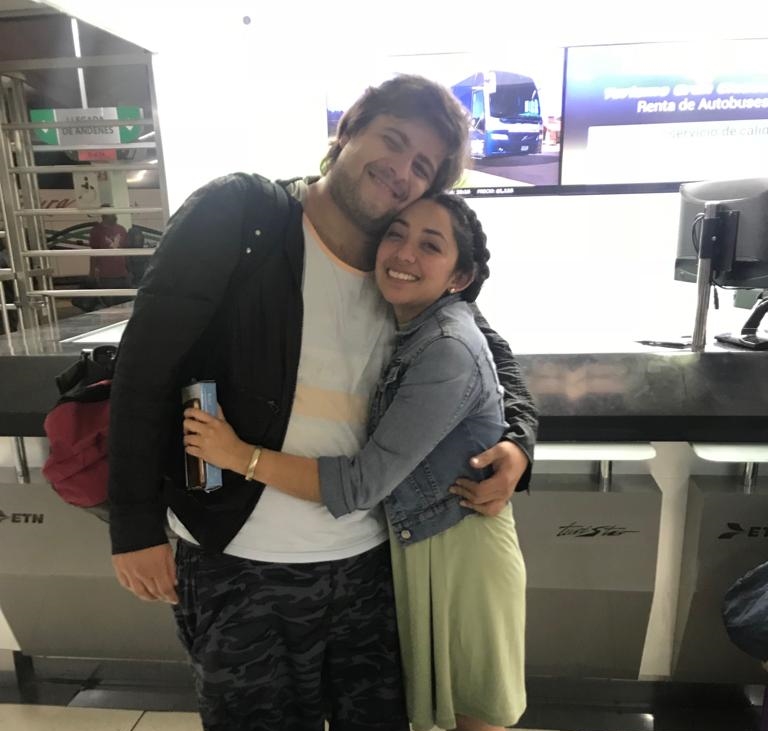
“I’ve lost track of when I started, but ever since I did, I’ve never stopped. This semester’s student is my eighth mentee, but I’ve had them from all over. I started with a special exchange student from China. I say ‘special’ because, since so many students come from China, they have their own mentoring program, and that’s how I got started. Then I mentored students from Mexico, England, Germany, Australia, and Spain. The students from those countries were the ones assigned to me, but the reality is that semester after semester, you end up mentoring students who you’ve actually become friends with or who didn’t click with their mentor and end up looking to you as a role model.”
For an exchange student, the host family is a point of reference, a friendly face, someone to turn to—especially at the beginning, when they haven’t even arrived in Uruguay yet and have simple but important questions, such as what the temperature is like in Uruguay during the different months of the year. It’s an example of a common misconception that many people have—that since we’re Latin Americans, it’s hot all year round—and if they don’t have a mentor to advise them, when they arrive they freeze until they can afford to buy a coat.
What initially drew me to the program was my curiosity to meet people with cultures and mindsets completely different from my own. I believe the program is beneficial for both the mentor and the mentee.
On the other hand, being a host parent for exchange students lets you feel at home all over the world. For example, in February I went to visit several Mexican friends I’d made and spent a month traveling to different cities, staying at their homes and feeling like part of the family in each one.
There’s nothing like being recognized by the family themselves as “the Uruguayan who helped my son when he was in Uruguay.” I’m currently planning a trip through Europe and intend to do the same—visit friends. I think that’s what makes the program so important for a sponsor: the chance to form bonds with people from other countries that would otherwise be unthinkable.
I always welcome my godchildren with mate, a barbecue, and grappamiel. This barbecue has become a tradition among some godparents—it’s where we first get to know our godchildren and have fun with some games that help them loosen up and get to know us quickly. If Uruguay has a game during their stay, I try to take them, even if they tell me they don’t like soccer, so they can truly experience Uruguayan culture. If they do like soccer, I take them to see a game of the team I support.
Of course, it really depends on what they’re into, but a stroll along the entire Rambla, the Prado, and whatever else comes up is a must. I try to take them out on the weekends to explore Piriápolis, Punta del Este, and Rocha, but that really depends on the bond we’ve built and how much time I have available.
"I think that, academically speaking, ORT provides exchange students with everything they need and really looks out for them. I haven’t heard of any cases where students were dissatisfied with the way they were treated. As for extracurricular activities, they receive support when they arrive. Additionally, as a social event, an international dinner is organized every semester, which I think is very helpful for them."
-
María José Ortiz – Student in the Bachelor’s Program in Interior Design – School of Architecture
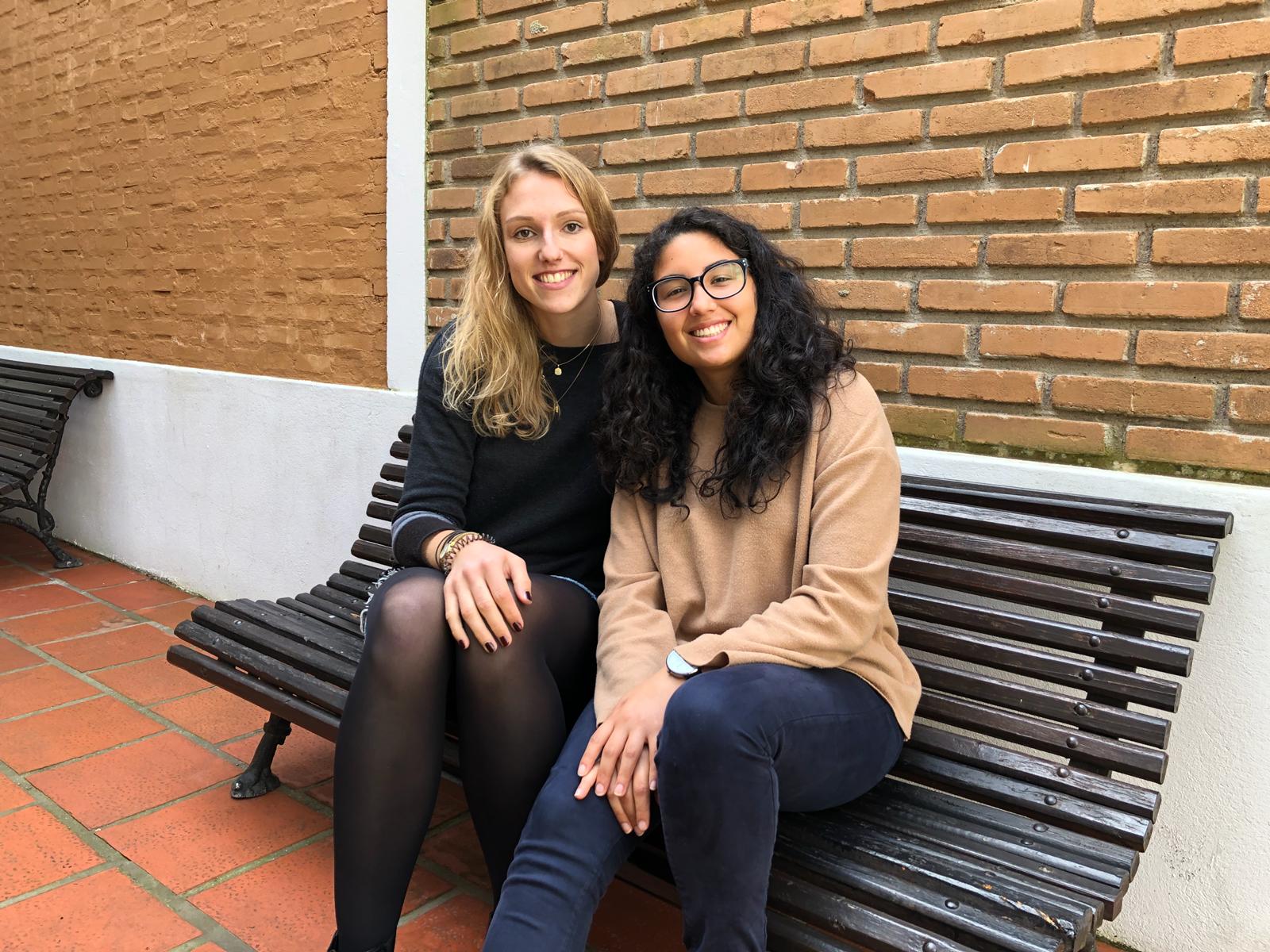
“I’m from Peru, and I came here on an exchange program for one semester in early 2016. Once I arrived in Uruguay, I extended my stay to two semesters. Eventually, I decided to transfer here because I really liked the country, Montevideo, and the quality of life, among other things.”Studying at ORT offered me many more benefits than the university I attended in Peru. For starters, a bachelor’s degree in interior design doesn’t exist in Peru—there’s only a technical diploma program. Here, you first earn that technical diploma as an intermediate qualification and then a bachelor’s degree, which is highly regarded. I was told that this was one of the best universities in Uruguay, and that convinced me.
When I arrived, I had been assigned a mentor who messaged me a couple of times on Messenger before I got to Uruguay, but she never actually made plans to meet me. I went to the ORT welcome event alone, and there I met a Uruguayan woman who hadn’t yet met her mentee; I told her about my situation, and she took me under her wing. Mostly, we just went out partying. Later on, I met the rest of the mentors.
I signed up last semester to be a mentor. I was paired with a 21-year-old American woman who got married two days before she arrived, so she came to Uruguay with her husband. We went to the beach, and we met up a couple more times throughout the semester.
This semester I have a German mentee. I helped her with everything related to college, like signing up for her classes, and I help her translate some things. We’ve gone for walks along the Rambla, out dancing, and out to eat. I see her pretty often. She’s very kind and funny.
What motivated me to sign up for the program was what happened to me when I was an exchange student. I arrived in a place where I didn’t know anyone; my host mother didn’t help me much, but my host family did, and that’s how I learned. The program encourages you to put yourself in someone else’s shoes, and I want to do for others what someone once did for me.
“On the other hand, it’s good to learn from other cultures and customs. Cultural exchange is incredibly enriching, and in my case—since I study design—it gives me a fresh perspective. I see how they design in Europe; my goddaughter gets to see how they design in Uruguay; and I know how they design in Peru.”