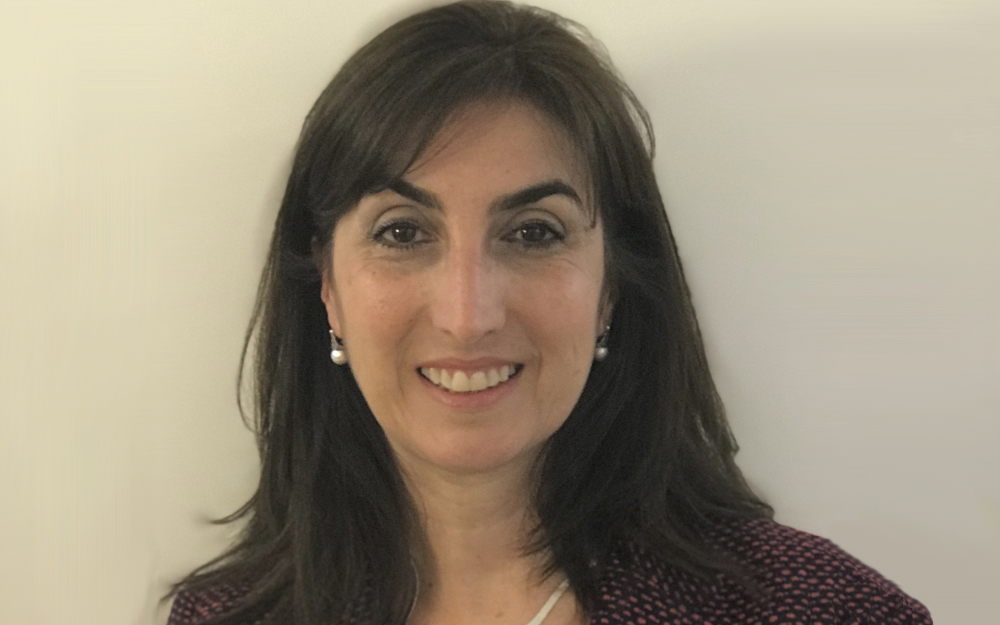
Since late last year, the Gastroenterology Clinic (Department) at the University of the Republic’s School of Medicine has had a new director. She is Dr. Carolina Olano, who holds a Diploma in Education and a Master’s Degree in Education from the Institute of Education at Universidad ORT Uruguay.
Following Dr. Henry Cohen’s retirement, and in his new position as a fifth-year resident, Olano took over as head of the Gastroenterology Clinic at Hospital de Clínicas, where he not only continues his research on diseases and techniques related to the small intestine but also serves as a faculty member.
In this regard, he believes that the skills he acquired during his time at ORT have been of great help to him in fulfilling the responsibilities of teaching in the field of medicine.
What aspects of Dr. Cohen’s legacy would you like to carry forward as you take over the Gastroenterology department?
It is a great challenge for me to continue the excellent work that Dr. Cohen carried out as director. There are many areas I would like to pursue, but I would like to highlight three of them. First, I will continue the technological development that has made the Gastroenterology Clinic the best-equipped center in the country for digestive endoscopy, in both the public and private sectors. This allows us to care for patients from the Hospital de Clínicas and other mutual or private health plans through the provision of services.
Furthermore, we aim to maintain—and, if possible, increase—the number of annual scientific publications by faculty and students in both established and emerging research areas. Several faculty members on the team are internationally recognized experts in various fields of gastroenterology, hepatology, and digestive endoscopy, and their work has been published in prestigious peer-reviewed journals.
Finally, I would like to continue inviting international experts in various fields to strengthen our teams.
Based on the new ideas you can contribute, what kind of mark would you like to leave?
As part of my personal legacy, I would like to place greater emphasis on the professional development of our team, with the aim of maximizing the teaching and learning processes for colleagues enrolled in the Gastroenterology graduate program and the certificate programs in Hepatology and Digestive Endoscopy. I would also like to establish a line of research in education to determine where we should place greater emphasis. Furthermore, I would like to establish reference centers in the discipline that facilitate multidisciplinary work of excellence.
What do you enjoy most about teaching?
What I enjoy most is sparking a desire to learn in my students—or, as William Butler Yeats put it, “kindling the fire”—rather than simply imparting information. Since medical information doubles every five years, and today’s scientific truths will be unacceptable tomorrow, it is essential to train physicians to use the clinical challenges they face daily as a driving force for updating their knowledge—or, in other words, to train them to “keep that fire burning.”
As a teacher of teachers, I also enjoy seeing them transform into reflective professionals—both in the midst of their work and in their reflection on it—which allows them to grow continuously and learn from their own experiences.
What responsibilities come with being a teacher in a field like medicine?
I believe that teaching at all levels always entails a tremendous responsibility. The complex changes taking place in society as a whole—and in medicine in particular—are constantly reshaping the competencies required of physicians, that is, the body of knowledge, attitudes, and skills necessary for high-quality practice. These competencies encompass not only the knowledge and skills that define the medical profession, but also the ethical commitment and values that today’s society demands.
Medical educators therefore bear a great responsibility to ensure that medical graduates and specialists possess these competencies, thereby guaranteeing their professional quality and an appropriate standard of care for the public.
You're still doing research. What have you been researching lately?
I continue to work on my line of research, which focuses on diseases and endoscopic techniques of the small intestine. I would like to highlight my work on capsule endoscopy, a disposable device the size of a pill that is swallowed with a glass of water and allows for the non-invasive, outpatient visualization of six to eight meters of the small intestine. Its primary use is for evaluating patients with anemia or intestinal bleeding believed to originate in the small intestine. It is also useful for assessing patients with inflammatory bowel disease or those with celiac disease who do not improve despite following a gluten-free diet.
The Gastroenterology Clinic is the most experienced center in the country in this technique.
I will also continue to work on a line of translational research with the Department of Immunobiology. This type of research allows us to apply knowledge from basic research (conducted in laboratories) to the prevention and treatment of conditions identified in clinical practice. In this case, we are focused on deepening our understanding of the inflammatory process that occurs in the intestines of patients with celiac disease and irritable bowel syndrome.
How has the Master's in Education program you completed at ORT helped you prepare for the challenge you recently took on?
When I started as an assistant professor (level 3), I took an educational course organized by the World Gastroenterology Organization called “Train the Trainers,” which made me realize just how much I didn’t know about the subject. It was then that I told Prof. Cohen about my desire to improve my teaching skills, and he gave me a lot of support to help me achieve that. Medical professors are, in general, people who know their discipline very well—they are expert physicians or scientists—but they lack pedagogical training, and the teaching techniques they use are mostly inherited from their own teachers.
The experience and dedication of the faculty members in ORT’s Diploma and Master’s programs in Education—among whom I would highlight Edith Litwin, Daniel Germán, Mirtha Ricobaldi, and Carina Lion, among others—enabled me not only to gain knowledge but also to shift my perspective. From there, we implemented several changes to the curriculum and assessment methods by incorporating, for example, an assessment portfolio in the Diploma in Digestive Endoscopy, which provides evidence of learning and a reflective analysis of the documented events.