When and why was YEDA founded?
The idea to start something like YEDA first came to me at least 12 years ago, in a high schoolsenior-year biology class, when we were studying diabetes and obesity. That led me, years later, to pursue a degree in Biotechnology Engineering at Universidad ORT Uruguay.
In 2016, as I was finishing my first year of college, I began to delve deeper into this subject, and the idea started to take shape. From that point on, I discussed it with Juan Elenter and sought his support; he is now my business partner.
Even back then, I was aware of the Weizmann Institute’s significance in Israel for the industry, and from the very beginning I set my sights on training there so I could launch YEDA. For me, it was literally like joining Real Madrid. I succeeded, and while there I built the network and gained the expertise needed to make that dream a reality and democratize access to these technologies in our region.
How does it work?
We currently have a minimum viable product (MVP) designed to help people with diabetes manage their health independently.
Essentially, this is achieved through an app that aggregates various patient data and, using artificial intelligence, generates personalized recommendations for managing their health.
This is called precision medicine, and it aims to predict, on an individualized basis, the impact of various treatments (medications, diets, metabolic surgeries, lifestyle changes) in order to generate the knowledge needed to choose the best treatment for each patient.
Our first product is focused on type 2 diabetes. Looking much further ahead, we plan to use this first product as a platform to develop useful solutions for other segments of the population. We have many areas of focus that we will explore, each in due course. We have a long and challenging road ahead of us, which is a great source of motivation for us.
You are currently in the validation phase with Brazilian doctors who are experts in diabetes. What else needs to happen before the app is available?
We are currently finalizing the company's legal and regulatory filings, as well as its intellectual property.
We’ve been testing and refining our first product over the past few months, and we’re ready to get started. We expect to begin operations as a company in February. We’ll start in Brazil (due to the size of the market), then plan to expand to Uruguay, and after that we’ll consider adding other potential markets within Latin America.
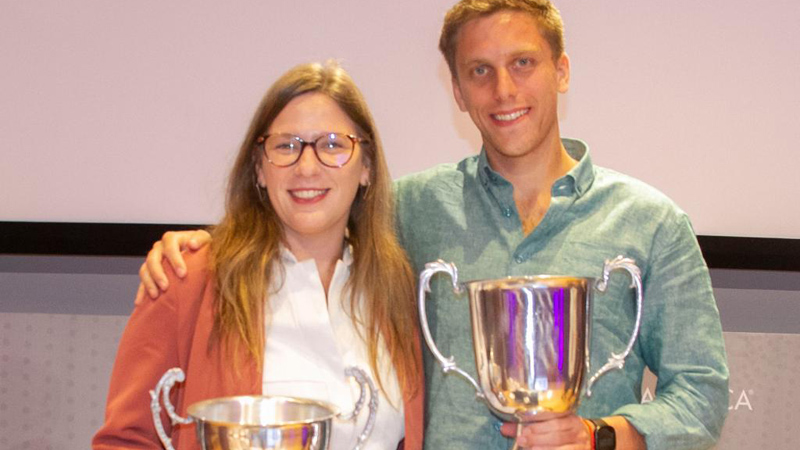
You’ve just won the #elBigPitch award, which is part of the annual #MueveUY event organized by the da Vinci Foundation. What does this award mean to you?
What a huge honor! The other startups that presented were fantastic, and the judges are top-notch. It’s a huge motivator and further proof that, if we do things right, we’ll be on the right track.
We were thrilled to receive that award, and while it may sound cliché, our real reward is seeing people with diabetes improve their health and quality of life by using YEDA, and watching our company grow.
Clearly, this is recognition of the work that all of us at YEDA have been doing. I’d also like to mention Thales Lab, which does such a generous job of helping startups in their early stages. I’d especially like to thank Sylvia Chebi (co-founder of Thales Lab), who gave us the opportunity to present YEDA.
You received various forms of financial support to keep the project going, and, as you mentioned, one of them came from Thales Lab, which is generally associated with software rather than biotechnology. Why do you think they decided to support you?
I believe that software is a powerful tool for creating valuable things, and this is a clear example of that. My view is that these collaborations across different sectors are the foundation of the future of technology. For example, without looking too far afield, our team includes doctors, biotechnologists, bioinformaticians, engineers specializing in artificial intelligence, systems engineers, business experts, and lawyers.
This concept of teamwork is something they instill in us throughout our studies, and we had excellent courses taught by dedicated professors who are leaders in their respective fields and helped us understand this.
What is it like to start a biotech business in Uruguay? Do you think there could be a revolution in this field, similar to what happened with software?
Starting a business in Uruguay and the region is becoming increasingly accessible. While there isn’t as much of a culture or dedication to it as in other countries, that ecosystem is taking shape. On one hand, there are entrepreneurs who take risks to fulfill their dreams, and on the other, there are sources of funding—major business leaders who generously dedicate their time to help these entrepreneurs navigate the exciting path they themselves traveled in the past.
At the same time, biotechnology is still in its early stages of development in Uruguay and the region, so we have a great responsibility to drive that revolution.
My vision is a future where these opportunities emerge, because the applications of biotechnology are endless, and this is just the beginning. It’s a wonderful challenge, and ORT prepares us very well to tackle it.
You studied at the Weizmann Institute in Israel. What was that experience like?
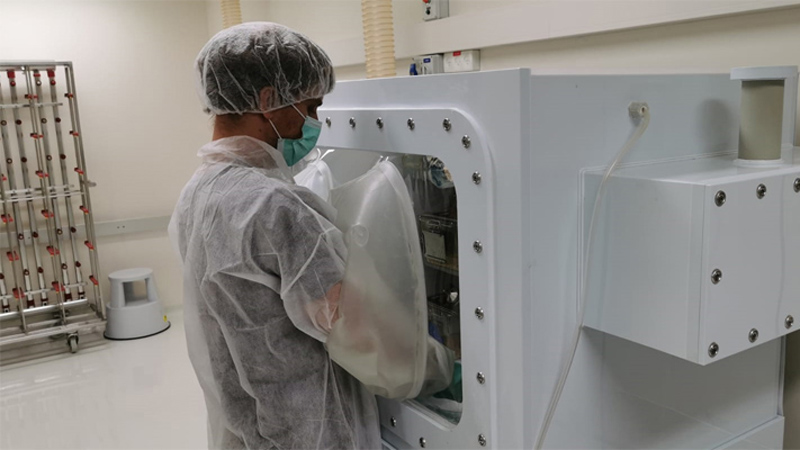
Unbelievable. For me, it was a huge milestone in my career, because I’d been looking forward to it and had worked really hard to get there. The experience was crazy—I was right in the thick of it. The facilities and resources are incredible.
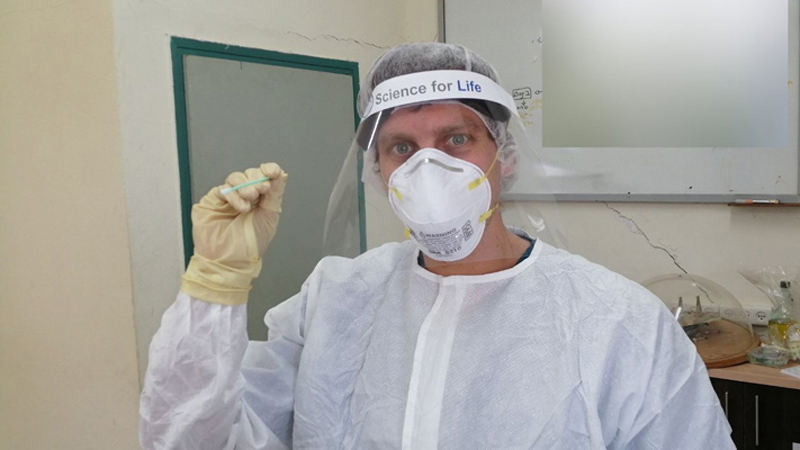
In particular, I happened to be there at the start of the pandemic, and the institute partnered with the military to set up a lab capable of testing 60,000 COVID-19 samples a day. We literally had the human and financial resources to do whatever was necessary. The speed and efficiency with which all of that happened was incredible.
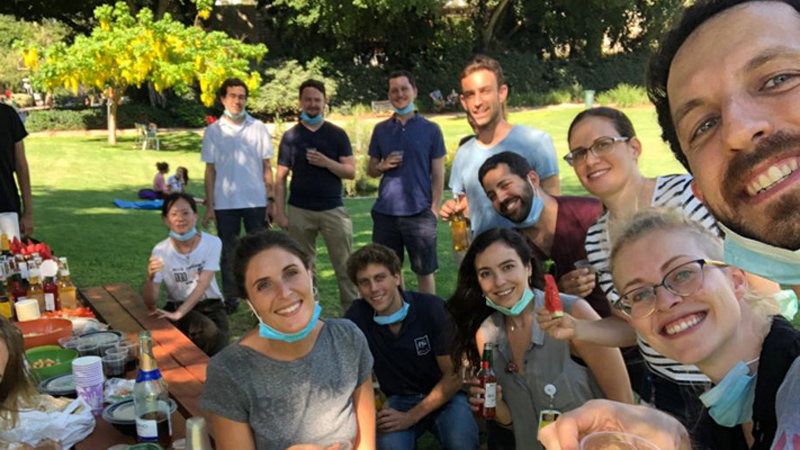
As for the lab work itself, I wrote my thesis on that topic, and in a few months, the research will be published in the prestigious journal *Nature*, bringing this incredible experience to a close. But above all, I made some amazing friends with whom I still talk almost every week. I highly recommend this kind of enriching experience to any student.
I would like to take this opportunity to thank, once again, everyone who has supported me throughout this process: the faculty, professors, and leaders in the field of biotechnology; my family and friends; Florencia; and many others. Because without that support, none of this would be possible, and I believe it’s important to highlight the human side of all this.
Did you feel like you were prepared in terms of knowledge?
I prepared very thoroughly because it was very important to me to make the most of that opportunity.
I studied the subject extensively on my own to be as prepared as possible; I did an internship at the Pasteur Institute to practice some skills before traveling, and I learned how to handle laboratory mice through an elective course I took at the School of Chemistry.
As for my basic knowledge of engineering, biology, biotechnology, and lab techniques, I felt I was extremely well prepared. Since I went to a place where everyone is a graduate student or higher—there are no undergraduates—I was still able to adapt to the work very quickly.
Obviously, I learned a lot while I was there, but mostly about more specific aspects of lab research. The degree program gives you a general overview of everything you need to know, and then it’s a matter of finding your passion and delving deeper into that subject.
What do you remember about your time at ORT's School of Engineering?
I remember it with great fondness and love. It was a wonderful time that’s sometimes hard to fully appreciate in the moment. And when you realize how privileged and lucky you are to have access to an education in something you love, you start to enjoy the journey even more.
I remember the hours spent in class and studying, my classmates and professors, as well as the nerves I felt at every stage of my degree program. Now that I’ve graduated, I’m increasingly grateful to the professors and the institution itself.