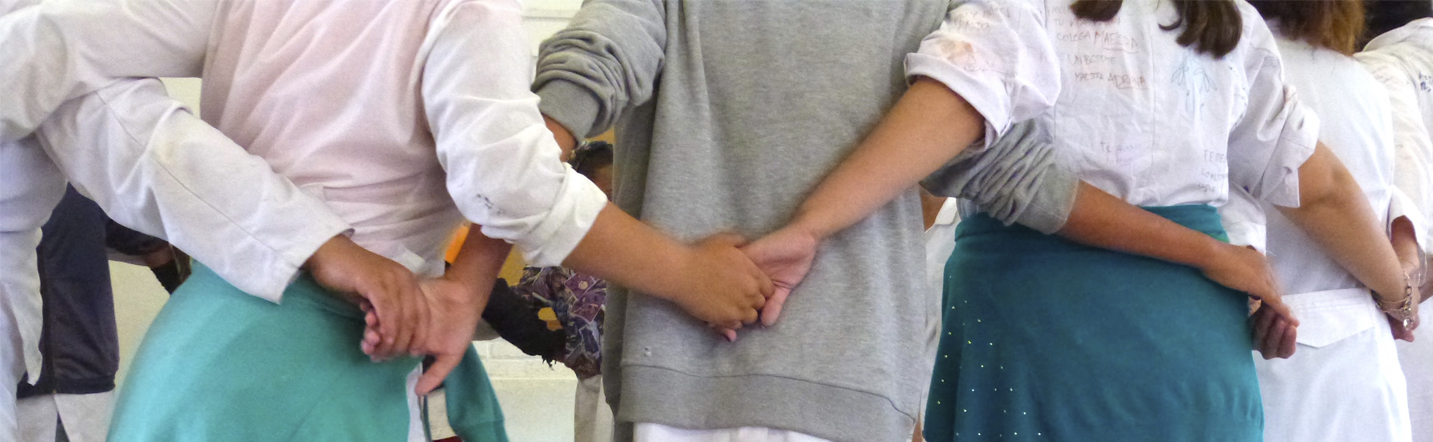
Despite the lack of training among those who teach it, the scarcity of places to practice, and the low priority the education system assigns to artistic content, the pericón is a dance deeply rooted in Uruguayan culture that continues to be taught in elementary schools.
Although this topic is not required for classroom instruction, more than half of the teachers who cover it learned it on their own, with the help of colleagues and online audiovisual resources.
These were some of the findings of the thesis titled “¡Áhura! The Practice of Pericón in Uruguayan Schools: An Educational Perspective.” It was submitted by Analía Fontán as a requirement for her Master’s degree in Education from Universidad ORT Uruguay.
The teacher, researcher, and dancer set out to study the pericón in Uruguayan schools. Specifically, she examined the perceptions of those responsible for teaching dance in Uruguayan public schools. At the same time, she profiled the teachers who instruct this dance and assessed the current status of the pericón.
When we hear the opening chords of the national pericón, many of us Uruguayans are transported back to our childhood. The intensity and nature of the memory can vary—ranging from aversion or apathy to the most vivid sense of joy and delight. But learning the pericón in school may have been our first encounter with dance; it was the first thing we learned, rehearsed, and danced with and for others.
The Pericón: History and Tradition
“The pericón has been danced ‘since time immemorial,’” Fontán was told by older, knowledgeable informants who were children between 1940 and 1950. Although he did not find any school curricula dating back to before 1979 that included instruction in the dance, even at that time it already appeared to be a practice “firmly established as part of school culture.”
The first historical references to the pericón dance were found in the late 18th century, in the “rural communities of the Banda Oriental.” However, the researcher found little information available on the incorporation and institutionalization of the pericón in the educational sphere.
Based on the information he gathered, he concluded that the school pericón does not appear to have been “premeditated or mandated by educational policy,” but is danced out of tradition or custom: “It seems to be the result of a ‘spontaneous’ or grassroots process; perhaps one of the few exceptions in our country where cultural practices have spread from the countryside to the city.”
Researchers of folk music and dance agree that the pericón was one of the most widespread forms of music and dance in the Southern Cone, particularly in the Río de la Plata region, during the 19th century.
Fontán debunked the notion that the pericón is danced in its “original” form, exactly as it was in the past. Contrary to what one might think, he argued in his thesis that it is a dance with roots in European peasant culture. Its most direct ancestor is the European contradanza of the 17th and 18th centuries, which reached the American continent as a result of European expansion.
“Today we don’t dance the same pericón that the people of the Banda Oriental used to dance spontaneously in the days of the ‘Old Homeland’ or the Cry of Asencio,” he said.
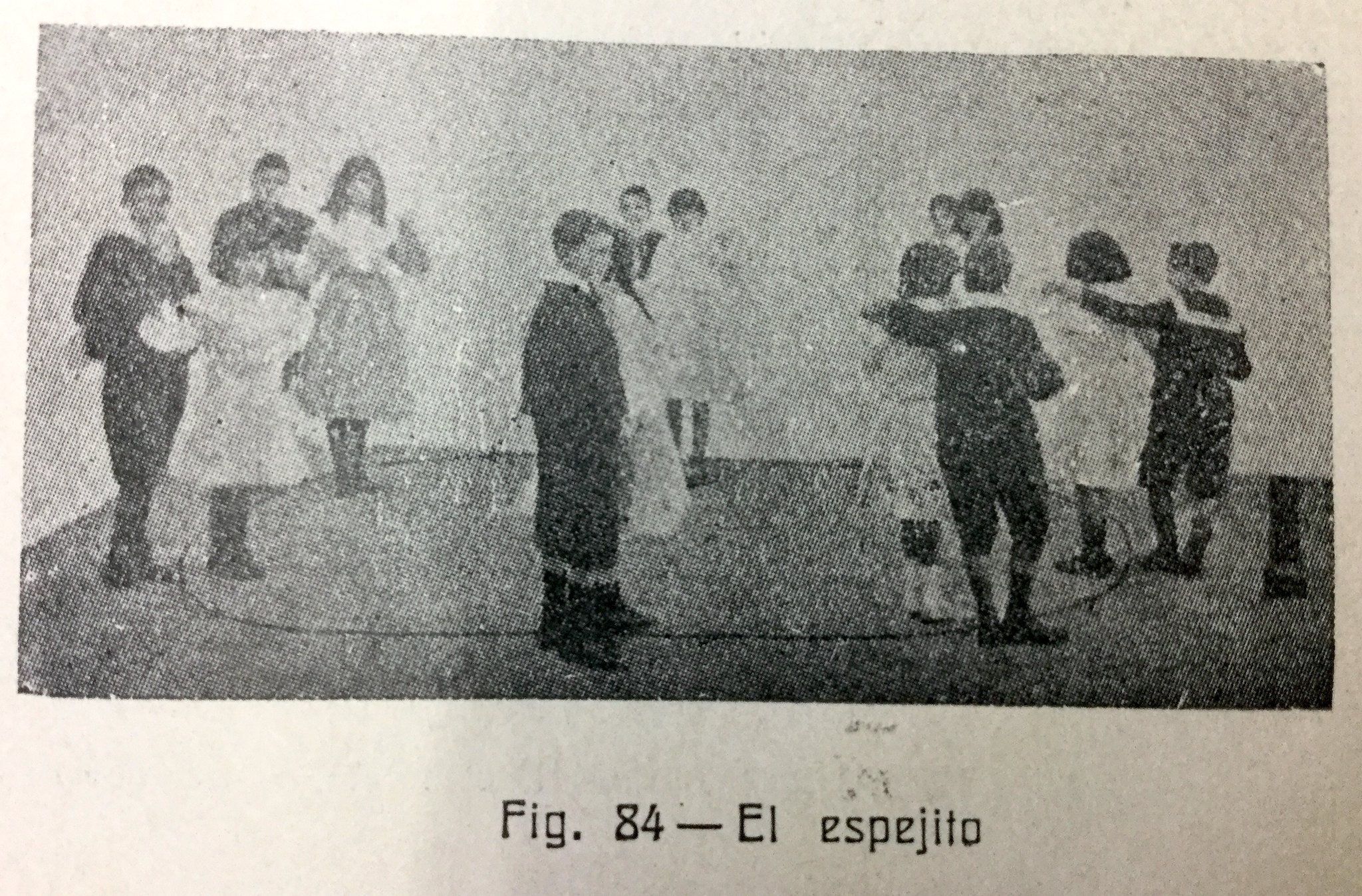
Photos taken from Vignali, M. (1910). Ballroom and Guide to Social Etiquette. Montevideo: O. M. Bertani, Publisher.
The Myth of Mandatory Participation
“Pericón is mandatory in school,” is one of the most common myths about the dance, according to the graduate, although it isn’t true.
Throughout her research, Fontán did not find any document establishing that it is mandatory. In her view, it does not appear that “official regulations or mandates” are the reason why it continues to be taught in schools.
The pericón has endured for generations, as a result of a tradition that connects the school with its community. This tradition is driven, for the most part, by the teaching staff and, in many cases, in response to requests from families or the community.
According to data obtained from a national survey of dance instructors, more than 60% of the teachers surveyed viewed the school pericón as a “tradition to be respected,” and more than 30% as “an option that the teacher may or may not choose.” According to the thesis, only 3.9% believe it is “an obligation to be fulfilled by institutional mandate.”
“If there is one thing that can be concluded from the data, it is that the teachers surveyed do not view teaching the pericón as an obligation imposed on them by the education system,” he added.
How do teachers learn?
Although physical education and music teachers were the first to teach the pericón, today—according to the research—more than 93% of those who teach it are schoolteachers. In general, they are between 30 and 50 years old and have more than 10 years of experience in the field of education.
More than a third of the teachers surveyed have never taught the pericón, while nearly two-thirds have, at some point, taught this dance in a school setting.
However, what training do teachers have regarding the pericón? Since this subject is not included in teacher training curricula, more than half of them learned the pericón on their own. Fifteen percent learned it through informal channels: in a folk dance group or an expressive arts workshop, for example.
With the melody of the pericón playing in the background during her presentation, Fontán explained that the internet and audiovisual media are key tools for learning. Sixty percent of those surveyed said they had relied on videos and online audiovisual resources to teach the pericón. In addition, more than half turned to other colleagues for guidance on the dance.
“This data is significant because it highlights the importance of the pericón dance in school culture in motivating a large number of teachers who, despite lacking specific training or experience in the field of dance, seek to learn it in some way so they can pass it on,” he explained.
The Challenges Facing the Pericón in the 21st Century
Institutional problems, a lack of instructional time for teaching the pericón, and a shortage of places to practice. A lack of training among those who teach it, low motivation among teachers and children, a lack of appreciation for “traditional and popular” culture, and the education system’s low priority given to artistic content. While the list could go on, these are some of the problems that teachers identified regarding the pericón.
All these factors could explain the “decline” of the pericón. In Fontán’s view, it is a practice that has declined in recent years and has been relegated to patriotic events and end-of-year ceremonies. However, during his research, he noted that in places where it is danced, there is “a surprising variety and richness of forms.” In any case, he admitted that has data to verify this, as it would require a comparative study, which does not currently exist.
The educational potential of this school practice is often overlooked and not fully harnessed by the education system.
Those responsible for teaching the pericón argue that it needs to be revised, based on the graduate’s research. Specifically, they propose rethinking it as a “comprehensive project” that addresses the historical, cultural, artistic, and social dimensions of the dance.
Fontán was also told about the importance of incorporating a gender perspective into the teaching of the pericón. For example, consciously considering how to pair dancers, analyzing how roles are portrayed in the dance, and reflecting on the demasculinization of certain figures—such as the bastonero.
“Even so, despite all these problems, people still dance the pericón,” he declared. Although it’s not a mandatory requirement, teachers across the country teach it in countless schools, and children dance it.
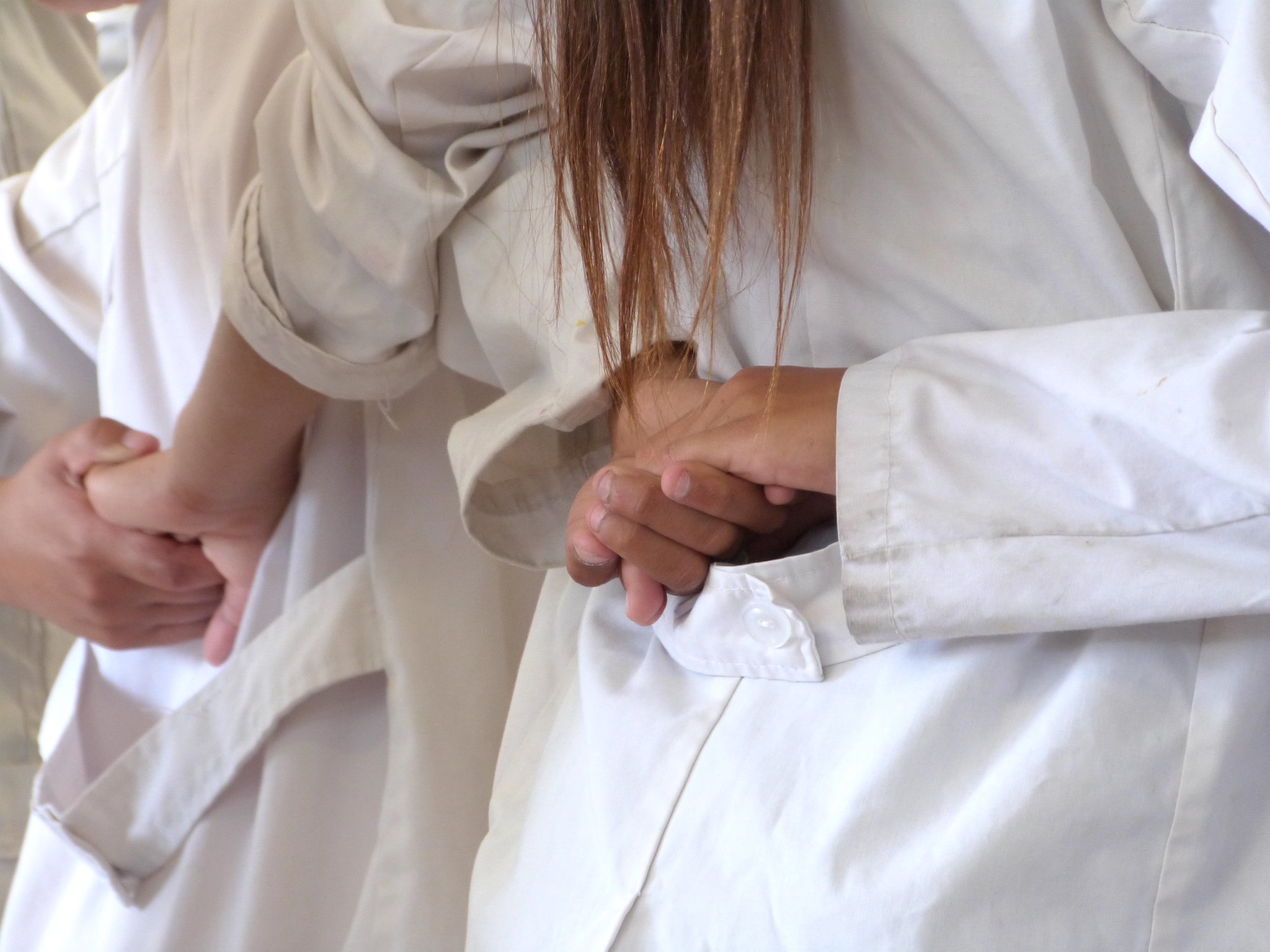
Photos: Analía Fontán.
Pericón is a powerful subject that can be approached as a learning path on many levels simultaneously—both as a means and an end, in essence and in context.
Why Learn the Pericón
“What do children learn from the pericón?” Fontán asked the teachers. More than half responded that they learn values related to identity, tradition, and cultural heritage. A smaller percentage noted that children also learn other values, such as respect, teamwork, and cooperation, as well as “spatial-bodily awareness and coordination.”
For the graduate, this represents a unique opportunity to work on socialization, as well as “address issues of social fragmentation, discrimination, and rootlessness.”
“It seems necessary to recognize and promote the value of pericón as a community practice, given the opportunities for participation and inclusion it fosters in the school setting,” he concluded.