https://www.youtube.com/watch?v=tMqhUAgez5Y
According to Analaura Antúnez, who holds a degree in Industrial Design, ZHÚ—which means “bamboo” in Chinese—is a platform that brings together knowledge and opportunities to develop bamboo-based projects. They operate in three business areas: design services, processing, and value-added products—that is, using bamboo as a raw material for transformation; environmental applications, such as using the plant for environmental purposes, for example, wastewater treatment, windbreaks, and energy; and crop establishment—since bamboo grows spontaneously and wild, making it difficult to determine the species or quantity, something ZHÚ aims to survey and document. “We believe these are three highly complementary areas: we cannot start planting without first developing the design or the application aspect; or we could design using the existing sugarcane, but we feel it is important that the other aspects are developed at the same time.”
“When it comes to our role as a coordinating platform, I always say, ‘If you have a dream involving bamboo, we’ll make it happen for you.’”
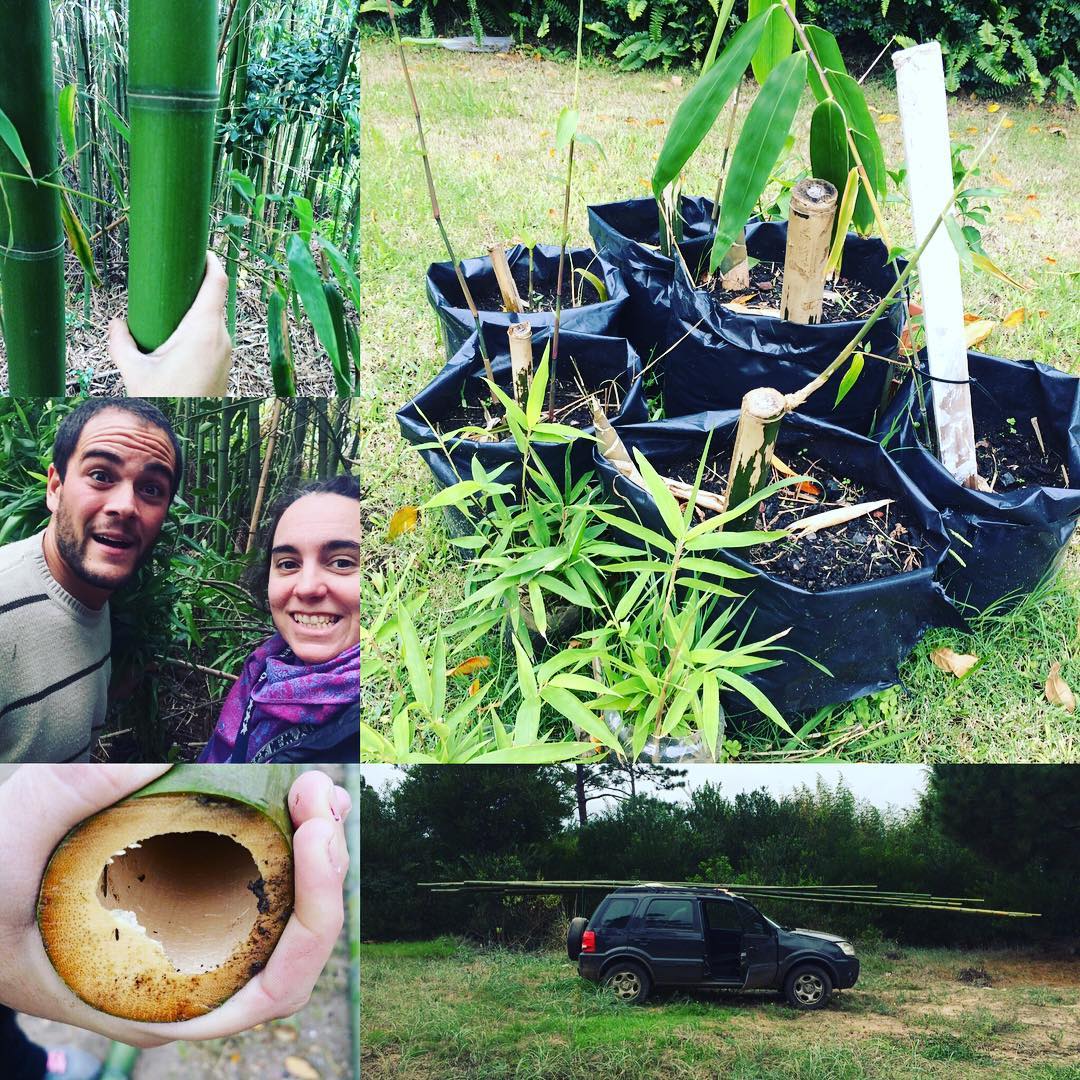
When did you discover bamboo?
My interest in bamboo began when I had the opportunity to travel to China on an academic merit scholarship awarded by the Office of Planning and Budget. I applied, was accepted, and went to study bamboo just as I might have gone to study anything else. Perhaps I was a bit immature. I think bamboo found me.
Here’s a little story: ever since I was a little girl, I always wanted to keep my childhood crib, and when I got into this whole bamboo thing, we looked at it and said, “The crib was made of bamboo.” And then you think: I don’t even know when this whole bamboo thing actually started…
I returned to Uruguay and learned that tacuara is a type of bamboo, and I said, “I have to do something with all this: it can’t be that we see it as a pest here, while over there they use bamboo for everything, at every level.”
What can you do with bamboo?
When it comes to design, you can do whatever you want: handmade, semi-industrial, or industrial. The great thing about bamboo is that it can be shaped using basic hand tools—like a machete.
In China, I gained a lot of knowledge, but it was all theoretical. Then I traveled to Panama on another scholarship, and there it was all more hands-on. There we found ourselves suddenly using machetes, axes, and shovels to prepare the raw materials for building bamboo walls. With few tools and minimal knowledge, you can learn quickly. That allows you to create byproducts: you have the cane, from which you can make half-cane pieces or slats—which are like wedges—and those can also be used later for design; they’re like long, thin boards. On a more industrialized level, those planks are used to make laminates and plywood; once you have the plywood, you can make whatever you want, because it’s just like wood.
And Zhú appeared.
I started developing what was initially called Proyecto Bambú, which later evolved into what is now Zhú.
The business grew and matured. Bamboo has so many potential uses, and there are countless niches and industries—from food to charcoal, textiles, lumber, and energy—that it’s easy to get overwhelmed. Through it all, I was still handling everything on my own, and I wondered how I could start thinking about monetizing the business.
I think it’s always hard to be an entrepreneur—figuring out how to keep things moving. Here, it was an extra challenge because bamboo is considered a pest: it’s one thing for it to be unknown, but it’s quite another for it to have a bad reputation as well.
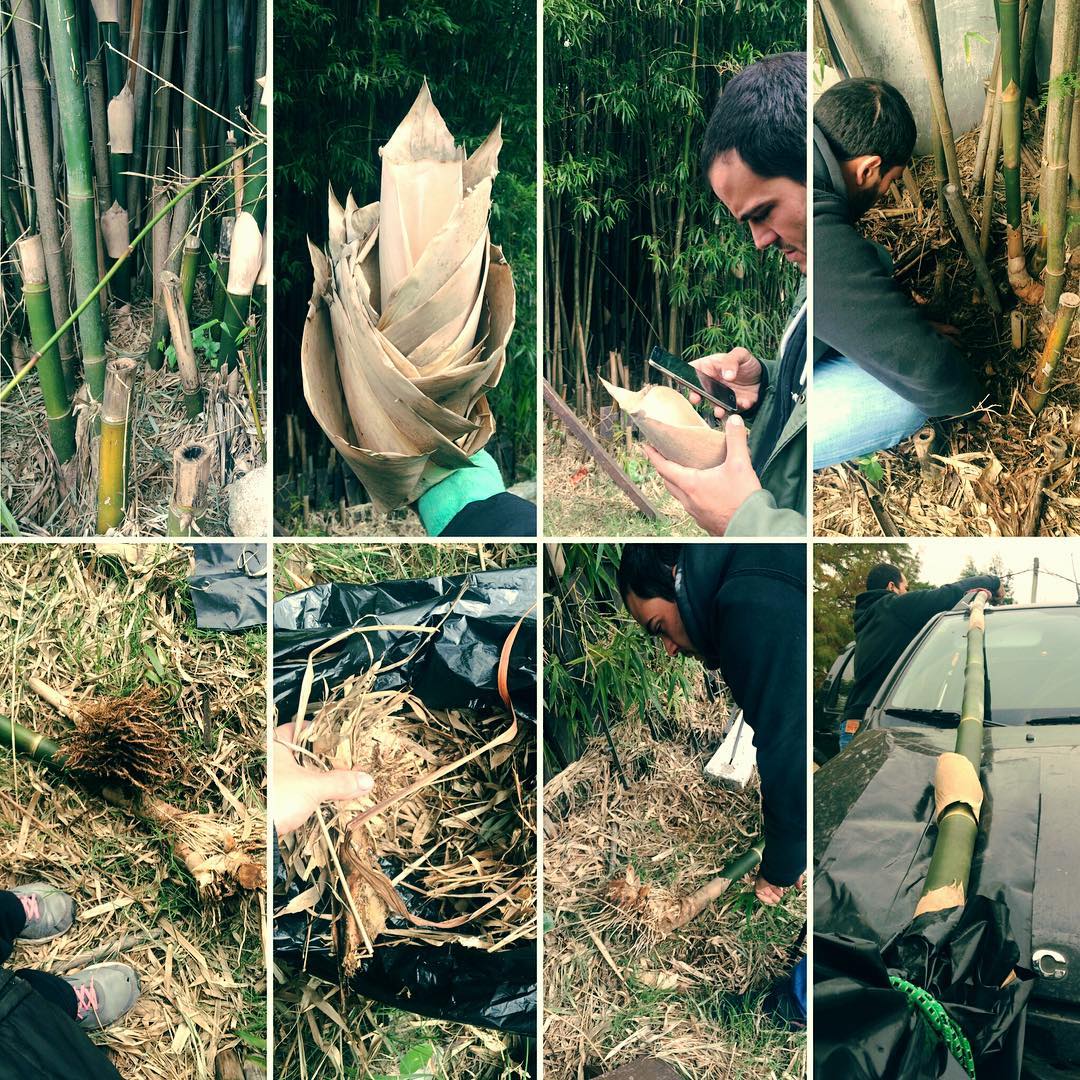
How is the ZHÚ team put together?
By the end of 2014 and early 2015, the team that is now ZHÚ was fully formed, with my two partners: José Burlando and Gabriel Arenares. This has allowed me to focus more on design.
I was looking for a partner who was an industrial designer, but I couldn't find one. A partner comes along when the time is right—when you have a clear vision; when you know where you want to go, the tools and resources start to fall into place. I hadn't realized that I didn't need another industrial designer by my side, but rather someone who could do what I couldn't.
In 2014, I met José Burlando, who had a degree in international business and experience in agro-industrial parks and environmental issues. We needed an agricultural engineer: we met Gabriel Arenares. He knew nothing about bamboo, but he took me out to the fields and I saw what he did—and he did it with such love and passion. I felt like he was just like me, but in a different field, so I knew he was the one.
ZHÚ is one of the Uruguayan startups selected to participate in the 2016 Entrepreneurship Summit, held in Silicon Valley. How did you react to this news?
We are beneficiaries of Endeavor’s “Más Emprendedores” program, and they encouraged us to apply for this opportunity. “Why even apply if you’re not going to get in?” we thought, but the process of applying itself was worthwhile: for me, the application was challenging because they asked very specific questions, limited the number of characters, and it was all in English!
We thought that if we were selected, it would be a miracle—and a bonus track to boot.
Making it this far has opened up a lot of doors for us. First, on a personal level, because when your family and friends support you, you think, “They’re doing this because they love me,” but when it goes beyond that, that’s when you start to think, “Maybe there’s something more to it.”
Silicon Valley is quite a challenge because it's a gathering of entrepreneurs looking for investors and investors looking for startups to invest in.
There are seven startups from Uruguay, and the other six are in the ICT or software sectors. We have to see this as an opportunity because everyone else will be talking about other things—we have to make the most of being different. The fact that organizations and events like this are looking at startups with a different profile—environmental, more sustainable—is inspiring. It makes you think, “I’m not crazy; I’m on the right track.”
We're interested in networking because we don't aim to be just a local platform. It's not just about finding an investor; on a personal level, it's about empowering yourself and fulfilling a dream—saying, “Who would have thought that you guys, with your little straws, would end up in Silicon Valley?”