“Very positive.” That is how Dr. Joaquín Gairín described the work carried out by Universidad ORT Uruguay the ORACLE project: an initiative aimed at analyzing and proposing measures to improve inclusion and equity in higher education.
“I’ve been very impressed; in fact, I think it could serve as a model for other universities,” he said during a meeting with faculty members from Universidad ORT Uruguay who are part of the ORACLE project.
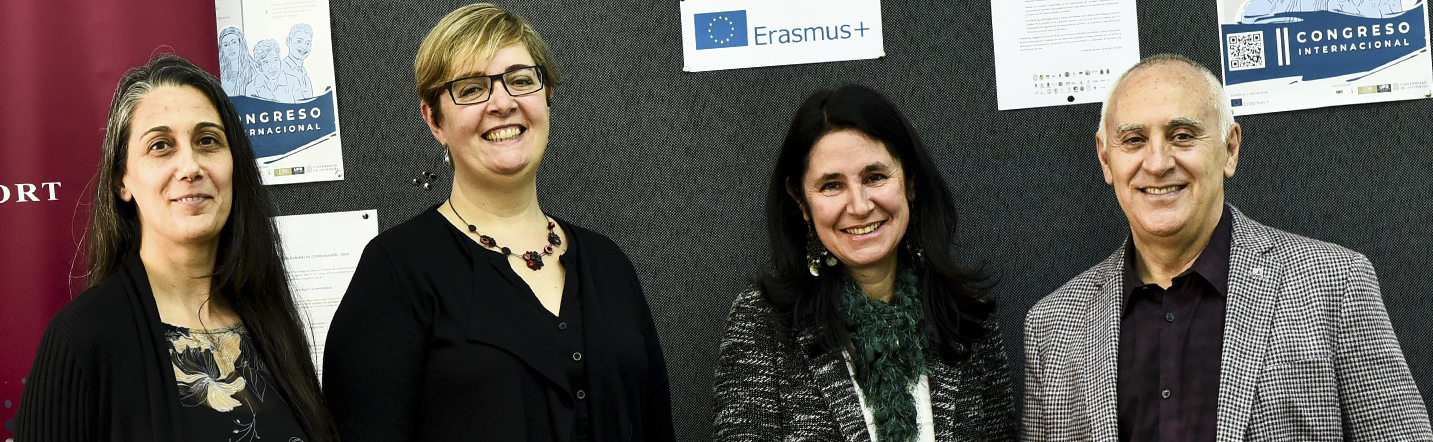
On Monday, June 3, 2019, Gairín met with Andrea Tejera, M.A., Dr. Claudia Cabrera Borges, and Dr. Mariela Questa Torterolo in the room where ORACLE is located at the University.
Time to take stock
“At ORT, there is a group working on the issue of equity; they have assessed the situation at the university, identified specific problems, and set out to address some of them,” noted Gairín, who added that these goals are not always easy to achieve.
“They discovered a world where there is much room for improvement, and what they’re doing is exactly what needs to be done,” he said. But he suggested asking ourselves, 15 years from now, “What characteristics should ORACLE-ORT have?” And working toward that goal.
One of the project’s objectives is to establish an Institutional Equity Unit at each participating university, tasked with assessing the current situation and developing proposals for improvement at the institutional level. The coordinator reported that these units have been gradually implemented at the participating universities but, in his words, the challenge lies in ensuring that “they become firmly established within the organizational structures.”
To achieve this, he specified that it is necessary to develop a work plan and general academic advising programs or specific programs tailored to different groups. He also recommended focusing on a single issue—such as dropout rates, international mobility, or disability—since, otherwise, “the level of specificity tends to be low.”
Becoming indispensable
“Whether resources are available or not, you must convince others that the work you’re doing is important,” Gairín told ORT’s institutional team. He also noted that it is not a “one-off project,” but rather a “necessary space within universities.”
For him, it is essential to demonstrate tangible results and to show that the work being done is a “service”: “The key is to foster a sense of purpose within the university so that everyone recognizes that ORT has a unit dedicated to promoting equity.”

The way forward
As part of the conclusion of the phase funded by the European Union, the members of ORACLE-ORT are planning an event to showcase the work they have done and promote a forum for best practices in inclusion in higher education. At the same time, they are preparing reports to share with the university in order to raise awareness about the current state of equity.
The challenge for them lies in “building relationships” with the other institutions involved in the project and fostering “closer collaboration.”
“Once this phase of the project is complete, ‘how can we continue working on this issue?’” the teachers asked Gairín. “The project’s development cannot depend on external grants, and once it is institutionalized, we must work as a network for and toward equity,” he stated.
“As we have done in other projects, the idea is that once the grant—in this case from the European Union—ends, the universities will keep the momentum going using their own resources: they will meet annually, conduct joint studies involving several universities or countries, and apply for new projects,” he added.
According to Gairín, ORACLE’s long-term goal is to expand the model to other contexts: “We want the network of 37 universities to grow into a network of 100 or 200 because, ultimately, the issue of equity affects all universities and society as a whole.”