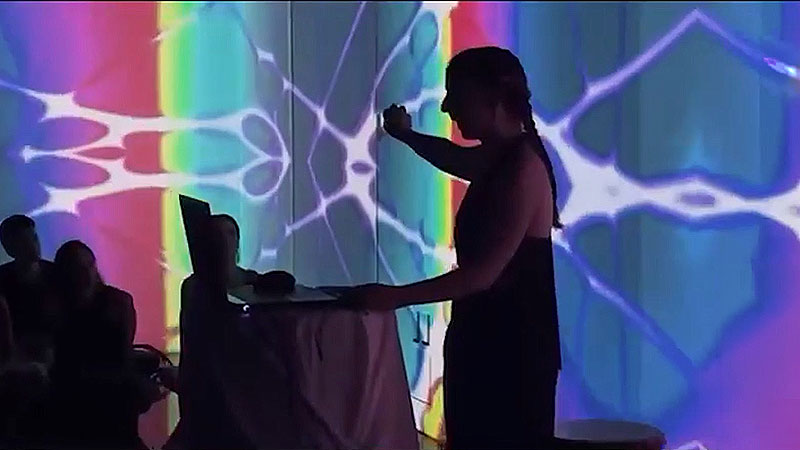
Camila Rodríguez, a graduate of the Bachelor’s program in Design, Art, and Technology at Universidad ORT Uruguay in Universidad ORT Uruguay, uses a brain-computer interface and artificial intelligence to transform her brainwaves into generative art.
A fusion of emotions and technology
This project is a unique blend of emotion and artificial intelligence, integrating art, technology, neuroscience, and design. The initiative aims to demonstrate that artificial intelligence is a powerful tool for expanding human capabilities, much like how the microscope expanded our view of the microscopic world.
I wanted to work with artificial intelligence so that I could show that it’s not something to be afraid of, but rather a tool that gives us the opportunity to enhance traditional human capabilities.
The fusion of these disciplines allows viewers to experience a new form of art—one that literally springs from the artist’s thoughts and emotions. This innovative approach opens new doors for artistic expression and demonstrates how technology can be used to enrich our understanding of human emotions.
The creative process
To create this innovative experience, Camila uses a portable electroencephalogram that records her brain activity and translates it into sounds and images.
“It allows us to scan our brain waves non-invasively, and with the help of artificial intelligence, as a digital artist I can give tangible form to these emotions we feel, ”Camila explained in an interview with Telemundo.
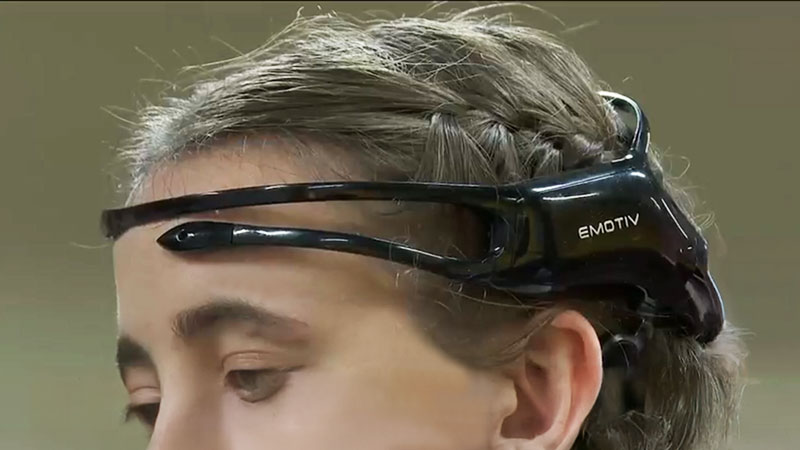
The creative process begins with the placement of an electroencephalogram, which detects brain waves through electrodes. This data is sent to specialized software that converts brain activity into images and sounds.
Camila has spent a lot of time training the algorithm so that it can accurately interpret her thoughts, allowing her to control the artistic performance with her mind.
The technology behind the project
The process involves generating electrical brain activity, which is measured and stored in a device. This data is sent to software that Camila uses to train an algorithm that responds to her brain waves.
“When I think of right and left, the images and sounds move and change according to my thoughts,” he explained on Telenoche.
The device, which is a portable electroencephalogram, can detect brain activity through five channels. This information is transmitted via Bluetooth to computer software, which interprets the data and converts it into cognitive states such as relaxation, arousal, attention, or interest.
Adaptive artificial intelligence allows the system to tailor itself specifically to Camila's brain waves, creating a unique and personalized experience.

An optimistic view of technology
Camila also highlights the importance of technology in art.
"Technology is a tool; there's no need to fear it. When used responsibly and with proper training, it can be very useful," he said on Telenoche.
This optimistic view of technology reflects a growing trend in the world of digital art, where artists are exploring new ways to integrate technology in order to push the boundaries of creativity.
Camila sees artificial intelligence not only as a technical tool, but also as a means of exploring and expressing the complexity of human emotions in a way never seen before.
From thesis to reality
The project originated as part of his undergraduate thesis at Universidad ORT Uruguay, demonstrating the positive impact of integrating technology into art and opening up new possibilities for future exploration in the fields of digital art and neuroscience.
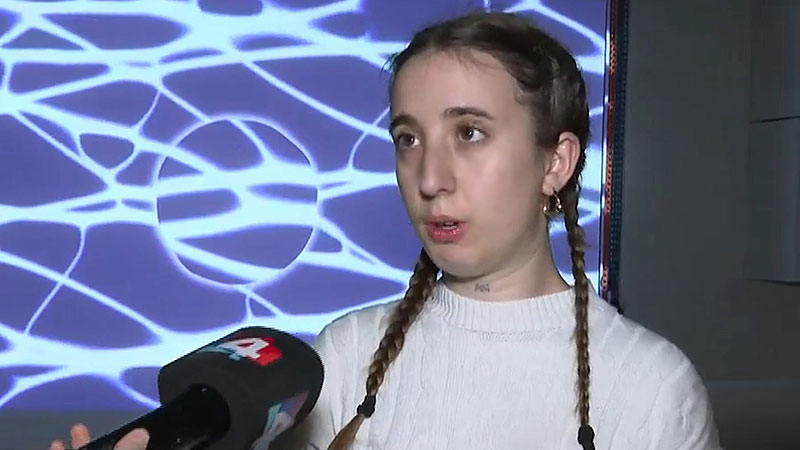
“I aim to explore emotions in this digital age, and I also view technology as a tool that helps us enhance our traditional human capabilities and make visible what cannot be seen at first glance,” Camila said.
The success of this project not only highlights Camila's creativity and innovation, but also the educational quality and support for research provided by ORT.
Through its focus on technology and design, this university is preparing its students to take the lead in emerging fields and make significant contributions across a range of disciplines.