For years, much of university assessment was based on one premise: a student’s submitted work reveals what they know and what they are capable of doing. Generative artificial intelligence has called that relationship into question.
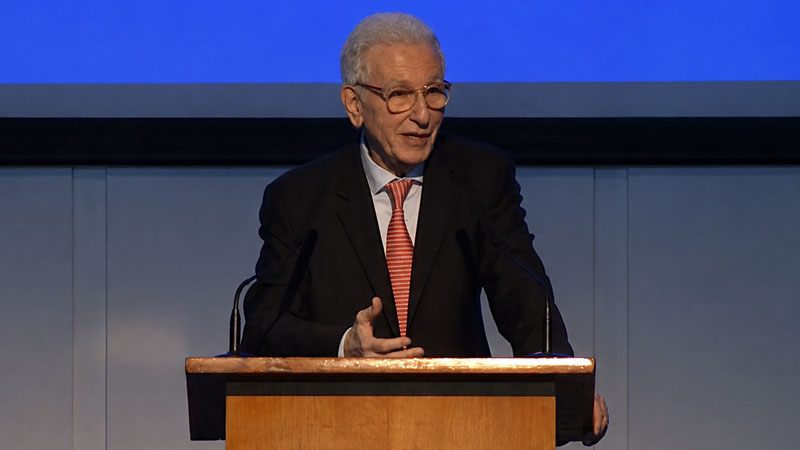
“Now, evaluating the product doesn’t make sense because it may have been generated automatically,” said Dr. Jorge Grünberg, director of the Center for Educational Technology ( rector ) at the National Institute for Educational Technology ( Universidad ORT Uruguay), during the conference “Artificial Intelligence and Education,” which he delivered on August 27 to ORT Argentina students who are about to graduate from high school.
His argument does not call for banning artificial intelligence in the classroom. On the contrary, Grünberg argued that future professionals need to learn how to use it. The challenge for universities, he noted, is to incorporate technology capable of performing part of the academic work without losing sight of what the student has actually learned.
From the Result to the Process
Until recently, an essay, a series of at-home exercises, or a computer program could serve as evidence of a student's performance.
With tools capable of generating these products automatically, Grünberg argued that the focus of evaluation should shift to the process.
“We need to evaluate the process; we need to be much closer to the students, ”he said. This transformation involves reviewing not only the assessment tools but also the way AI is integrated into teaching.
Grünberg explained that the“ Universidad ORT Uruguay ” promotes the use of artificial intelligence and requires students to disclose whether they used it and how, especially when submitting automatically generated content.
He also noted that the university has offersa required course on artificial intelligence for all degree programs and provides competitive grants to support faculty members who experiment with these tools in their respective disciplines.
From this perspective, the alternative is not to try to recreate a pre-AI educational environment, but rather to design teaching and assessment methods that are compatible with the technology that graduates will later use in their professional careers.
“Use (AI) models as a learning aid, not as a substitute for cognitive effort,” Grünberg advised the students.
He also proposed using them as tutors or training partners, and verifying their responses in case they might generate incorrect information.
Your first job changes, too
The challenge of demonstrating what a person is capable of does not end in college. Grünberg argued that, although there is currently no evidence of a large-scale replacement of human jobs, the integration of artificial intelligence is having a particularly significant impact on entry-level job opportunities.
“The jobs most at risk are junior, entry-level positions, ”he said. As he explained, the phenomenon is not evenly distributed across professions: he cited programming as one of the fields where entry-level positions have declined, while in areas where human intervention has intrinsic value—such as medicine, nursing, or teaching— the impact is different.

This situation poses a second challenge for higher education. If some of the tasks that traditionally allowed junior professionals to gain experience can be automated, universities need to create other opportunities for students to demonstrate their skills before they fully enter the job market.
Grünberg recommended that students build portfolios with specific projects that demonstrate“real, demonstrable, and transferable experience.” He also explained that the Universidad ORT Uruguay is working to expand clinical education experiences, with extended periods of student work in real organizations.
The goal, he explained, is for graduates to enter the job market with a higher level of experience than has traditionally been associated with those who have just completed a degree program.
Technology for Every Profession
According to Grünberg, these changes are taking place in a context in which the use of artificial intelligence will no longer be a skill reserved for those who study computer science.
“Knowing how to use artificial intelligence will be essential in any profession,” he said.
At the same time, he distinguished between two ways in which organizations can incorporate these technologies: replacing tasks performed by people or using them to enhance their capabilities. He defined the latter approach as an augmentative strategy and argued that it can modify and redefine job roles rather than eliminate them.
Generative AI, he added, is not “omnipotent” either. Among its limitations, he highlighted the difficulties it faces in continuous and cumulative learning compared to the human ability to quickly incorporate new experiences, as well as its reduced capacity to interpret intentions and relationships based on limited information.
https://www.youtube.com/watch?v=7yVxpRm_Ovc
Thus, the conference raised two related questions. If academic outcomes can be generated automatically, universities need new ways to assess learning. And if some of the work previously performed by professionals early in their careers can be automated, students need new ways to gain and demonstrate experience.
For Grünberg, learning to use artificial intelligence is part of the solution, but it is not the whole solution.
“Don’t try to do better what machines already do very well,” he concluded. “Cultivate your human side—that’s what will set you apart.”