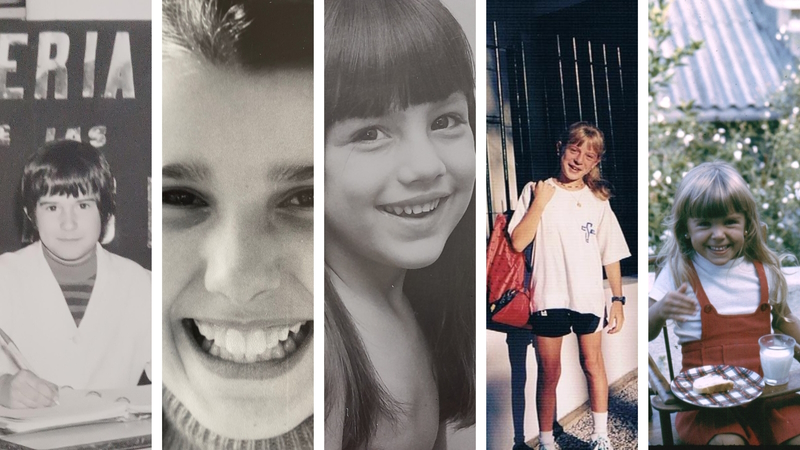
This day serves as a reminder of the vital role that women and girls play in society. Diversity in research brings new perspectives while also empowering talented female researchers.
Some opted for the natural and exact sciences, such as computer and information science, chemistry, or biology; others chose the field of education or the social sciences, with a focus, for example, on economics and business, among other options.
They discovered their calling, specialized in different fields and made their mark, became leaders in their areas of expertise, and today they have the responsibility of serving as role models for so many young girls who want to follow in their footsteps, as well as being a guiding light for those who have yet to discover their path.
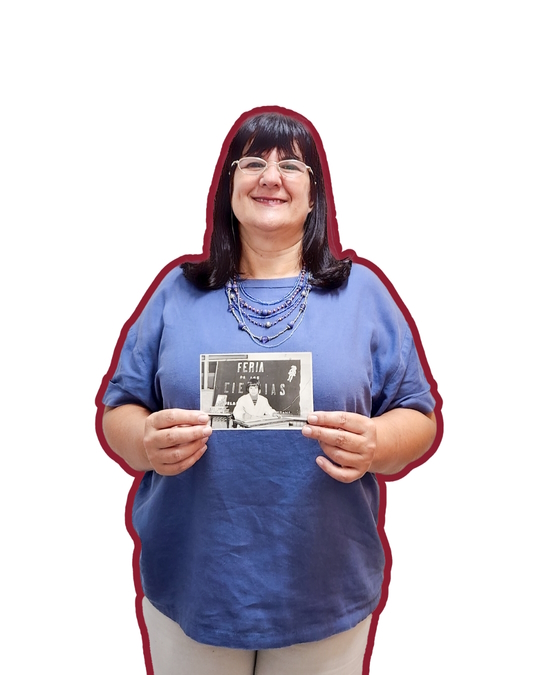 Nora Szasz
Associate Dean for Academic Affairs at the School of Engineering.
Why did you choose to pursue a career in science?
Ever since I was a child, I’ve viewed and understood the world through the lens of mathematics. I loved playing with numbers and discovering the rules that govern arithmetic operations.
I always knew that my path lay in the exact sciences, so when it came time to choose a major, I headed to the School of Science, where I realized that in science there are no wrong answers—only opportunities to learn and discover something new. And I chose computer science, which has been my passion ever since I first explored it.
It was a long and adventurous journey. I ended up earning a Ph.D. in Europe and returned to Uruguay, where I devoted myself fully to academic life. For me, science is a never-ending journey, full of challenges and wonders waiting to be discovered.
What message would you send to the girl in that photo?
When I look at this little girl—who is me 50 years ago—I realize she had no idea that an incredible journey lay ahead of her, one that would take her to places she couldn’t even imagine.
I would tell her: "You have a whole world of discoveries ahead of you. Don't be afraid to make mistakes or take on new challenges, because every experience—good or bad—will bring you closer to your goal. Never stop asking questions, exploring, and learning, because that's how you'll continue to grow and develop as a scientist."
"Always remember that you are capable of achieving anything you set your mind to. Believe in yourself, trust your abilities, and never give up—especially when things get tough. Keep pursuing your dreams with courage and determination, and you’ll do your part to make the world a better place."
Learn about the degree programs offered by the School of Engineering
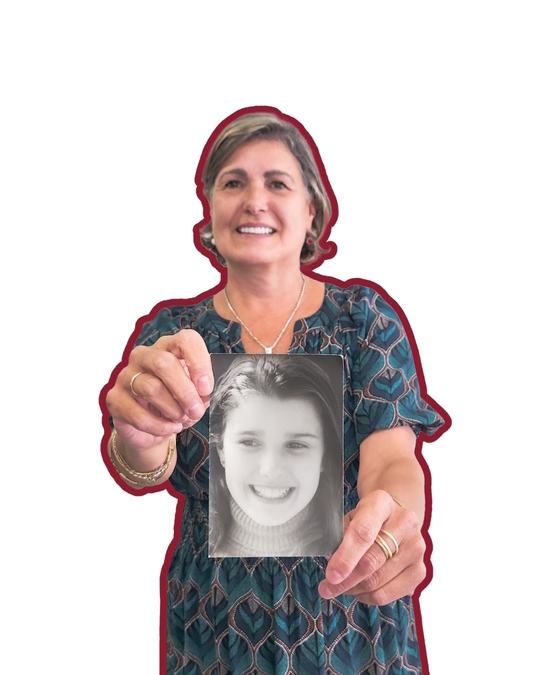 Teresa Cometto
Professor of Marketing, academic coordinator of the Bachelor’s Degree in Management and Administration and the Bachelor’s Degree in Digital Business, and faculty member.
When you were a child, how did you picture yourself in the future? Did you see science as a possibility?
As a child, I had a lot of fun playing on my own, writing stories and poems, and pretending to be a teacher. But what entertained me most was my little pharmacy, made from little jars that I washed and carefully filled with things I found in nature: dirt, leaves, stones, and insects. To be honest, I liked a lot of things; I couldn’t say that science was at the center of my thoughts.
It wasn't until I started high school that I discovered the world of chemistry, research, and its impact on nature. I had no doubt that this was the path I wanted to follow, though I didn't fully realize the impact it would have on my life.
Science has given me an analytical foundation for problem-solving that has broadened my horizons in ways I could never have imagined. It has provided me with tools to tackle life’s challenges with curiosity and resilience in areas that cut across business, beyond the subjects themselves. It has prepared me to pursue a Ph.D. abroad and to build a successful career in both the corporate world and academia.
What message would you send to the girl in that photo?
I would tell you: "You are capable of achieving anything you set your mind to, even if you can't imagine it right now. Don't be afraid to explore your curiosity and pursue your interests. Dare to follow your passion for science, because within you lies infinite potential to make incredible contributions to the world. Science is a guide for making informed decisions, ranging from small daily choices to major decisions that will shape your future. Trust yourself, ask for help, lean on the people who value you, and never stop dreaming big."
Learn about the degree programs offered by the School of Business and Social Sciences
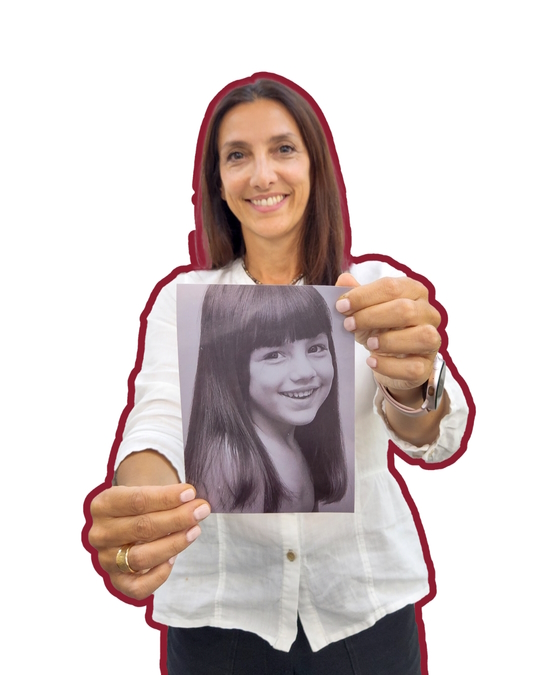 Lorena Betancor
Professor of Biotechnology. Instructor in the Biotechnology Engineering program and director of the Protein Technology Group in the School of Engineering.
Did you face any challenges when choosing your career path? Which female scientist has inspired you since you were a child?
Honestly, I was very lucky because I was able to choose a major that inspired me. It was curiosity that led me to science. I was fascinated by the microscopic world and by the reasons why living organisms functioned the way they did.
As a teenager, I learned about several female scientists through reading—Madame Curie, Rosalind Franklin, and others—who, along with the women in my family, served as role models for me.
Those were the factors that led me to decide to pursue a bachelor’s degree in biochemistry in the early 1990s in Uruguay, where law, medicine, and economics seemed like safer choices.
I later realized that those bold decisions in my professional life led to the most wonderful outcomes. Not only in terms of what I’ve learned from them, but also in terms of the many people I’ve met and places I’ve visited, which have enriched me as a person and in my professional journey—first as a doctoral student and later as a biotechnology researcher.
What message would you send to the girl in that photo?
I would tell her, "Believe in yourself. There's so much to discover. Lean on the people around you, and don't be afraid to ask for help when you feel like you can't do it alone. There's always someone willing to help."
Learn about the Biotechnology Laboratory
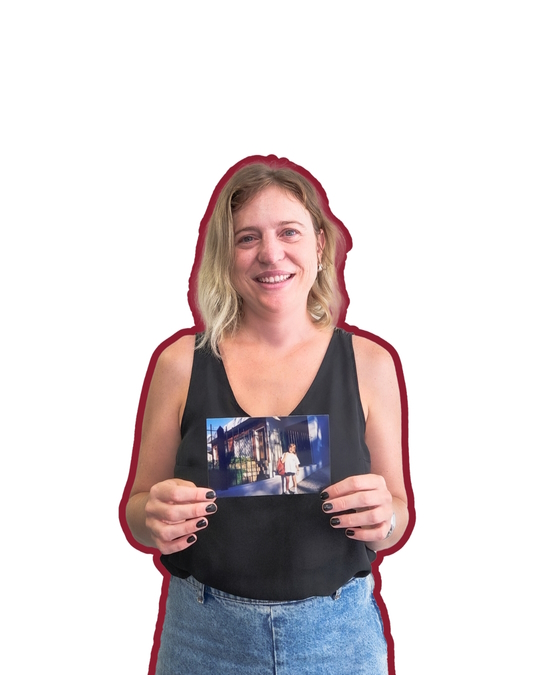 Marina Melani
Bachelor of Industrial Design from the School of Communication and Design. Doctor of Education from the Institute of Education at Universidad ORT Uruguay.
In the field of education, what contributions do you hope your research will make to society? Did you ever imagine this when you were a child?
The areas I have researched and am interested in researching have evolved over time. These days, I am focused on everything related to entrepreneurial competence—people’s ability to adopt a proactive attitude, think creatively, and possess what is known asan entrepreneurial mindset.
I hope to inspire people to work, practice, and explore their creative potential. Creativity is a skill that can be developed; it requires conscious effort and involves adopting certain habits. It’s an area that many people tend to neglect, and I hope to demonstrate that it’s never too late to pick it up again. As a child, I didn’t specifically envision myself in this role—I think, in part, because I didn’t know it was a possible path.
Learn about the degree programs offered by the School of Communication and Design
What message would you send to the girl in that photo?
The first thing that came to mind was the importance of trust. Trusting my instincts, my interests, and what I’m passionate about. Trusting that whatever deeply moves us—whatever it may be—can be a path to professional growth, even if it seems hard to see it that way at first. But at the same time, I realize that trust is built, and that it has a lot to do with the support network that has been with us since birth. I hope that all girls can find the confidence within themselves to pursue their dreams.
Learn about the graduate programs offered by the Institute of Education
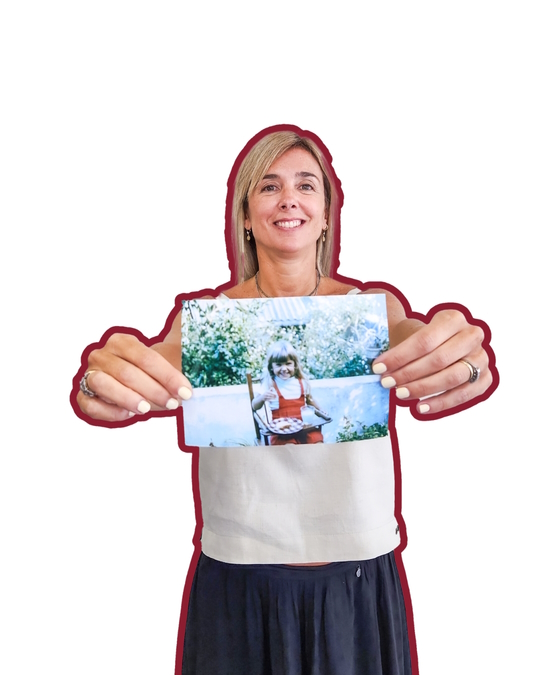 Paula Cardellino
Professor and researcher at the School of Architecture.
In what ways can you see the advancement of science through your work as a doctor?
My doctoral degree was the culmination of extensive research I had been conducting since earning my architecture degree. The need to understand the true relationship between architectural design—especially that intended for educational purposes—and the people who use it led me to apply a scientific method that would allow me to test several hypotheses I had been developing regarding this connection.
Becoming a doctor allowed me to delve into the field of social sciences and contribute new knowledge to the scientific community through the analysis of less tangible aspects of everyday life. It also opened the door to new avenues of research and collaboration with fellow researchers around the world from various fields of study.
What message would you send to the girl in that photo?
It would show him that a genuine interest in architecture and the potential to understand human behavior in relation to the built environment is indeed possible. The social sciences allow us to delve into research in a very direct way by observing human behavior in these architectural spaces.
Learn about the degree programs offered by the School of Architecture