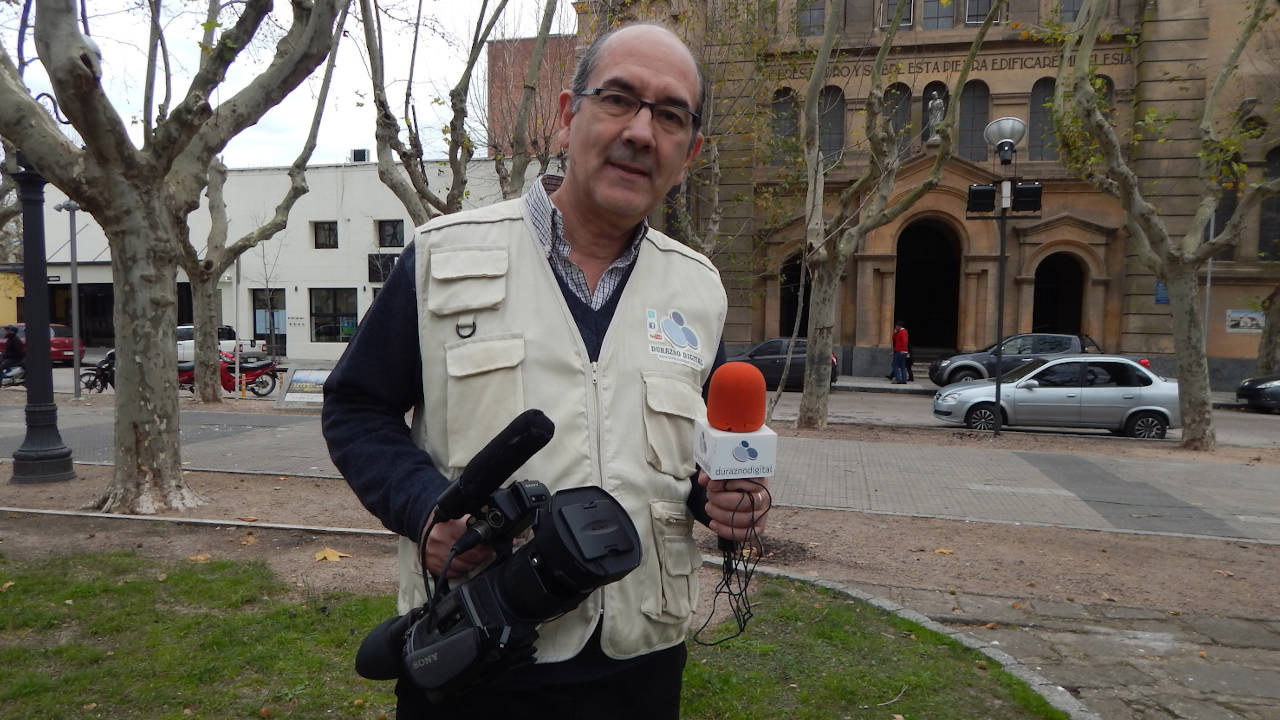
Google's Journalism Emergency Relief Fund program reviewed applications from 12,000 digital media outlets in 140 countries with the aim of “supporting the production of original journalism for local communities in the face of the coronavirus pandemic.”
The Durazno Digital website was awarded $5,000 and recognized by Google for its journalistic contributions during the health crisis. According to Fernando Báez—who holds a degree in Communication from ORT and is the founder and current head of the site—part of the money will be invested in the development of another digital platform focused on entertainment.
The technology that makes the internet possible
Durazno Digital is the most-read news outlet in the Durazno department, averaging 15,000 visits per day. Founded in 2005, it is run by Báez—content curator, writer of most of the stories, and head of business operations—and his wife, who serves as webmaster, image and video editor, and community manager, in addition to updating the social media sections. In addition, two other people contribute articles, opinion pieces, or podcasts. “We work Monday through Sunday, about ten hours a day, except on weekends when we average five hours.”
In fact, the site was created as a result of one of the courses Báez took around the year 2000 as part of his Bachelor’s degree in Communication, where he observed “the range of services and products he could offer online.”

In addition to non-news-related content, the publication also aims to offer “a broader view of what’s happening in Durazno.” Báez acknowledges that it took him quite some time to produce articles “on tourism, landmarks, buildings, notable figures from the department, local communities, a directory of officials, departmental laws… in short, everything that had never before been written in a professional manner with the aim of showcasing it to the world.”
To give a sense of how the project began—and how the network evolved—Báez explained that he started out by purchasing just 5 MB per month. “We couldn’t go over that limit. Most of it was text (which took up almost no space), plus about ten lightweight images I called ‘wildcards’ for sports, politics, crime, and so on, and eight photos for the featured stories that could be uploaded like this: on Monday we’d post four stories with photos, on Tuesday four more, but by Wednesday we had to delete the four from Monday. That was the way to stay within the limit and keep the homepage constantly updated with images and text.”
Our Duty in the Face of the Pandemic
“When the pandemic hit, we realized that the online newspaper had to be an ally to the public.” They created a COVID-19 section, where they tracked the statements issued by the Departmental Emergency Committee and the daily reports from SINAE. They designed social media graphics featuring relevant data, alerts, and advice.
“It’s worth noting that we didn’t step up our efforts to win an award; rather, we believed that was simply what any responsible media outlet should do, because our purpose is to serve society,” he said.
Báez said they received many messages on WhatsApp asking about the accuracy of viral information. “We ended up spending up to an hour a day answering questions and reassuring the public. While it filled us with pride because it was a sign of our credibility, those were minutes we couldn’t devote to creating content.”
In that context, they applied to the Journalism Support Fund and were selected by Google, receiving a grant of $5,000. “This isn’t a fund for future projects, but rather recognition of what we’ve already accomplished. Google didn’t ask us for anything else. However, Durazno Digital will invest part of the grant in developing another digital platform (complementary to the newspaper) aimed at enhancing entertainment.”
Beyond the financial aspect, we celebrate this grant with joy because, for us, it represents recognition of our work and transparent business practices, even though purely digital media are not regulated by the government.