“Insights into Consumer Attitudes in Uruguay During the COVID-19 Pandemic – April 2020” is the title of the study conducted by Terra, a marketing analyst and professor at the School of Business and Social Sciences at Universidad ORT Uruguay. Drawing on her extensive experience in the retail sector, the professor surveyed a total of 80 influential and well-informed women regarding the responses of Uruguayan fashion brands and companies in general to the pandemic. She also incorporated data from the March Consumer Confidence Tracking Report by Opción Consultores.
Decorating and cooking
Given the complex economic situation the country is facing due to the consequences of COVID-19, many Uruguayan households have had to cut back on spending.
Specifically, among the 62% of households that expected a reduction in income, 89% stated that their primary financial strategy would be to cut back on spending, according to a study by Opción Consultores.
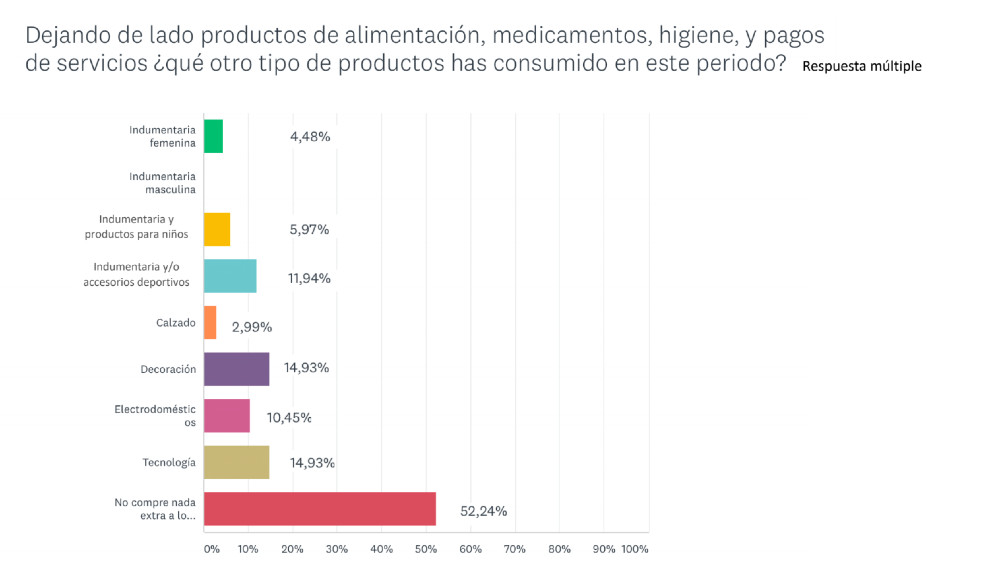
In this regard, the Terra survey found that 52% of respondents purchased only essential items.
Of the remaining 48%, slightly less than half of the respondents purchased household goods. Both technology and home décor were mentioned by 14.93% of the respondents, while home appliances accounted for 10.45% of the mentions. There was a fourth category that was frequently mentioned: sports apparel or accessories (11.94%). The remaining percentage is divided among children’s clothing and products, women’s clothing, and footwear. Men’s clothing received no votes.
According to Terra, since the start of the lockdown, consumers have become aware of needs they had previously overlooked. “Some repairs are handled at home, with purchases from hardware stores, but concerns about home décor are also emerging, which represents an opportunity for the home décor industry,” the expert explains in her research.
The rise in sales of home appliances can be attributed to the fact that cooking has become a form of entertainment and a way to save money. Meanwhile, the increase in technology purchases is due to the fact that not all households had the internet connectivity and basic equipment needed to handle remote work and distance learning.
On the hunt for discounts
In the case of clothing, the figure did not reach 10% and was concentrated in the women’s category. Although sportswear and accessories accounted for 12% of mentions, the vast majority of these referred to the purchase or rental of equipment for exercising at home.
According to the study conducted by the ORT professor, 40% of the respondents stated that they were not interested in buying clothing and footwear at the time they answered the questions. However, 32% continue to follow brands on social media and are open to making purchases. For Terra, this is the audience that is responding to brands’ e-commerce offerings. “They highly value discounts, websites that offer a seamless experience, and free shipping,” she says.
The university’s marketing analyst instructor also explains that in a market where prices had long been distorted by discounts, these discounts are now sought after and valued more than ever in the midst of the crisis. “We also see fertile ground for the growth of the second-hand market, due to its promise of offering brand-name products at affordable prices, and because it is also based on a concept of sustainability, the relevance of which COVID-19 has highlighted more than ever,” she adds.
An opportunity to gain momentum
In its study, Terra concludes that the rapid growth of the online channel for brands appears to be a point of no return. The physical channel will remain key, but so will the ability to deliver a strong omnichannel experience.
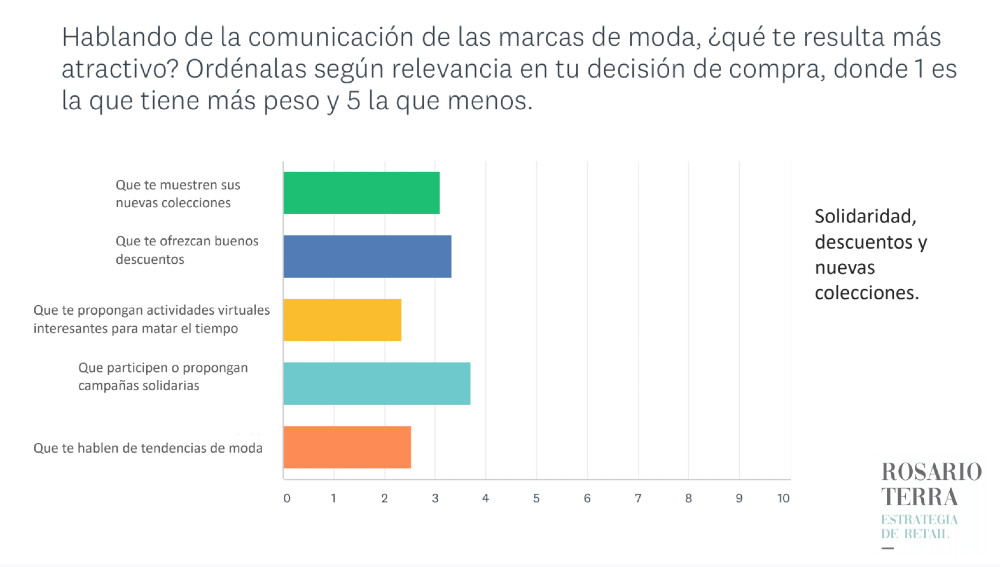
Consumers are calling for empathy regarding the situation and a spirit of solidarity with the community. “This doesn’t mean that brands aren’t ‘allowed’ to sell. In fact, discounts are their second priority, and they want to see the new collections, but in a creative way that takes the context into account,” the professor notes. This is why brands must be flexible, react quickly, and adapt not their identity—which is their main asset—but their way of working to the situation.
Finally, Terra explains that the outlook is very bleak, in some sectors more so than others. “The attitude toward spending is much more frugal, rational, and mindful in most cases, but with flexibility and creativity to respond quickly, solve problems, and identify opportunities, it is possible to come through this—and emerge stronger,” she concludes.