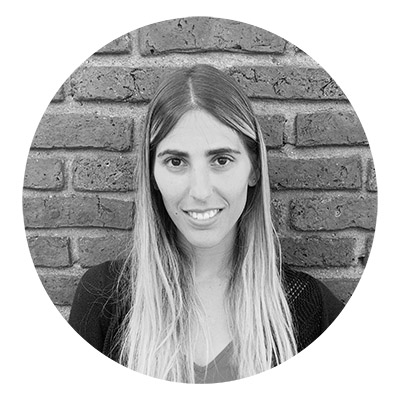
 For the past five years, she has been teaching the courses "Fundamentals of Public Relations" and "Communication for Human Development" at the School of Communication and Design at Universidad ORT Uruguay. This is also his third year as a member of the Institutional Communications team at the Hans Christian Andersen Elementary and High School, where she has also served as a mentor and coordinator since joining the high school.
In the midst of the pandemic, what was it like to defend your thesis online?
The truth is, it was quite a different experience compared to an in-person defense. I must admit that I was very nervous—more so than I usually am in situations like this.
On the one hand, I had the advantage of having worked via Zoom for the past three months, so it wasn’t a new platform for me and I was able to navigate it with ease. On the other hand, one of my strengths is interpersonal communication, and I feel that, in person, through body language and the spontaneity of being there in person, I’m able to express myself more assertively and effectively. In particular, I only knew one of the members of my panel, and in that sense, I feel that being there in person would have made it easier to connect.
It felt quite strange to me to be wrapping up such an important process from home, on my own, and without the magic of in-person interaction—something so central to education. Still, it’s amazing how technology has made these experiences possible, despite the pandemic.
As for the advantages, for many, doing it virtually allowed for better time management during the presentation and access to more supporting materials.
Likewise, some people find that conducting meetings from their own home or office helps them feel more comfortable or confident. As for the challenges, I think they have to do with striking a balance between formality (or protocol) and warmth, to counteract the physical distance.
The pandemic hit and turned everything upside down: it disrupted everyone’s routine, derailed or altered plans, confronted us with uncertainty more than ever before, and—especially for those of us working in education—demanded a threefold commitment to our profession
What was it like to finish your final project under those circumstances? Did it change the process you had been following throughout the semester in any way?
Honestly, it was really challenging. When you take on this kind of work, you set up a schedule with tentative deadlines to ensure each task gets done. In my role as a teaching assistant, my priority became making sure I didn’t “lose track” of any of my students and doing everything in my power to help them continue their learning process. But at the same time, I had to look out for their emotional well-being.
Furthermore, as a liaison between various institutional stakeholders, my role as a bridge was adapted to the virtual environment. And, particularly given my background and youth, I have a high level of digital literacy. As a result, I had to work very hard to train the entire educational team so that the contingency plan—in this case, distance learning—could be implemented quickly and effectively.
So, as I was in the midst of completing my thesis—which had just revealed the importance of the role of the teacher-in-training in today’s secondary education, both as an added value to the educational program and as an institutional link—my priority lay there, driven by ethics and a sense of vocation. As Edgar Morin puts it, in highly changing and complex contexts, we must be “archipelagos in the midst of oceans of uncertainty.”
For the first few weeks, I worked around the clock. Then, once the transition was complete and we’d all adjusted, I was able to get organized and refocus on my thesis—obviously, I had to rethink my plan… But, well, flexibility is one of the key skills of the 21st century, so it was all a learning experience.
What motivated you to continue your education and training?
It took a few years for my calling to become clear to me… I have a bachelor’s degree in Corporate Communication. But about five years ago, I shifted my career to the field of education.
The more I became involved in education, the more I fell in love with this profession and discovered its connections with communication—primarily from the perspective of communication for human development.
I learned through experience and taught myself along the way, but I always knew that as soon as I could, I wanted to formalize my education… And that’s how I ended up pursuing a Master’s degree in Education, seeking a more solid foundation for my professional development and a range of technical resources that would enable me to adopt better educational approaches.
What have you learned, or what is the most valuable insight you’ve gained from the graduate program?
My overall impression is extremely positive. I always recommend the Master’s in Education. I think it’s very well designed. In its blended learning format, it’s demanding, yet accommodating to the work schedules of those enrolled.
I believe that, overall, there is a very good selection of courses, seminars, and approaches. Another strength is the fact that students begin focusing on their final project as early as the first semester.
And, without a doubt, its greatest strength lies in the faculty members—both local and international—who make up its teaching staff. At the same time, ORT’s professionalism, attention to detail, and organization are truly noteworthy. For me, this wasn’t anything new, since I’d already been a student and a teacher there, but it was something that left most of my classmates in awe.
The in-person sessions for exchange, discussion, and collective thinking with the teachers and the extremely diverse group about education were what I valued most during the process
The courses I enjoyed the most were Theories of Teaching, Emerging Contexts for Learning, Management of Organizational Development Processes, and the two seminars, which were a real treasure: one on education policy with Dr. Jason Beech and another on curriculum with Dr. Flavia Terigi.
In your work, what aspect do you think you’ll be able to improve or enhance as a result of completing your master’s degree?
I’ve been doing this ever since I started the master’s program. I think this program provided me with a lot of insights and theoretical foundations for many of the ideas and concepts I already had about education. I feel that the master’s program strengthened me as a professional and, in a way, helped me clarify my professional and educational profile.