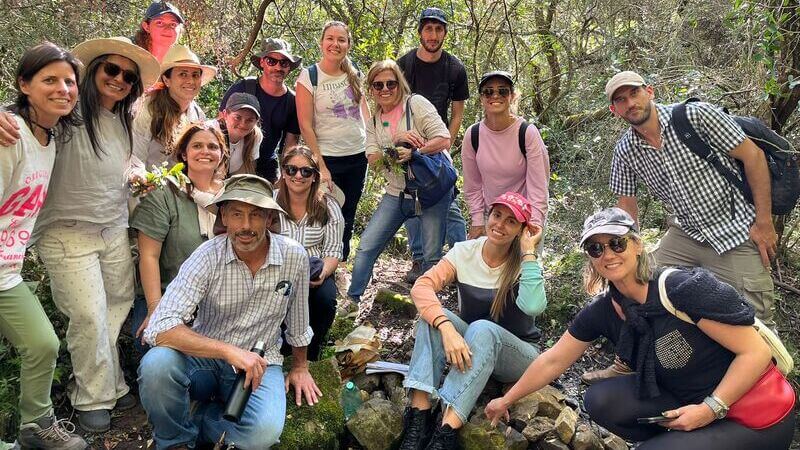
Seeking to raise awareness about animal cruelty and to support the Reserva de Vida farm, landscape architects and aspiring landscape architects gathered near the town of Pueblo Edén, in the department of Maldonado, to work on a prominent landscape extension project.
In Defense of Life
Reserva de Vida, by the visual artist Lara Campiglia, began as a sanctuary for horses that had been abused or abandoned. Today, its mission is to raise awareness about animal abuse and offer people the opportunity to support the cause by adopting or sponsoring horses and dogs.
Located in a mountainous region covered in native forest, the farm spans 88 hectares. From there, Campiglia is working to address some of the most challenging issues related to animal abuse in Uruguay: irregularities in hunting controls, and non-compliance with animal welfare and, especially, blood farms.
On these farms, a practice known as “mare bloodletting.” This practice, banned in various countries around the world and little known but widespread in Uruguay, consists of the regular extraction of blood from horses, specifically pregnant mares, with the aim of obtaining a substance called PMSG (equine chorionic gonadotropin). This substance is used in the livestock industry to stimulate ovulation in other equines, cows, and other animals, thereby facilitating their commercial reproduction.
The the collection of blood from pregnant mares to obtain PMSG is considered inhumane and has been the subject of controversy and condemnation worldwide. This practice is believed to cause unnecessary suffering to the animals and raises ethical concerns regarding the treatment of the species.
While many countries have banned this practice within their borders, they do not regulate the purchase of PMSG. And one of the countries where there are no regulatory barriers to the production and sale of this substance is Uruguay.
- You might also be interested in reading: “What does a landscape architect do?”
Landscape Architects Against Animal Cruelty
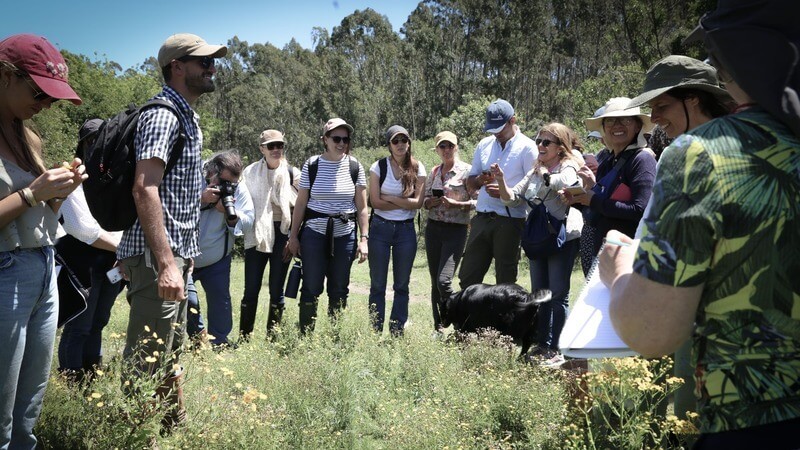
In support of this project and Campiglia’s work at Reserva de Vida, in addition to students, faculty, and graduates of the Landscape Design Technician program, “we were joined by Agricultural Engineer Andrés González (a specialist in identifying Uruguay’s native flora),” noted Architect Paula Rial, the program’s academic coordinator, who added:
We surveyed the area's flora and compiled a herbarium to create an inventory and develop a management strategy.
According to Rial, this is the first phase of a larger project, which includes planning and planting, with the aim of creating a reserve of native flora in the area.