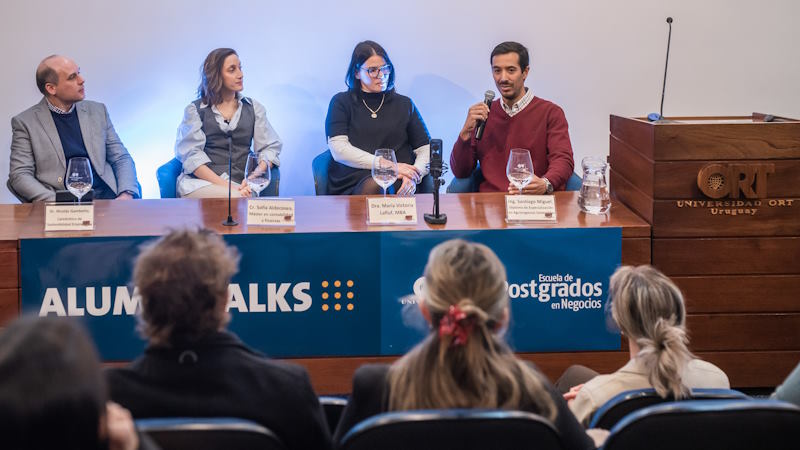
The event took place on July 31 in the auditorium at the Pocitos Campus, with Dr. Nicolás Gambetta—professor of Corporate Sustainability and academic coordinator of the graduate programs in Accounting and Taxation—serving as moderator for the discussion between Cra. Sofía Aldecosea, who holds a Master’s degree in Accounting and Finance; Dr. María Victoria Lafluf, MBA; and Santiago Miguel, who has Specialization Diploma in Sustainable Agribusiness.
Key points were discussed, such as:
- corporate sustainability strategies,
- application of ESG tools in real-world projects,
- creating a triple impact: environmental, social, and economic,
- cross-sectoral collaboration (SDG 17),
- the challenges involved in maximizing positive impact.
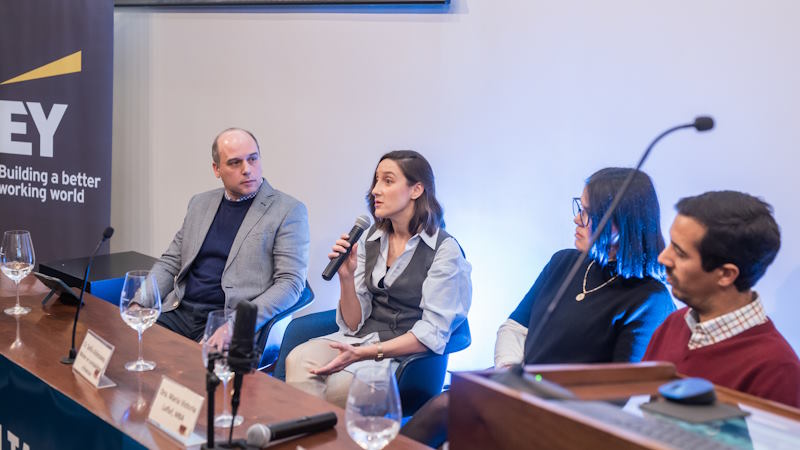
Gambetta explained that there are currently new regulatory frameworks—IFRS S1 and S2 at the international level and the European framework based on ESRS standards—that are pressuring companies to disclose how sustainability issues impact their financial statements and their businesses. “In order to provide this information, companies need to make changes to their business models.”
We need responsible leaders who understand how sustainability issues affect financial statements and business operations.
Dr. Nicolás Gambetta
Integrating sustainability into everyday life
Sofía Aldecosea, a Certified Public Accountant, works as a specialist in the Environmental Control and Performance Division of the Ministry of the Environment. In her presentation, she offered insights into the role of accountants in the transition toward business models with a triple impact: environmental, social, and economic. “I believe the main tool the Master’s program gave me was purpose, because after completing my thesis (on the key success factors of B Corporations in Uruguay), I was able to connect my profession with a calling—the calling of triple impact and of striving to support that transition in business models.”
In this context, what are the challenges? Aldecosea replied: “Trying to view the triple bottom line as an opportunity rather than a cost.” He also noted that “there is some skepticism regarding the generation and management of knowledge related to sustainability and the competitive advantages it offers.”
We are constantly having an environmental, social, and economic impact. Sustainability may seem like a new concept, but what is really changing is the way we view, perceive, and measure these impacts.
Sofía Aldecosea, CPA
Technological innovation in the healthcare sector
Dr. María Victoria Lafluf, director of the Ministry of Public Health’s Childhood Program, presented as a case study the technological service she designed in her MBA business plan: the use of 3D biomodels to perform virtual endovascular diagnostics and surgical planning. Using this method, it is possible to improve diagnostic accuracy and surgical safety without increasing costs or resorting to invasive procedures.
According to Lafluf, there are two challenges: staying at the forefront of technological development and ensuring that the government keeps pace with this momentum through appropriate regulatory measures.
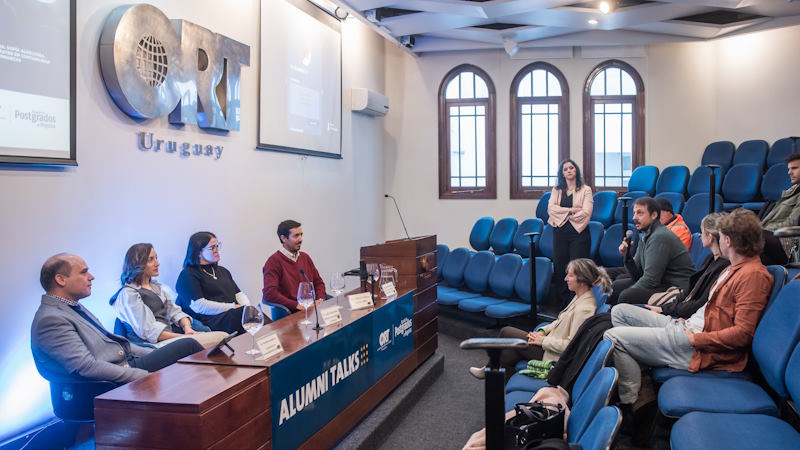
What skills are needed to achieve a triple impact?
Drawing on her experience, the director of the Children’s Program replied:
- the perspective of the multidisciplinary team,
- an analysis of the environment and the sector in which the centers of power operate,
- ethical considerations,
- change management,
- everything related to finances.
Sustainable agribusiness: “Think globally, act locally”
Santiago Miguel is an executive at the Uruguayan Association for No-Till Farming (AUSID) and serves as a technical advisor to crop and livestock farmers. He shared that completing the Diploma in Sustainable Agribusiness “was the catalyst” for addressing these issues in a structured manner within his company, where they decided to create a sustainability committee “to address sustainability issues in a structured way, before the issues address us.”
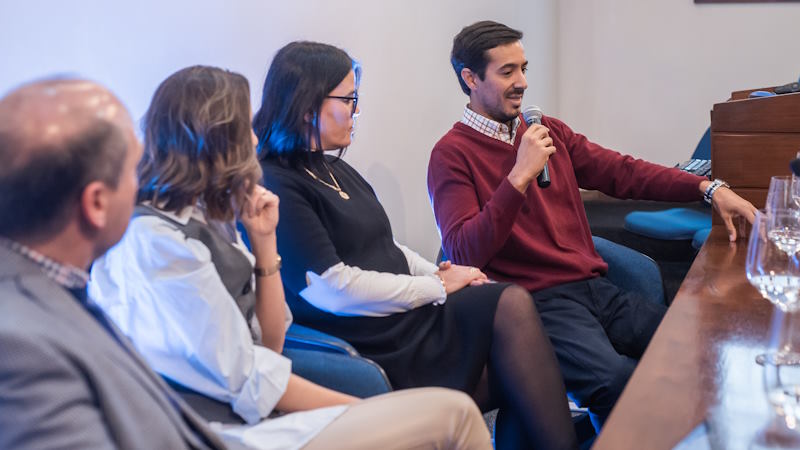
While there are challenges, there are also significant opportunities for companies, Miguel noted. “Addressing these issues can ultimately make companies more resilient and help them attract top talent,” he explained.
We need to think globally and act locally, because the sum of all these small actions can yield benefits.
Santiago Miguel, Engineer
https://youtu.be/sm-K6DR2VnE?t=2