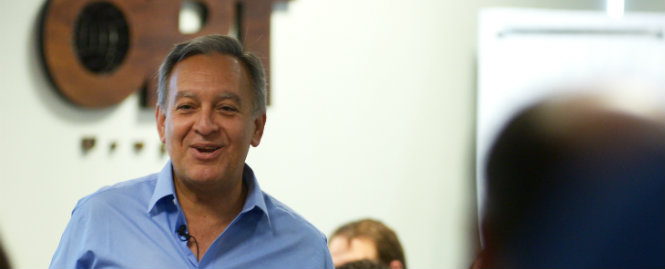
"El 94% de los errores en un proceso están provocados por defectos del sistema", señaló el Ing. Luis Miravitlles, MBA, durante la conferencia "Lean management: optimizando la cadena de suministros".
A través de casos y ejemplos prácticos, Miravitlles -quien se desempeña como consultor de operaciones- explicó qué es el lean management y destacó la importancia de implementar un sistema de gestión óptimo para la cadena de suministros.
El evento tuvo lugar el martes 16 de agosto de 2016 y fue organizado por la Escuela de Postgrados de la Facultad de Administración y Ciencias Sociales de la Universidad ORT Uruguay, como parte del Ciclo de Charlas de Management y Negocios.
Lean management : su particularidad y su valor
Según explicó Miravitlles, profesor del área de dirección y operaciones y tecnología del IE Business School, el lean management implica desarrollar procesos que sean "muy eficientes" y no tengan "ningún desperdicio", ya que dicho elemento "es la cara reversa del valor".
El transporte, movimiento o almacenamiento innecesario, la sobreproducción, la falta de calidad en el trabajo, los tiempos ociosos, no priorizar adecuadamente o no saber aprovechar el talento del personal: esos son algunos desperdicios, según los principios del lean management.
Este modelo de administración tiene su origen en el sistema de gestión de operaciones popularizado por la empresa de automóviles Toyota. Hoy en día también se aplica con éxito a los servicios, al trabajo en oficinas y a los departamentos financieros o comerciales, entre otros ámbitos.
El objetivo del lean management es observar todas aquellas actividades que se realizan en una empresa y descubrir qué aporta valor. Lo que no, debe ser minimizado al máximo y, si es posible, ser eliminado.
Cómo poner en práctica el lean management
"Estadísticamente se ha comprobado que solo el 6% de los errores que se producen en un proceso están causados por el personal. El otro 94% están provocados por defectos del sistema, que inducen al trabajador al error", señaló el orador. "Lo que hay que arreglar es el proceso", agregó.
A su vez, precisó que siempre hay que mejorar tres cosas de cualquier negocio: el servicio, el costo y la calidad. Para lograrlo, existe una serie de metodologías y herramientas: el lean management es una de ellas. Propone eliminar el desperdicio –también conocido como "muda"–, los tiempos muertos y los espacios vacíos e innecesarios, para organizar un flujo que funcione de forma organizada y estructurada, donde no se pierda tiempo.
Atención constante, pragmatismo y una aplicación global e integral, así como una evolución constante y continua: esos son algunos de los requerimientos para llevar a la práctica el lean management. También es clave hacer un análisis del proceso y ver cómo se trabaja, así como cronometrar los tiempos que lleva realizar determinada actividad.
Con todos sus beneficios, esta modalidad de trabajo implica mucho esfuerzo. "Al final, es muy difícil de hacer y muy difícil de aplicar", reconoció.
Liderazgo y constancia: claves del lean management
"Si uno quiere aplicar temas de lean management en su organización, es fundamental el liderazgo", sentenció Miravitlles. Si dicho elemento no funciona bien, las ideas se terminan convirtiendo en "proyectos que pasan".
Si bien hay gente que lo toma como un "proyecto", en palabras del ingeniero el lean management se trata de "una manera distinta de trabajar". "No es algo que uno tenga que hacer de más; es conseguir cambiar la mentalidad de las personas que manejan y gestionan las organizaciones y los procesos, para intentar hacer las cosas de una forma distinta", aclaró.
Asimismo, dijo que es importante tener la técnica, mirar, analizar, ensayar, ver los defectos e irlos eliminando. Sin embargo, es normal cuestionarse hasta qué punto es posible perseguir la perfección. Para contestar dicha pregunta contó el caso de un amigo basquetbolista que para conseguir un alto porcentaje de triples suele quedarse, después de cada entrenamiento, tirando más de 1000 veces al aro. "Al final entran", sostuvo.
A pesar de que "no se puede alcanzar la luna el primer día", en su opinión "es importante alcanzar un ritmo en el que siempre se esté mejorando".
Un caso de éxito: el restaurante Benihana
Miravitlles contó a la audiencia un caso práctico y exitoso de eliminación del desperdicio: el restaurante japonés Benihana. Allí no hay mozos, sino múltiples estaciones con cocinas, donde un chef le prepara el plato a los comensales. Se caracteriza por tener un menú corto y simple.
A su vez, al cocinero se le acerca la materia prima, no tiene que abandonar su puesto de trabajo, por lo que siempre está generando valor. Sumado a ello, siempre se completan las mesas y el espectáculo no dura más de 30 minutos, por lo que la rotación es alta.
De acuerdo con el consultor, a diferencia de los restaurantes tradicionales, el Benihana no tiene "mudas". No hay desplazamientos improductivos o tiempos muertos, por ejemplo.
"Te están cocinando y sirviendo al mismo tiempo. Te sentás, comés, te hacen un espectáculo y te vas", narró. "Es el restaurante con la mejor relación rotación-precio del mundo", concluyó.
Video del evento:
https://youtu.be/Y7O-mAifJ1o
Galería de fotos: