What are the learning styles of psychology students at the University of the Republic in clinical courses? How do these styles relate to age, academic performance, and gender? What is the students’ perception of their preferences when it comes to acquiring knowledge?
Those were the questions that guided the research conducted by Gabriela Prieto, an assistant professor at the Institute of Clinical Psychology in the School of Psychology at the University of the Republic (Udelar).
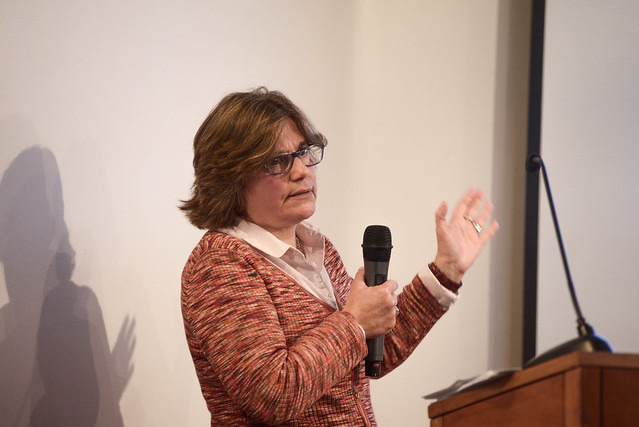
On Wednesday, May 17, 2017, in the auditorium at the Downtown Campus, Prieto defended her dissertation and was awarded a Ph. D. in Education.
What were the specific details?
The Thesis The learning styles of psychology students at the University of the Republic in clinical courses, as the title makes clear, identifies the population under study.
For this reason, Prieto emphasized that the results can be generalized to the Faculty of Psychology at Udelar, but that “it would not be appropriate” to apply them “to other populations.”
Throughout her presentation, the speaker also explained that the research was based on a mixed-methods approach, although the focus was on the quantitative aspect: she administered a questionnaire to 300 students in the School of Psychology.
In addition, he conducted 30 follow-up interviews with students taking courses that included clinical content.
Why study this topic?
“Identifying learning styles can be seen as a valuable contribution to teaching,” Prieto said.
According to what he said, understanding these learning styles allows teachers to determine which teaching strategies are best suited for their students.
In fact, this could even improve academic performance. He also pointed out that this is an aspect that, in these areas, is “often” overlooked.
He also explained that clinical learning “has specific characteristics that do not necessarily align with rote, repetitive, or pragmatic learning”: “It does not follow the strategies used in other types of learning.” These ideas served as the foundation and motivation for beginning the work.
What conclusions were reached?
With regard to the characteristics of psychology students, the doctoral dissertation showed that women are in the majority and that the average age is under 25.
They also describe themselves as observant, reflective, responsible, and reliable. They state that reading and practicing through case studies are their preferred strategies for addressing and mastering clinical content. According to Prieto, this preference is linked to the predominance of perceptual and visual learning.
At the same time, during the defense, he concluded that a reflective learning style predominates: “This indicates that these are students who rely on observation and data collection.” In his words, the presence of this style aligns with the skills necessary for learning clinical content.
Prieto also noted that, as students get older, there is a greater tendency toward a global perspective, which, in her view, is an “expected” development. However, she cautioned that psychology students often lack the kind of holistic thinking that is “essential for addressing clinical content.”
Finally, he argued that they have limited adaptability and struggle to process and engage with theoretical material.
https://youtu.be/hbq4jx-UJ-M?si=Jj5TvdT1aWWplXbP