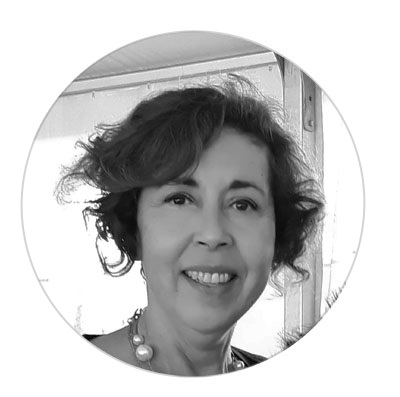
 Chilean student Claudia Pinares has always wanted to pursue a doctorate—to continue her education and acquire the tools needed to contribute to educational improvement.
But Chile’s most prestigious graduate programs required him to commit himself fully to his studies. He had to devote himself entirely to his studies and resign from his position at the Center for Pedagogical Improvement, Experimentation, and Research, an agency under the Chilean Ministry of Education.
So he started looking into other options. Two students who had earned their PhDs in Education at Universidad ORT Uruguay . They warned him that it was a “demanding” process, but that it would give him the opportunity to work and pursue his graduate studies at the same time. They also emphasized the high quality of the university and its faculty.
She did some research online, asked around, made up her mind, submitted her application, and was finally accepted. In July 2018, Claudia Pinares boarded a plane and set foot on Uruguayan soil for the first time to begin her doctoral program.
***
But arriving in a new country felt “intimidating” to him: “People in Uruguay have a different personality than Chileans. We’re more shy and quiet; Uruguayans are outgoing.”
According to the student, the first week of in-person classes was not easy. She arrived excited about her thesis topic: Chilean first-time directors taking on the role for the first time. But her professors offered a series of criticisms and comments, which led her to stay up late into the night rewriting and revising her work.
In any case, Pinares acknowledged that it was an incredibly enriching experience; she “learned a lot” and it pushed her to challenge herself. “It forces you to defend your topic, because you care about it and you chose it. The professors give you feedback that, with some distance and time, you gradually take in and process.”
She found the first six months of her graduate program to be a positive experience. She highlighted the interaction between faculty and students as a particular strength. In particular, she noted that the students were “very generous” toward her.
In February 2018—at the start of the second semester of her Ph.D. in Education—she returned to Uruguay ready and open to changes among teachers. She is convinced that this is the way she will be able to deepen and improve her research because, otherwise, “everything would stay the same, and that’s not the point.”
In fact, the focus of her thesis has already shifted. Initially, she wanted to study how teacher induction programs affect new principals. She is now studying initial principal training: how curricula are developed and whether they are relevant for those taking on the role for the first time.
***
“At least in my country, new principals arrive at the school and no one introduces them; no one knows who they are. It’s usually the janitor who greets them,” Pinares said. “The Ministry of Education offers no support to new principals,” she added, noting that when she took on that role, she went through “everything a principal usually goes through” and received help from no one but her friends.
In her view, she didn’t have the necessary tools at the time to work with either the teachers or the students. With the knowledge she had, she managed the institution as best she could. For that reason, she felt it was essential to receive training that would help her, so that she could help others.
“Everything has fallen into place so that I can continue my studies. And I enjoy studying; it’s challenging,” she said. In her words, conducting research and reading “opens up a whole host of possibilities”: “It allows new avenues and ideas to emerge that can be adapted and implemented in the field of education.”
“If your leadership can influence the principal’s work, and the principal influences the teachers, the children will learn,” continued Pinares, who explained that “the ultimate goal is for the children to learn—especially those who are struggling.”
However, he warned that if any link in that chain is weak, the children will receive a subpar education.
***
Pinares does not yet have a thorough understanding of the Uruguayan education system. But one thing that really struck him is that—unlike in Chile—initial teacher training is not university-based.
He also noted some similarities: “I think we have the same shortcomings: initial teacher training isn’t good there, and it isn’t here either.”
In her view, this is the area where students in the Doctor of Education program should contribute: “We need to roll up our sleeves to improve things and address all the shortcomings that exist.”
“I know one person can’t change the world, but I think I can do my part to improve education,” he concluded.