Agustina Parrilla heads the projects department at LACC, the cargo terminal at Montevideo Airport. There, she manages a team of six people focused on implementing technological solutions, such as new operating systems and management tools.
Although she holds a degree in Production Engineering (Udelar), her career has always been tied to the world of logistics. It was precisely her involvement in IT projects that led her to seek out tools that would allow her to speak “the same language” as the technical teams.
From having no technical knowledge to leading IT projects
“I felt lost when it came to the technical side of things,” says Agustina. Despite her experience in processes and logistics, she needed to understand the functional aspects of the systems in order to lead projects effectively. That’s when she decided to pursue a Master’s in Information Systems Management. Just a few months after joining LAC, she enrolled in the program with the goal of gaining knowledge she could directly apply to her new role.
One of the most significant changes was the creation of a Project Management Office (PMO) within the company. Previously, technology projects were handled informally, relying solely on the expertise of suppliers. Thanks to the master’s program, Agustina not only learned how to implement methodologies but was also able to demonstrate the importance of investing in technology from a logistics perspective.
Put what you've learned into practice starting in your first year
During the first year of her master’s program, Agustina faced the challenge of mastering basic technical skills such as programming and databases. Although she does not work directly in development or infrastructure, these subjects provided her with the necessary foundation to gain a thorough understanding of technology projects. As the curriculum progressed, she began to apply concepts such as project governance, agile methodologies, and leadership frameworks, which were key to her professional growth.
An enriching experience and a diverse network
One of the aspects he valued most about the graduate program was the diversity of backgrounds among the students: from psychologists and communications professionals to marketing specialists. “That was the most enriching part: different perspectives on the same topics, ”he says. He also highlights the quality of the faculty and their approachable manner, noting their availability for consultations outside of class and their openness to dialogue.
Tools that are still in use
Among the courses that had the greatest impact on her, Agustina mentions leadership—for its focus on the soft skills needed by technical professionals—and innovation, taught by Enrique Topolansky. The latter helped her understand that not all new technology is synonymous with innovation, and that what really matters is effectively solving real-world problems.
A project with a real impact
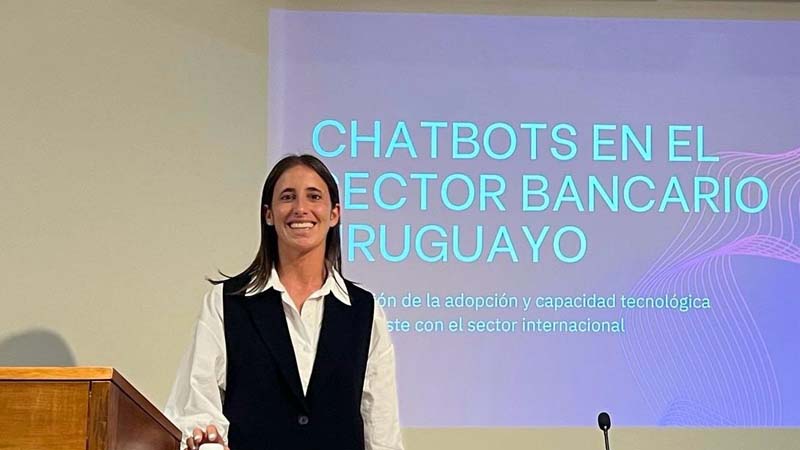
His master's thesis was a research project on the implementation of chatbots in the Uruguayan banking sector, featuring interviews with stakeholders in the financial system and a comparative analysis against international standards. As a final product, the team developed a best-practices manual. This knowledge is now being applied to a new project: the implementation of a chatbot for customer service in Latin America and the Caribbean.
“Two years that fly by”
For those who are unsure about enrolling in the master’s program, Agustina has some clear advice: “Go for it—it’s fantastic.” The program offers a comprehensive overview of information systems, their impact on organizations, and the keys to leading digital transformation processes.
It equips you with the tools you need to lead both technically and personally. And above all, to grow professionally.
Learn about the Master's Degree in Information Systems Management