A problem that inspired a solution
"If you can get scammed out of something as big as a shipping container, imagine how hard it must be to trust a daily freight service," says Rodrigo. Based on that experience, he began exploring ways to improve transport traceability. "Today you can track a pizza in real time, but not a truck carrying thousands of dollars worth of goods," he notes.
How LlegoYa Works
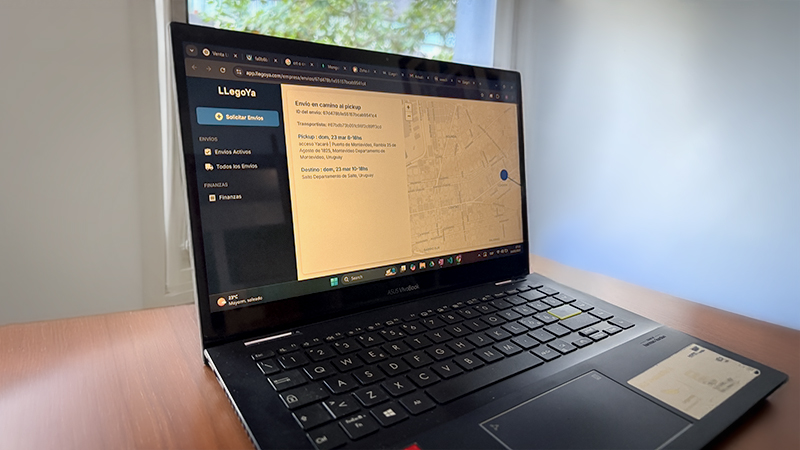
The platform allows users to get automatic quotes, choose the right vehicle based on the load, and track their shipment in real time. In addition, carriers are verified and rated by customers, which adds an extra layer of security to the process.
Since its launch in 2024, LlegoYa has signed up 250 delivery drivers and 20 companies. "The biggest challenge was building trust and attracting delivery drivers. But once they saw the benefits, growth came naturally," he says.
The difference: technology and optimization
One of the startup's key differentiators is its pricing algorithm, which is based on more than a year's worth of collected data. "It not only improves pricing but also optimizes routes and avoids empty trips, thereby reducing costs and emissions," explains Rodrigo.
In addition, the platform allows for consolidated shipments, which means that the more units shipped together, the lower the cost per unit transported. It also automatically analyzes carrier supply and demand, adjusting prices in real time to offer more affordable options.
Another key innovation is the integration of geolocation systems, which not only allow customers to track their shipments but also notify carriers when they are near the pickup location, reducing wait times and improving delivery efficiency.
Expansion plans
LlegoYa's future plans include expanding into freight and moving services, integrating with insurance companies, and incorporating artificial intelligence to optimize transportation management.
The company is developing artificial intelligence-based solutions to optimize transportation management, including the automatic generation of itineraries that adjust in real time based on traffic conditions and other factors.
Expansion into the B2C market
Although LlegoYa initially focused on businesses, it is now also targeting individual customers. The startup is expanding its services to include freight and moving services, as well as incorporating smaller vehicles—such as cars, vans, and motorcycles—to handle smaller-volume deliveries and shipments within cities.
"We want everyone to have access to a reliable and efficient transportation service, not just large companies," explains Rodrigo. This diversification will allow carriers to optimize their schedules and generate more revenue by reducing empty trips and improving the profitability of each route.
In addition, LlegoYa plans to continue automating the process so that users can receive instant quotes and choose the best service based on their specific needs.
"We want to transform the industry and make technology—which is currently only available to large companies—more widely accessible."
The Role of Higher Education
LlegoYa is a prime example of how technology and entrepreneurial vision can transform traditional industries. For Rodrigo, the key was to educate himself, take risks, and surround himself with people who would support his idea. "If you have an idea, present it. You’ve got nothing to lose by trying."
Rodrigo emphasizes that his education at Universidad ORT Uruguay instrumental in his entrepreneurial journey.
"The program gave me the tools to learn quickly and solve problems in a structured way. Not only did I gain technical knowledge, but I also learned to think strategically."
He also mentions the importance of courses related to management and business. "It's not enough to know how to program or design systems. If you want to start a business, you have to understand the market, know how to negotiate, and run a business. Management courses were essential to developing LlegoYa."
He also highlights the impact of ORT’s Center for Innovation and Entrepreneurship (CIE), where he found support to bring his idea to life. “From the very beginning, the CIE helped me shape the project. I received mentoring, contacts, and a space to develop the startup,” he says. “It’s essential to surround yourself with people who encourage you and give you confidence.”
Tips for aspiring entrepreneurs
For students thinking about starting a business, Rodrigo has a clear message:
"It might be tough at first—you won't see immediate results, and it might seem like it's not worth the effort. But if you believe in your idea, commit to it, give it a try, and make whatever adjustments are necessary."