How did this Pardelión Music TV project come about?
We have an audiovisual production company. From the very beginning, we’ve been pursuing two parallel paths. On one hand, we’ve focused on corporate advertising and everything related to audiovisual media. At the same time, we had some experiences in the digital realm making videos that went viral, such as “43 Million Cheering for Uruguay” from the last World Cup or the official pharmacy test, which was in December 2013 when marijuana was legalized.
We realized that viral videos are great but very fleeting. We wanted to build something different based on our experience—something that isn’t so viral but can grow, even if slowly, and build an audience. That’s where the idea to start a channel came from.
There was an experience in Villa Serrana with a girl named Eco López whom we heard one night. She was a neighbor who showed up with a guitar and started playing. It was a great moment; we filmed it and uploaded it to YouTube. It turned out to be a video of pure darkness, but it became the foundation of what we realized we wanted to convey in terms of the musical experience on the channel.
You mention on your website that the artists perform the songs in a format that promotes simplicity and intimacy. How do you achieve this?
For us, the format was very important. On one hand, there are music videos, which feature meticulously produced studio recordings with visual elements and video art layered on top.
There are also live performances, where musicians play for an audience but the cameras are positioned in such a way that the interaction isn’t disrupted.
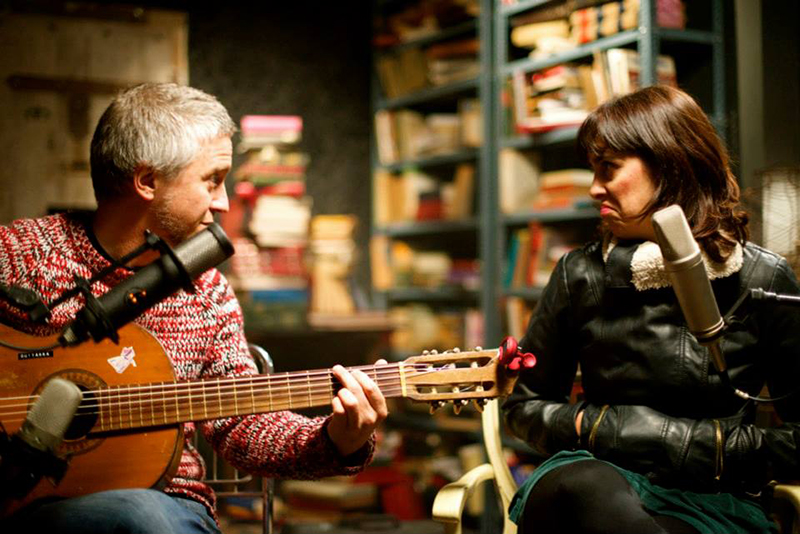
This project falls somewhere between these formats because, for us, the key is that the musicians play for the cameras. This allows you to experience an intimate connection with these musicians right from your living room couch.
We achieve this format by creating a pre-shoot session where the musicians arrive a little early, we improvise with some music, have a drink and a bite to eat, relax—there’s incense, and the musicians and technicians are barefoot. It’s about creating a moment. When the musician feels ready, we record the song.
At the same time, there’s the issue of the camera lenses, which are photographic lenses, and they create the sensation that you’re getting close and moving among the musicians at distances that aren’t typical in this type of video.
Did you identify a lack of this type of format in the Uruguayan audiovisual landscape?
The interest in creating the channel stemmed from our love of music and the desire to work on a project together with a group of people who work in advertising.
When the time came, we started thinking that if we were going to create a music channel, how could we do something different, with added value.
We did a lot of research. We searched for Uruguayan artists on YouTube to see what wasn’t out there and might interest them. We looked at surveys and talked to various people. We saw that Uruguayan musicians today don’t have online content because it’s expensive. We realized there was a space to create content for the artists. Also, because we’re in the post-MTV generation, where video is already part of music.
We thought it would be great to show them performing songs themselves and see what makes them talented, rather than having to rely on stock footage or video art representations.
You’re basing the project on a free model. Do you plan to change that at some point?
Yes. The idea was to start by showing what we could do. There are between 25 and 30 people working here because they were interested in the project. This way of working led to many meetings with brands, agencies, and digital channels, and we’re looking for a way to [fund it] without compromising the product or altering the original concept.