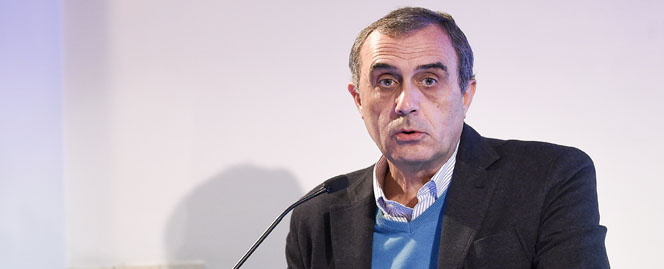
“It’s hard for us to leave our workplace, go to a strange place, and learn something we don’t value very highly,” said Dr. Carlos Marcelo during his visit to the university.
According to a member of the Academic Committee for the Doctorate in Education, the key lies in the fact that teachers are “independent learners” who acquire the knowledge needed to teach on their own.
Furthermore, because “teaching is undervalued,” since universities generally place a higher value on research than on teaching.
Many teachers do not recognize the importance of usingactive teaching methods and continue to rely on the traditional lecture-based model.
In this regard, Marcelo points out that while case studies,problem-based learning, and the use of ICT in the classroom are interesting learning strategies, teachers often say: “It doesn’t work for my subject,” “They don’t fit into my course,” or “I don’t have time to incorporate them because I can’t finish covering the curriculum.”
So, what solutions did he propose? For example, he mentioned that one of the innovations that could be implemented is peer mentoring. In other words, certain teachers who are recognized as “good professionals” support their colleagues.
It is also possible to form groups of faculty members—who are interested in teaching and have training in pedagogy—to serve as mentors for new faculty members.
“Clearly, this must be accompanied by a university policy that values and highlights teaching, best practices, and outstanding faculty; offers awards for innovative projects; and disseminates these initiatives through repositories of innovative experiences,” he concluded.