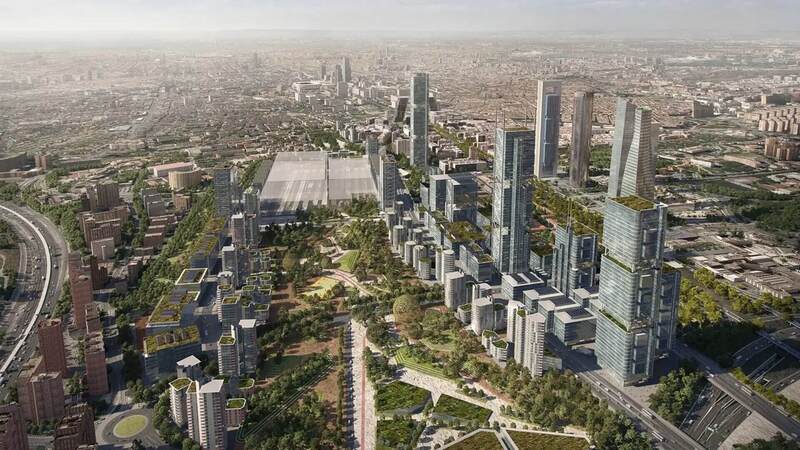
Madrid Nuevo Norte (MNN) is the answer to one of these gaps on a monumental scale. It is not just a real estate project; it is an urban renewal effort to heal a century-old wound in the northern part of the Spanish capital. It is, as described, the largest urban regeneration project currently underway in Europe.
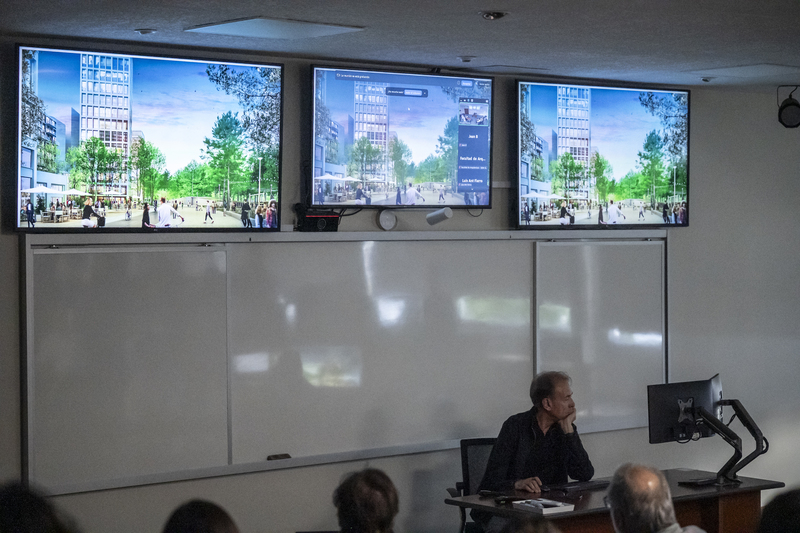
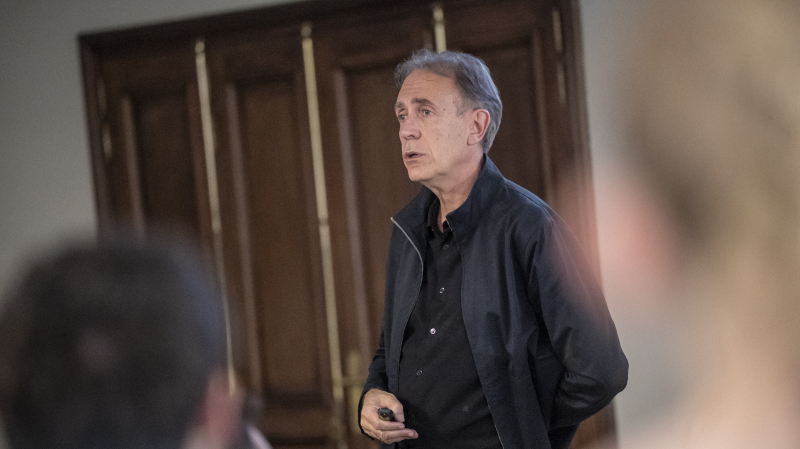
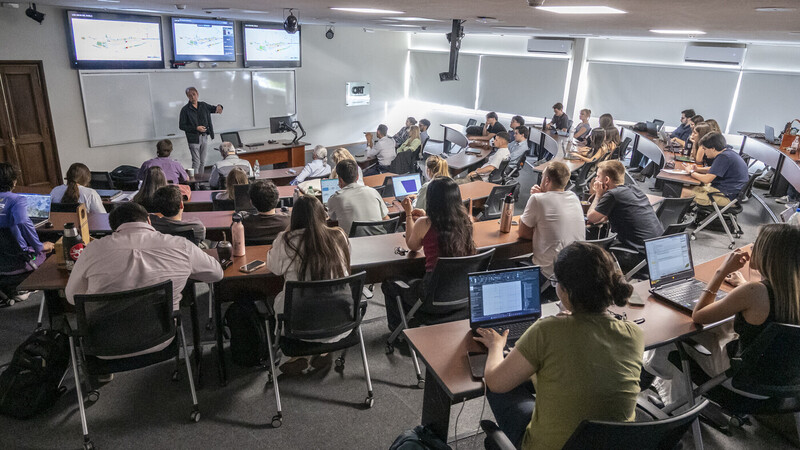
These lessons are drawn from the recent lecture by architect José Luis Infanzón, Director General of Public Space, Works, and Infrastructure for the Madrid City Council, delivered to the Faculty of Architecture at Universidad ORT Uruguay. Below are some of the most striking and counterintuitive points that define the true magnitude of this project, as seen through the eyes of Architect Infanzón.
The real mission: “stitching” the city together
The fundamental problem that Madrid Nuevo Norte set out to solve was not a lack of office space or housing, but the “enormous urban divide” historically created by the tracks leading to Chamartín Station. This vast expanse of rails completely separated the eastern and western neighborhoods of northern Madrid.
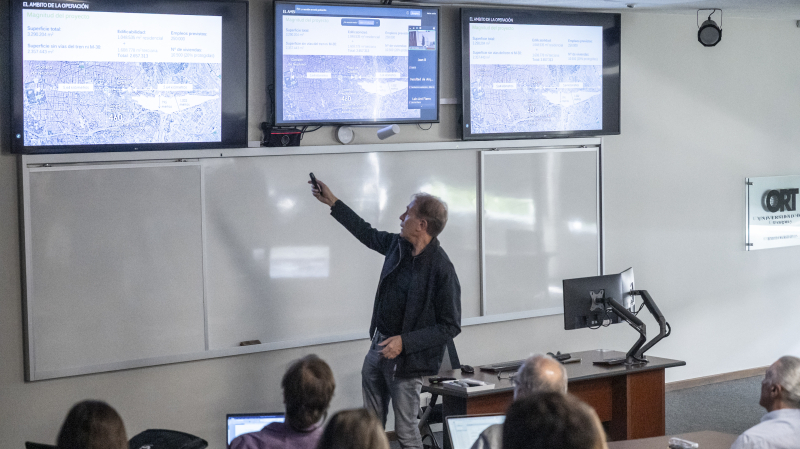
That is why, in the words of the project leaders, the main goal of the project is “to stitch the city together”. The aim is to create an urban “stitch” to restore cross-sectional permeability and reconnect two parts of the city that had been turning their backs on each other for decades.
“The most important thing about this area is something that happens in most cities, particularly in European cities,” Infanzón noted, adding that:
“Railroad tracks have historically created a massive barrier, a massive urban divide.”
- You might also be interested in reading: “Hostile Architecture: Challenges and Alternatives for Inclusive Urban Design”
(Re)connecting a country
Until very recently, according to Infanzón, Spain’s high-speed rail network—“the second largest in the world after China’s”—suffered from a critical flaw. There was a northern network and a southern network that converged in Madrid, but they were not connected to each other.
 In practice, This led to absurd situations: A passenger traveling from Barcelona to Galicia had to get off at Atocha Station (south), take a commuter train, cross the city, and arrive at Chamartín Station (north) to continue their journey.
The solution was a tunnel under Paseo de la Castellana to connect the two stations, but here lies the most incredible detail: that tunnel had already been built. As Infanzón revealed, “the tunnel has been finished for four years and still isn’t ready to go into service.” The problem? The stations weren’t designed to be “through stations” rather than terminals.
In this regard, Madrid Nuevo Norte is the key to unlocking this massive latent investment. The project finances and coordinates the monumental renovation of Chamartín Station, finally allowing the tunnel to be put into use and unifying the country’s railway network. This makes the area the “transport hub that will be the most powerful in Spain,” said the speaker.
- You might also be interested in the article: “Housing, City, and Climate: Architect Frans de Witte’s (MVRDV) Perspective in Montevideo”
Building a floor where there isn't one
The most spectacular solution in the project is to cover the widest part of the rail yard with a giant slab to create a central park on top. The cost of this structure is staggering: 600 million euros.
Meanwhile, the complexity is immense, as rail traffic cannot be halted. The crews can only work for three hours at night, which allows them to install just “one pile per night.”
The initial attempt to build it was a failure that illustrates the challenge. With “three different construction companies” working at the same time, the result was chaos: “Impossible. Four years and we built four piles—and it was chaos,” recalled Infanzón.
The solution was a stroke of managerial genius: instead of coordinating multiple parties, the project developers signed a new agreement to provide the 600 million euros directly to the railway operator (ADIF), so that it to manage the construction of the slab as “a single project” integrated with its own construction work.
This project is not a whim; it is the key that makes the entire operation viable by artificially creating public land (green spaces) required by law.
- You might also be interested in reading: “Re-imagining Plaza Canadá: Inter-university collaboration at the MNAV with the Canadian Embassy”
A laboratory for sustainable urban planning
MNN positions itself as the antidote to late 20th-century development models, which created low-density, single-use neighborhoods.
To illustrate the difference, Infanzón cited a striking statistic: Madrid’s “inner city,” covering 58 square kilometers, is home to one million people.
The large-scale developments of the 1990s, covering a similar area, were planned for only 300,000 people. The result was the dreaded “dormitory towns,” lacking vitality.
- We also recommend reading: “Modern Architecture, a Paradigm Shift”
To prevent this, Madrid Nuevo Norte is based on two pillars:
- Compactness: High density to create a critical mass that supports services and transportation.
- Mixed-use development: Integrating residential, office, and retail spaces to keep neighborhoods vibrant around the clock.
In this regard, the speaker said:
“The two pillars of a city’s vitality and sustainability are compactness and mixed-use development.”
In addition, the project incorporates innovations such as the use of geothermal and aerothermal energy, eliminating the need for a connection to the gas grid, and the creation of permeable paving to manage rainwater.
- You might also be interested in reading: “Sustainable Innovation: Architecture Students Visit +Colonia and Design Homes”
Patience as a planning tool
According to Infanzón, perhaps the most revealing fact is not technical, but political: it took 30 years for the project to be approved.
Over the course of three decades, the plan went by various names, such as “Operation San Martín” and “Extension of the Castellana,” and included several versions that never saw the light of day.
The main reason was the extreme complexity of reconciling the interests of the landowners, which included the three levels of government (the national government, the autonomous community, and the city government) as well as private owners.
On this point, the architect noted that “getting all these different stakeholders to agree has been quite complex and difficult because, in many cases, each administration was led by a different political party, and reaching agreements has been complicated.”
The final agreement that finally got the project off the ground wasn't reached until 2019, a lesson that the most profound urban transformations require an extraordinary amount of perseverance.
Watch the full conference:
youtube.com/watch?v=wbT2nxH6pUA&t
- You might also be interested in: “Antoni Gaudí: Master of Catalan Modernism and Architect of Nature”
A legacy for the future
Madrid Nuevo Norte is much more than an infrastructure project or a new neighborhood. It is the embodiment of a new model of city that seeks to correct the mistakes of the past and anticipate the needs of the future. It is "the true Madrid of the future."
Their story is a lesson in how long-term vision can overcome technical, financial, and, above all, political obstacles. Beyond Madrid, what lessons about patience, collaboration, and long-term vision can we draw from this monumental urban project for our own cities?