The AI-animated project also featured an appearance byJosé "Pepino" Ministeri, known in the murga world as one of the genre's most renowned directors.
Visually, the creators of the music video reconstructed it based on Miucha: The Voice of Bossa Nova, a Brazilian documentary that focuses on the singer Heloísa Maria Buarque de Hollanda, better known as "Miúcha," as a key figure in the development of the bossa nova genre.
In turn, the music video’s visual style was inspired by images of the Uruguayan capital from the 1900s to the 1920s, sourced from the Montevideo Photography Center.
The project was spearheaded by musician Alberto Magnone, who was also behind the original version of *El murguista*. He composed the music and co-wrote the lyrics with Horacio Ferrer in 2014, while Pablo Routin performed the song.
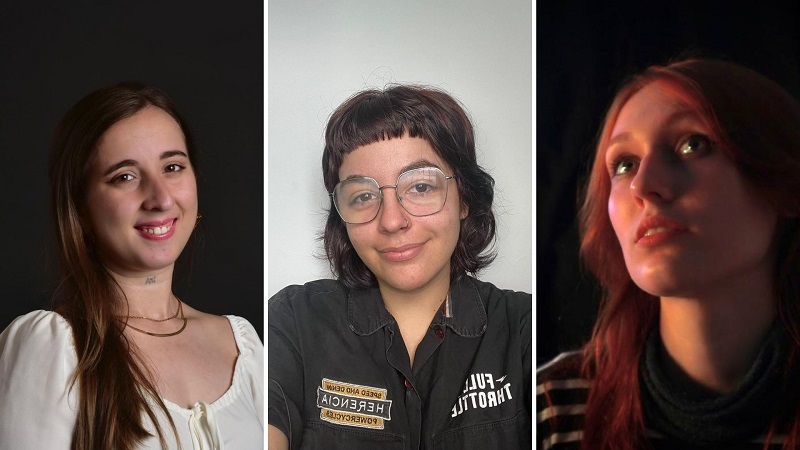
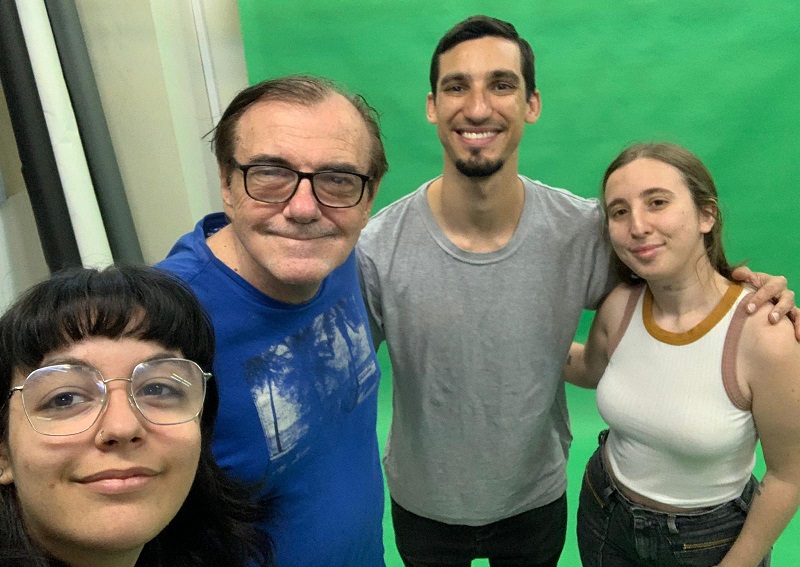
The music video was directed by Camila Rodríguez, a graduate of the Bachelor’s program in Design, Art, and Technology, in collaboration with Josefina Silbermann and Fiona Fernández, senior students in the same program.
The music video also featuredJulián Rügnitz, murga director; Tabaré Leyton, tango and murga singer; and Jorge Cancela, sound designer.
From an initial idea to a possible universe
The idea came from Magnone, who already had an initial version of Carlos Gardel’s voice generated using artificial intelligence by an outside studio.
Initially, the plan was for the singer to “appear” in the music video, showcasing his movement and stage presence, while the song played in the background.
In other words, the initial plan was not for Gardel to portray the character in its entirety on a visual level as well, but rather for his role to be primarily that of a narrative presence within the story.
However, the members of the artistic collective Cafijo—whose name is a combination of Camila, Fiona, and Josefina—presented her with a range of possibilities using AI tools they had incorporated into their work:
We told him that with these new AI tools, we could recreate Gardel and make him sing. We showed him the progress we’d made and the projects we’d been working on; he liked what he saw and asked us to apply that technology to the music video.
After two months of intense work, the digital artists managed to reconstruct the music video and set it in early 20th-century Montevideo, combining historical accuracy with artistic recreation.
The scene opens in a café in Montevideo, where Carlos Gardel runs into Pepino and the murga director invites him to the Carnival.
The narrative shifts to a new scene, and suddenly Gardel appears on a balcony, watching the murga group Los Patos Cabreros perform at night, and begins to sing, in an atmosphere that blends tango, folk tradition, and contemporary technology.
A creative process centered on the human element
Although the project relies on artificial intelligence technologies , the filmmakers emphasize that the human element was crucial throughout the entire process. The concept, scriptwriting, scene planning, aesthetic direction, and casting were all finalized before any technological tools were used.
One of the most complex challenges was recreating Pepino's dance. Since the available historical records are scarce and of poor quality, the dance was first performed and recorded by Rügnitz.
Then, using motion capture techniques (motion transfer, that footage was digitally applied to the AI-generated character. The final integration required multiple adjustments to achieve visual consistency and avoid an artificial effect.
https://www.youtube.com/watch?v=-EdATVGL4mo&list=RD-EdATVGL4mo&start_radio=1
The work was carried out largely remotely, with occasional in-person coordination sessions. Each team member took on different scenes, while Rodríguez, as the project’s overall director, ensured a consistent aesthetic throughout.
Carlos Gardel: A Uruguayan Icon of Tango
For Magnone, Carlos Gardel emerged as a natural choice because he is a figure deeply rooted in Uruguayan culture.
The weeks leading up to the music video’s premiere also coincided with an investigation conducted by the Gardel Rioplatense Commission (CGR), which uncovered a document from the Uruguayan Consulate in Buenos Aires in which Carlos Gardel stated that he was born in the department of Tacuarembó, Uruguay, on December 11, 1887.
According to CNN, the record shows that he applied for Argentine citizenship while in Buenos Aires without any official documentation.
If officially recognized by the Inter-American Court of Human Rights, this new information would confirm that Carlos Gardel was Uruguayan by birth and an Argentine citizen, reinforcing his connection to the culture of the River Plate region and removing France from the debate surrounding the singer’s origins.
Recognized as the greatest tango singer of his time and a central figure in the collective imagination of the River Plate region, the question came to Magnone almost spontaneously: "What if Gardel sang my song?"
Learn more about theBachelor's Degree in Design, Art, and Technology at the