Immersive, interactive, three-dimensional computing platforms. The digital universe, virtual reality, and cyberspace.Gaming. Cryptoeconomics,blockchain, and non-fungible tokens (NFTs). Web 3.0—the next generation of the internet? Humans interacting socially and economically as avatars, which may or may not reflect aspects of physical reality… All of these are concepts (and questions) that arise when experts attempt to explain what the metaverse is, how it emerged, how it developed, and where it is headed. In broad terms: an interactive virtual world where the possibilities are so vast and diverse that they remain unknown.
According to Eduardo Mangarelli, dean of the School of Engineering, the metaverse could be defined as the representation in a virtual environment of certain elements, objects, or people from the physical world. For this reason, he believes it is appropriate not to attribute its creation or emergence to a specific company or service, but rather to the history shaped by the many initiatives and projects that have sought to represent physical things on virtual platforms.
In this regard, the academic coordinator of the Bachelor’s Degree in Design, Art, and Technology, Mag. Fabián Barros identifies two milestones as the major drivers behind the development of the metaverse as we know it today: the online platform designed for interaction within its virtual community, Second Life (launched in 2003); and the massive and rapid technological advances brought about by the lockdowns during the COVID-19 pandemic. However, they did not happen or come into being “because all these technologies were latent, they were ready, and following the lockdown, they ‘emerged’ into the virtual realm, ”states Barros.
According to the coordinator, simulating the physical world is a reassuring method that allows users to operate within virtual environments. This approach even extends to emulating the desktop, recycle bin, and folders containing files—a transition from the old typewriter to the computer.
The connection to gaming
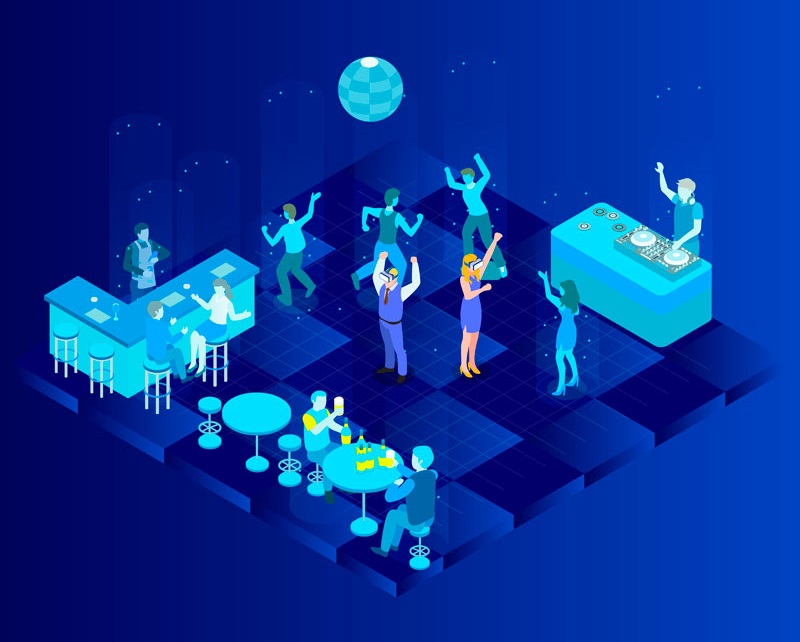 “It was the world of video games that pioneered the ability to enter that dimension through avatars in search of adventure,” says the graduate of the Bachelor's Degree in Advertising Communication and Gonzalo Praderio, a professor at the School of Communication and Design, who states that it was based on this logic that the concept of the metaverse expanded beyond that world to reach many other industries, in which It is believed that this could have a revolutionary impact because it involves a new way of relating to one another and adds a new dimension to services and content, which major global companies are already working to capitalize on.
While interaction through avatars and immersion in an alternative world or universe are, among other things, similarities to video games, according to Barros, the key difference is that in the metaverse there is no competitive goal, no rules, and no tasks to complete; rather, it offers a new way of interacting, mediated by an avatar.
What about workplace interactions?
According to Dr. Tomás Rodríguez, a professor in the School of Business and Social Sciences, “hybrid work, remote work, and working from homewere nothing more than the first step toward the future of human interaction within organizations.”
Along the same lines, Mangarelli views industrial production as another key area for the rise of the metaverse, because it contributes to control, operation, safety, efficiency, and other important aspects that facilitate the operation of a physical plant through its digital twin, which behaves exactly the same way thanks to the data transmitted by various types of sensors.
In the field of architecture, for example, what the metaverse offers beyond what Building Information Modeling(BIM) systems already provided is the ability to take virtual tours of a building site. This adds value, “but not just for sales tours and showing it to a potential client who might eventually buy the property, but also to be able to walk through it during construction to draw conclusions and make decisions regarding the project itself, ”says Architect Gabriel Lambach, a professor at the School of Architecture.
“This new BIM model makes it possible to identify conflicts and errors—for example, between the structural and plumbing systems. This is extremely valuable because, since it’s a simulation, we can focus on specific aspects of the building’s design—something that can’t be done once the building is constructed because, obviously, you can’t tear down the walls,” the professor explains.
However, beyond that, the conversation surrounding the metaverse raises the possibility of meeting up with friends, going to nightclubs, going on adventures, playing games, interacting, and even working. But what’s the difference between working remotely and working from the metaverse?
Extending the concept of remote work to the metaverse involves envisioning a kind of virtual office where people would be positioned as if they were physically present in that office, would be able to approach others, and, ultimately, interact with one another. “Obviously, there’s a very fine line between what it means to approach someone to talk in the metaverse and what it means to open a chat tool to send them a message—which is what we do today while working from home, ”says Mangarelli. He believes that some companies and multinationals are interested in building a brand position based on the concept of the metaverse, and they seek to promote the idea that the metaverse is completely different from what we know. “In this sense, there’s an element of marketing and branding, ”he says.
The next generation of the Internet?
“Web 1.0 has a basic design, is relatively simple to navigate, and its key distinguishing feature is the link. It is passive because the user enters as a spectator, and the level of interaction is practically nonexistent,” says Barros. Web 2.0, he adds, is the era of social media and introduces the concept of the prosumer: someone who is both a producer and a consumer of content. When a user tweets, for example, they generate new content, and when they click “like,” they modify it.
“Web 3.0 introduces an innovative architecture based on blockchain and everything related to the cryptoeconomy, enabling independent interaction between users through avatars. Thus, web platforms move beyond two-dimensionality—that is, they incorporate the Z-axis (depth)—allowing me to move through different worlds. In a way, this brings us closer to the idea of the metaverse,” says Barros.
However, according to Mangarelli, and based on the idea that the emergence of the metaverse should not be attributed to any particular person or entity, but rather to a development shaped by various technologies, Web 3.0 is not necessarily linked to the metaverse, although it is likely linked to its development due to blockchain technology.
“In my opinion, it is incorrect to speak of Web 3.0 as an inevitable consequence of Web 2.0. Those who have rebranded what was previously called Web 2.0 as Web 3.0 are trying to impose the idea that we are inevitably heading in that direction because we are facing the next generation of the Internet,” says the dean. Web 1.0 and 2.0 encompass a set of technologies that may or may not be extremely relevant to Web 3.0, but it is not an inevitable or linear path, just as it has not been so far.
According to Mangarelli, the goal of this third generation of the Internet is to promote a web of decentralized services where all transactions take place within blockchain or cryptocurrency ecosystems. The connection to the metaverse, then, lies in how some companies and multinationals are using it to drive the growth of blockchain and the cryptoeconomy.
Why is Mark Zuckerberg interested in the metaverse?
 The creator, founder, and CEO of Facebook changed the company's name to Meta Platforms in October 2021, as part of a strategy to position the metaverse as the future of human relationships—perhaps taking on the role currently played by social media.
According to Barros, Facebook (or Meta) and Zuckerberg“are moving toward a commercial goal, where, in addition to engaging in social interactions, you can also conduct financial transactions. Blockchain is a new economy that is taking shape, one that is now beginning to show its potential to the point of shaking up the global economic system.”
Metaverses can be divided into two types based on their IT architecture, explains Barros: closed metaverses, where interaction takes place within a company’s platform, the economy is closed, and transactions are only valid within that universe, and blockchain-based metaverses, a system of “blockchains that are inviolable in terms of security and, furthermore, collaborative and community-driven—very different from the monopolistic model of Google, Facebook, and others”—which allows for the creation of digital assets to be used as a medium of exchange (such as cryptocurrencies) and the generation of unique certifications for digital assets that provide them with authenticity, such as NFTs. “In March 2021, the first digital artwork was sold for $70 million, demonstrating the potential of blockchain, the cryptoeconomy, and NFTs,” he notes.
According to Praderio, “many companies see the metaverse as an opportunity to take the leap toward a new form of human interaction through virtual beings in a parallel world,” and Facebook has been the most committed to creating a metaverse to lead this evolution of the internet and social media. However, he believes that “it is much more than a social network,” because with an economy independent of the traditional one—such as that offered by blockchain—“it would give real-world economic value to a world of assets that are currently speculative.”
The metaverse, Rodríguez explains, “simply encouraged the use of cryptocurrencies in its parallel world for all transactions,” taking advantage of the decentralized nature of blockchain technology, which operates free from regulation by governments or other agencies.
The limits are...
 The metaverse, then, is an immersive, interactive, three-dimensional computing platform, a parallel or alternative universe where people interact through avatars and which has no specific goals beyond interaction between users (or avatars, to be precise), although it does have economic goals based on the model of blockchain which enables the authentication of digital items, products, and services for exchange.
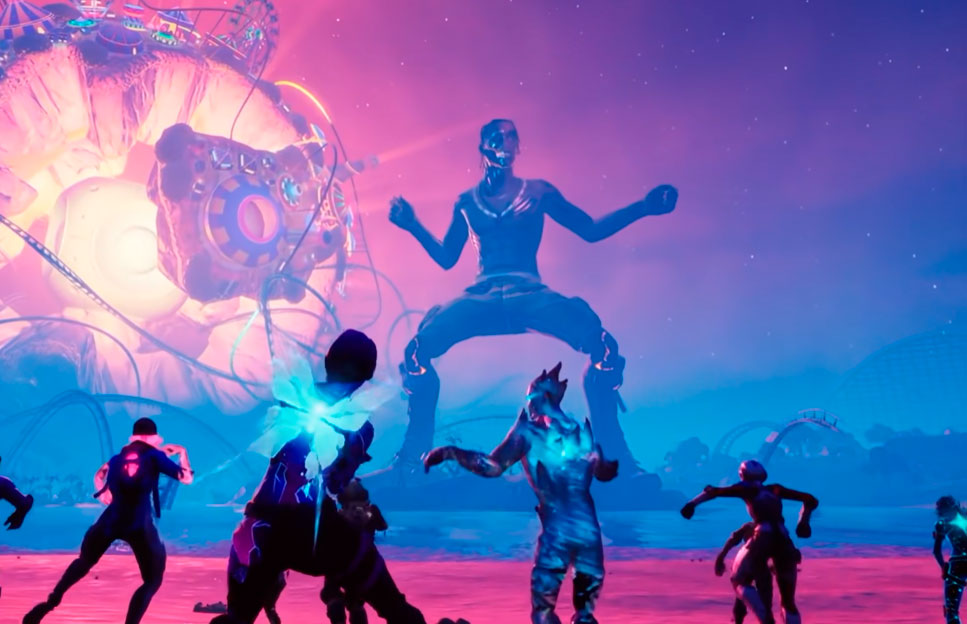
“In March 2020, Travis Scott (an American rapper) performed a show in the metaverse of the video game Fortnite. It wasn’t a livestream; it was a giant, hyper-realistic avatar that descended from the sky and sang for the audience, who participated by logging into the ‘concert’ via more avatars that danced, sang, chatted… In short, they interacted. How many people can you fit into a stadium? 100,000, maybe. More than 10 million people logged in there—something that’s physically impossible,” says Barros.
“Zuckerberg himself explained that in the metaverse, you’ll be able to instantly teleport as a hologram to the office without having to travel, attend a concert with your friends, or chat with your parents in your living room,” says Rodríguez.
According to Barros, the limits of the metaverse “may be legal, technological, or ethical, and depend on each individual user , but it is an expanding universe where everything is yet to be done; the possibilities are endless, and we will continue to discover them.”