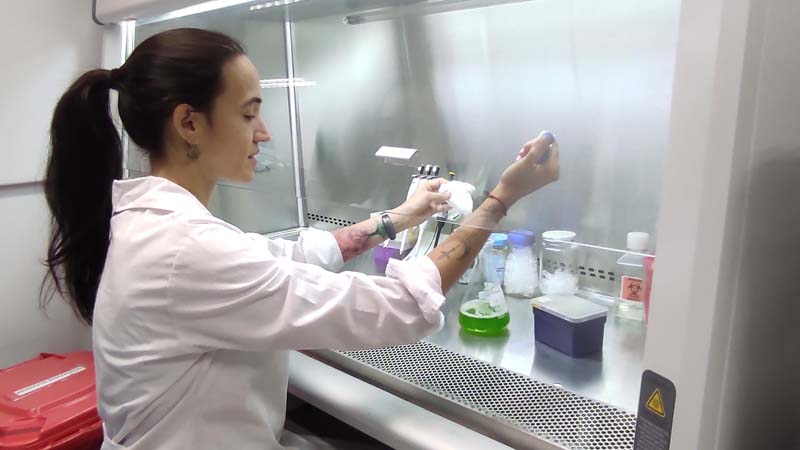
A team of researchers, led by Dr. Mariana Umpiérrez of the School of Engineering, is developing an innovative approach to promote circularity in production processes.
The project, titled "Evaluation of the effectiveness of alga-alga and alga-fungus consortia in the bioremediation and upcycling of industrial effluents to promote circularity in production processes," seeks solutions for the treatment of industrial waste through biotechnology.
A key source of support for young researchers
The project has María Viñas Fund, which was established to promote the work of emerging researchers. According to Dr. Umpiérrez, this support is essential:
“It allows us to gain greater flexibility in creating more complex experimental designs that have a greater impact on the results.”
In addition, the project is being carried out in collaboration with the Pontifical University of Valparaíso, with Professor Guadalupe Martínez serving as an advisor, and other researchers who are contributing their expertise.
Microalgae and fungi: a biotechnology consortium
The core of the project lies in the use of microalgae to treat industrial waste, specifically from dairy farms.
These algae not only capture carbon dioxide during photosynthesis, but are also efficiently harvested by fungi that encapsulate them.
The contribution of mushrooms goes beyond the logistics of harvesting, as they enrich the biomass with proteins and bioactive compounds, transforming it into a valuable product for animal feed.
Environmental impact and impact on animal production
The biomass obtained from the algae-fungus consortium will be tested as an additive in animal feed. Although it is not intended to replace the main diet, supplementing it could:
- Improve animal nutrition.
- Reduce methanogenesis in the rumen of dairy cows, helping to lower methane emissions and, consequently, the dairy farm’s overall carbon footprint.
“The idea is to create a system that not only treats waste but also has a positive impact on animal production and the environment,” the researcher noted.
Toward a sustainable future
The project represents an important step toward establishing a strong research group capable of addressing environmental and production challenges.
Through this initiative, the School of Engineering reaffirms its commitment to developing innovative solutions that integrate science, technology, and sustainability.