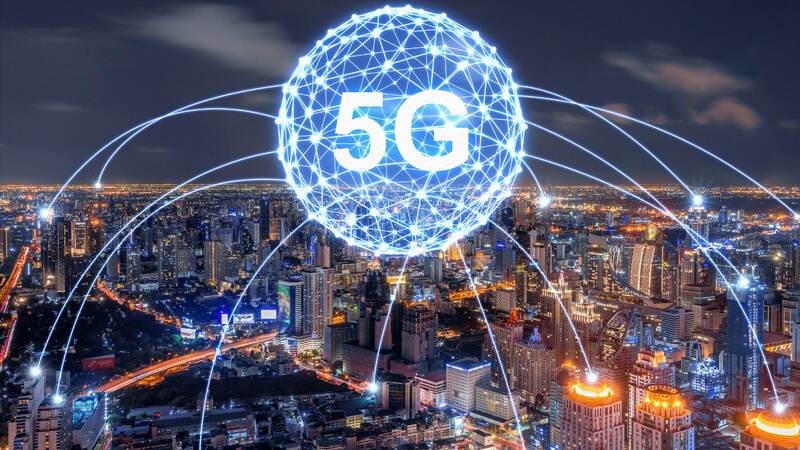
To understand this in more technical terms, according to Escuder, a professor of Telecommunications Engineering at Universidad ORT Uruguay, 5G network technology has evolved from previous standards—such as GSM (second generation), UMTS (3G), and LTE (4G)—to improve performance and offer new and better services, in addition to meeting specifications and supporting existing mobile services.
But is the 5G network already up and running? Do we all have access to it? Are there any negative implications? To understand this current network, the professor says, it’s worth taking a quick look at the evolution of mobile networks.
-
In what context did 5G technology emerge?
The first generation was designed to provide only “voice” services with mobility and evolved into a digital version. The GSM (2G) standard was revolutionary: it enabled the widespread adoption of these services as well as the use of short message service (SMS). With 2.5G, native connectivity to data networks was added. The 3G network was designed as a multi-service network (voice, messaging, and data simultaneously) with higher speeds. But with the advent of smartphones, a higher-capacity network had to be designed to support more devices simultaneously connected at higher speeds: the fourth generation (LTE), with speeds of tens of MB/s, comparable to a fiber-optic access network.
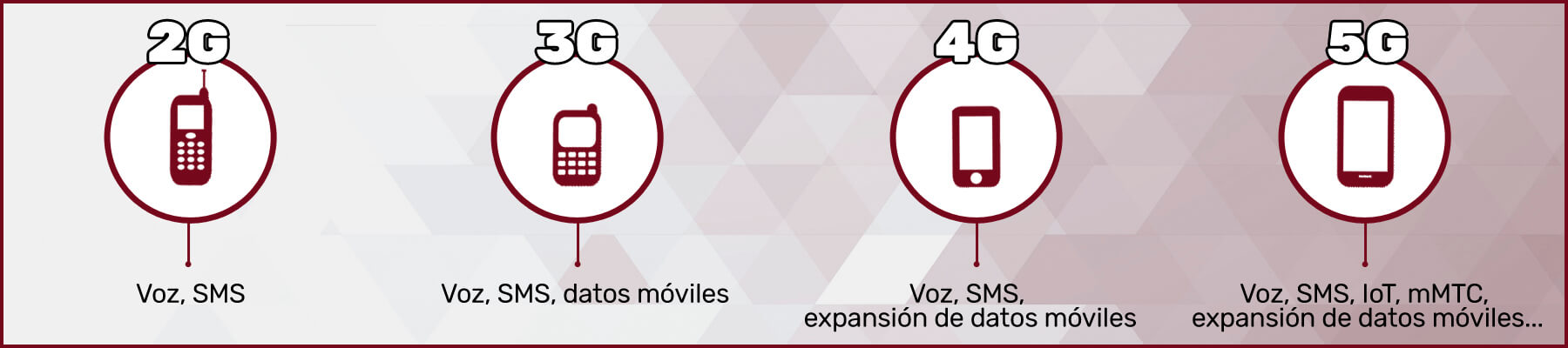
The 5G network emerged from the need to further increase network capacity (use of new spectrum bands and more efficient utilization) to provide higher speeds to more customers connected simultaneously. It also reduces network “latency” (the time it takes for data to travel), allowing for a large number of devices per cell while coexisting with network services that have specific requirements. Such a reduction, for example, is required for services such as gaming. -
Are there any operational 5G networks in Uruguay?
The correct information comes from the mobile operators, who are deploying the necessary network infrastructure. Antel launched the first commercial 5G network in Latin America in 2019, in the Barra de Maldonado area, according to information on its website: “Antel, with support from Nokia, successfully completed the installation of the first commercial 5G network in Latin America. The deployment of this network began in the department of Maldonado, in the Barra de Maldonado area, where the first 5G base stations are operational and ready to provide service. The high speeds and ultra-low latency of 5G were demonstrated at the launch event. The new 5G technology enables a connection capacity of up to one million devices per square kilometer, browsing speeds exceeding 1 Gbps, and immediate network response.”
-
Who can access that network?
This service will be available to users who have activated the service with that carrier (for example, a SIM card with a 5G plan) and a device with the necessary capabilities (appropriate technology and frequency) while within a 5G coverage area.
-
Uruguay plans to shut down its 2G networks in 2023. Will the shutdown of these older networks have any implications?
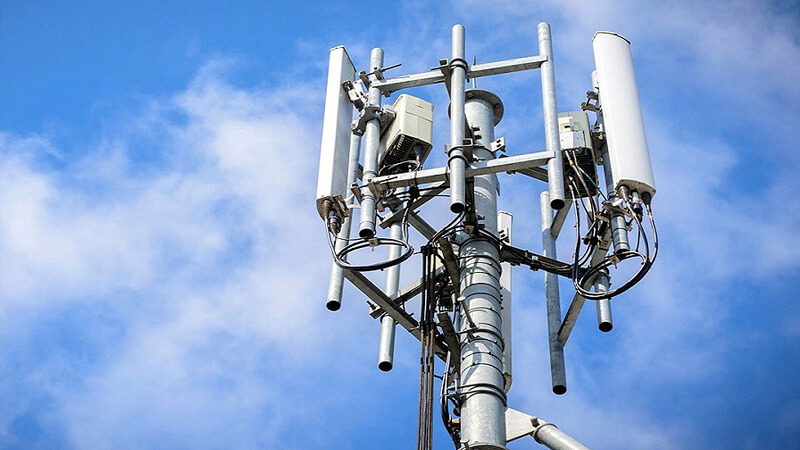 As technology advances, newer generations support new services (e.g., greater capacity, higher speeds, etc.). Keeping multiple technologies in operation simultaneously entails enormous costs (electricity, air conditioning, manufacturer support, antennas and cables on towers, operation and maintenance, etc.) for systems that are gradually being phased out in favor of newer technologies. New devices preferentially use the newer, better networks with higher capacity.
The process of “phasing out” a technology is slow, as it depends on how long it takes customers to upgrade their devices to use the new technologies, regardless of whether or not they are within the coverage area of the new mobile technologies. Shutting down a technology isn’t always easy, as it largely depends on whether the customer (individual or business) updates certain “older” systems (such as alarms, home automation, etc.) with devices compatible with the new networks. As 2G base stations gradually see less traffic, the shutdown process can be initiated, and the process can be accelerated by promoting products based on the new technologies.
-
What changes and new features does 5G offer compared to LTE/4G?
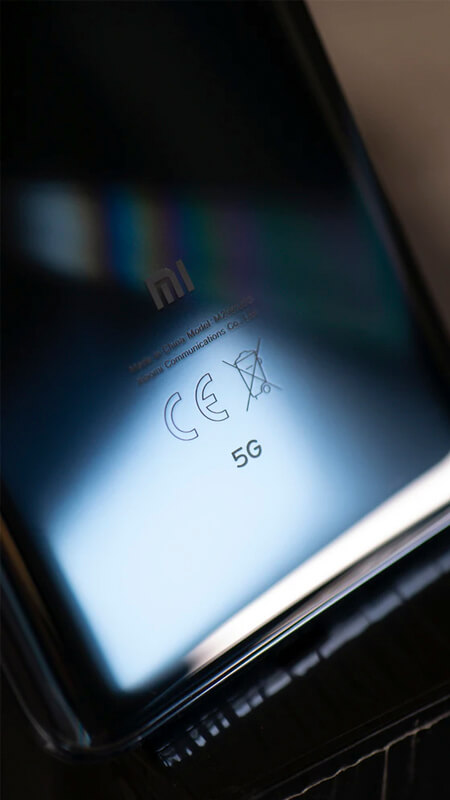 Many changes are needed to meet the objectives, as they affect the entire infrastructure and require a redesign (access, transport, and core).
From an access perspective, this involves using new spectrum more efficiently. From the network core perspective, it involves changes to reduce latency and streamline the infrastructure (virtualization of functions “in the cloud” and redesign of communication protocols between different functions). The use of Artificial Intelligence is not new, but it does find room to expand in the 5G network given the demand for new and improved services.
Among the specifications that technically describe the characteristics of a 5G network, the following innovative features are particularly noteworthy:
- Data speeds of up to 10 Gb/s.
- Lower latency for certain services: 1 millisecond, enabling the development of ultra-reliable low-latency communications (URLLC) services.
- Reduced energy consumption, leading to greater system efficiency.
- Longer battery life. Particularly for certain devices, up to ten years.
- Support for a greater number of connected devices per unit area. This enables the deployment of Internet of Things (IoT) devices or Massive Machine Type Communications (mMTC).
- Support for vehicular communication (V2X). -
What myths or controversies surround the deployment and operation of 5G?
5G is simply a technology that makes better use of current technological resources (more spectrum, greater computing power, distributed systems, etc.) to deliver the expected services. Every new technology impacts society, provoking different reactions, as it brings about changes in people’s lives. While there is nothing mysterious about technology, it is more complex and reaches a greater number of people faster than people’s understanding of that technology can keep up, and the unknown can breed mistrust. In this context, any topic that gains enough traction on social media can become a hot topic.
-
Does exposure to 5G radio frequencies affect health?
The International Commission on Non-Ionizing Radiation Protection (ICNIRP) studies the use of radio frequencies for human applications and issues recommendations on the matter. 5G may use frequency bands higher than those currently in use to provide greater capacity, but always within the category known as non-ionizing radiation—that is, radiation that is not capable of ionizing atoms. To date, no evidence has been found that exposure to these frequencies, which are used by the 5G network, has harmful effects within the limits established in the ICNIRP recommendations.