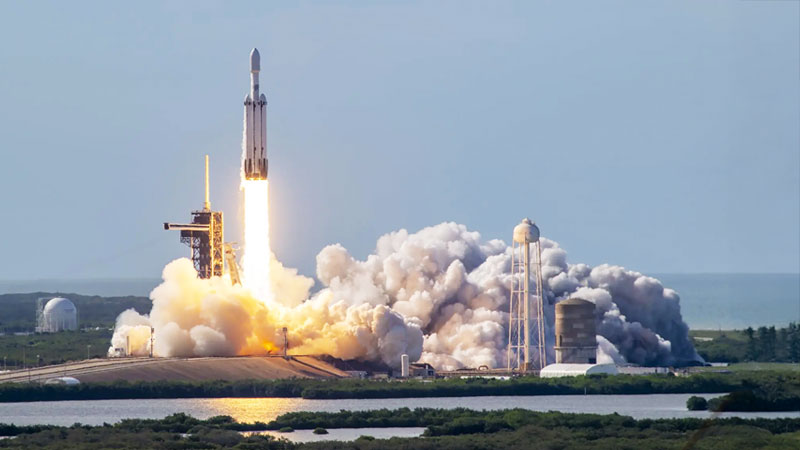
The NASA International Space Apps Challenge is one of the world's largest science and innovation hackathons.
For 48 consecutive hours, thousands of people in more than 180 countries work simultaneously on real-world challenges related to space and Earth, using open data from NASA and partner space agencies.
In Uruguay, around 200 people participate each year, forming multidisciplinary teams with expertise ranging from technology, communication, and design to engineering, the social sciences, and the arts.
The 2025 edition will be held in Montevideo, Ciudad de la Costa,Punta del Este, and Salto.
This intensive work format, known as a hackathon, brings together people from different disciplines over a weekend to solve challenges within a limited timeframe.
It’s not just about coding: solutions can take the form of ideas, prototypes, visualizations, animations, or narratives. What matters most is creativity, the clarity of the proposal, and its potential impact.
Would you like to join us? Sign up here:
www.spaceuruguay.org/spaceapps
Who is eligible to participate?
The event is free and open to all ages. Children under 18 must be registered by a parent or legal guardian and accompanied at all times during the event.
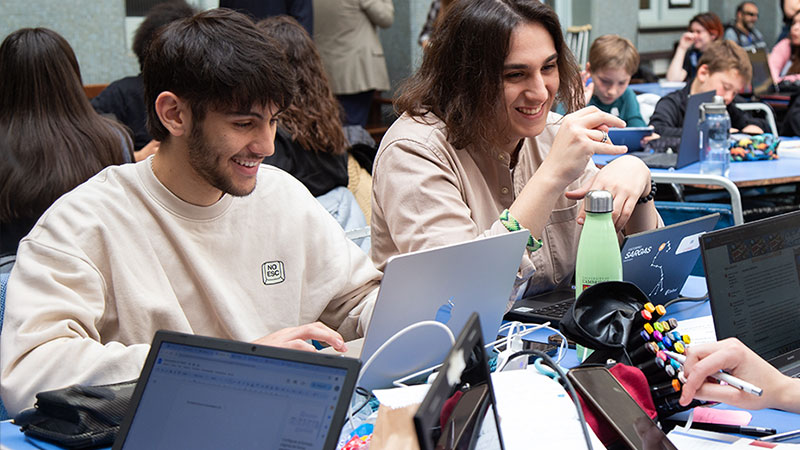
There are no academic or technical requirements: what we value is a diversity of backgrounds.
Whether you're a student, a professional, a technologist, an artist, or a communicator, there's a place for you.
Challenges that span multiple disciplines
The 2025 edition of Space Apps features 18 official challenges. While some are space-focused, many also address Earth-based issues and may be of interest from various academic and professional perspectives.
Here are some of the main themes for this year:
• Society, Economy, and Sustainability
These challenges call for the use of open data to optimize agricultural practices, predict air quality and atmospheric phenomena, and organize knowledge about space energy.
There are also proposals for ways to improve the quality of life in cities and human settlements.

• Design, architecture, and spaces
Some challenges focus on imagining and designing living spaces for extended space missions, as well as on creating more sustainable cities using data and new technologies.
• Communication, storytelling, and creativity
The hackathon also provides a platform for those who want to tell stories: from explaining solar phenomena through creative narratives to turning satellite data into animations or designing content that celebrates the 25th anniversary of the International Space Station.
The goal is to translate scientific information into stories that inspire and inform a diverse audience.
• Design, Art, and Technology
Other challenges focus on visualization and the aesthetic experience: creating animations from data, designing habitat prototypes, telling visual stories about space weather, or even using satellite imagery to raise awareness about marine conservation.
• Science, engineering, and technology
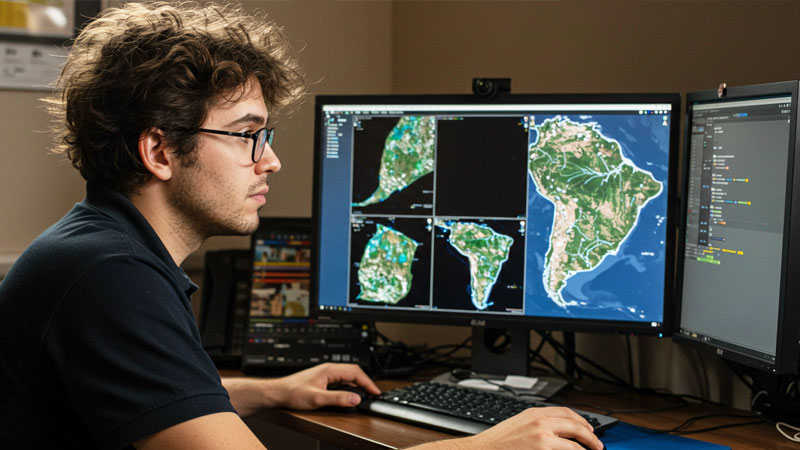
The proposal includes more technical challenges, such as detecting exoplanets using artificial intelligence, analyzing radar data to study terrestrial processes, working with meteor data, and monitoring biodiversity using satellite tools.
There are also opportunities to apply biotechnology, computer science, and telecommunications to specific problems on Earth and in space.
• Unrestricted creativity
Finally, teams have the option to propose their own challenge, provided it aligns with the spirit of innovation and collaboration at Space Apps.
Would you like to participate? Sign up here:
www.spaceuruguay.org/spaceapps
How to Present a Project
Participating in the NASA International Space Apps Challenge involves much more than just sitting down to code. The essence of the hackathon lies in teamwork and bringing a creative idea to life that addresses one of the challenges presented.
While it is possible to sign up individually, the most rewarding experience comes from joining teams of two to six people. The strongest projects are usually formed in groups of four or five, because that combination allows for a balance between technical and non-technical profiles.
Each team must choose a challenge and upload their proposal to an official page on the Space Apps platform. There, they should provide a summary, a more detailed description, and a demo that illustrates the idea—this could be a video, a slideshow, a mockup, or a prototype.
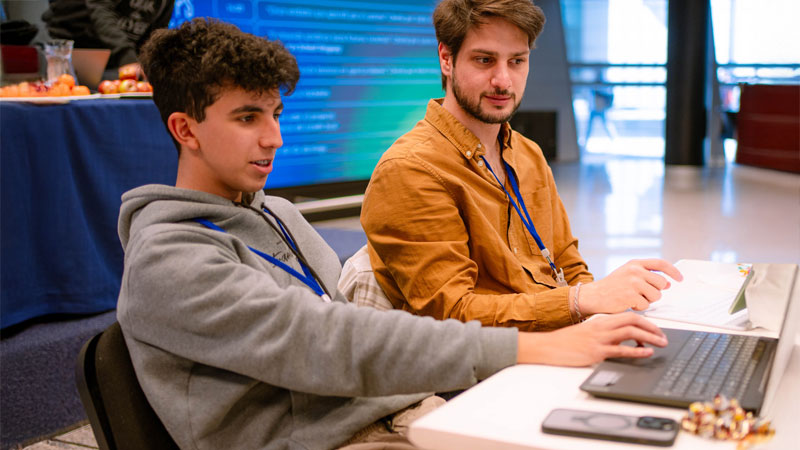
All materials must be submitted in English, as the projects are published on the NASA website and evaluated by an international panel of judges.
What matters most is not technical sophistication, but the clarity of the proposal and the impact it could have.
A team may not write a single line of code, yet still stand out with a well-thought-out and well-communicated idea.
Projects are not judged solely on the basis of their concept: the judges also consider the potential impact (influence), the innovation and creativity of the approach, whether they are technically or scientifically sound, whether they address the chosen challenge (relevance), and whether they are presented clearly and attractively.
Would you like to sign up?
www.spaceuruguay.org/spaceapps
Why might you be interested in participating?
There are many reasons to join, and they go beyond the competition.
One of the most appealing aspects is that all participating projects are published on NASA’s website, which means the work automatically becomes part of a portfolio with an international reach.
Space Apps is an opportunity to test your entrepreneurial skills: imagine how your idea would work, bring it to life in 48 hours, and get feedback from mentors and judges.
Many ideas start out as simple sketches and eventually evolve into projects with a life of their own.
There’s also the social aspect. In each edition, teams are formed, and the process of solving a challenge over two days fosters an atmosphere of friendship and community that stands out just as much as the competition itself.
There are quite a few people who participate simply because it’s a perfect excuse to make friends who share their interests.
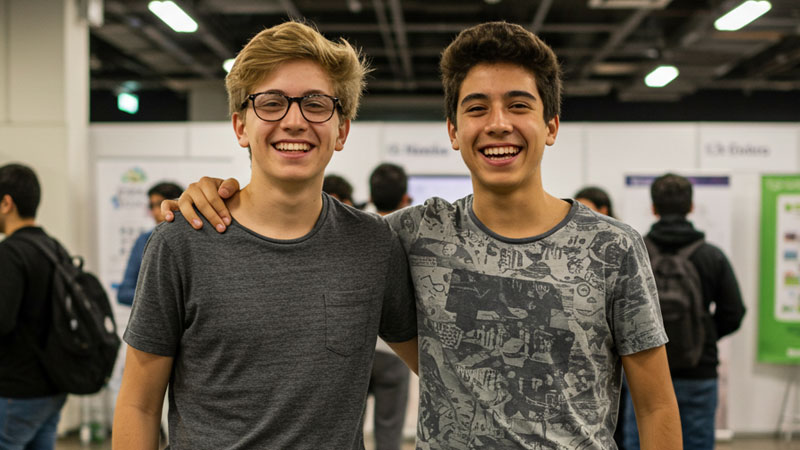
In addition, teams have the chance to compete for local prizes and one of the 10 Global Prizes, which include the opportunity to visit NASA and get an inside look at how the space agency operates.
Beyond the recognition, what many participants highlight is the personal inspiration the hackathon leaves them with: the feeling that, with a diverse and motivated group, it is possible to come up with ideas that have a global impact.
Call for Volunteers
In addition to team members, the Space Apps Challenge offers the opportunity to join as a volunteer.
In Uruguay, two main positions are available:
- Mentor: guides teams on technical, methodological, or subject-specific matters.
- Team leader: facilitates the work process, encourages collaboration, and helps the group make progress.
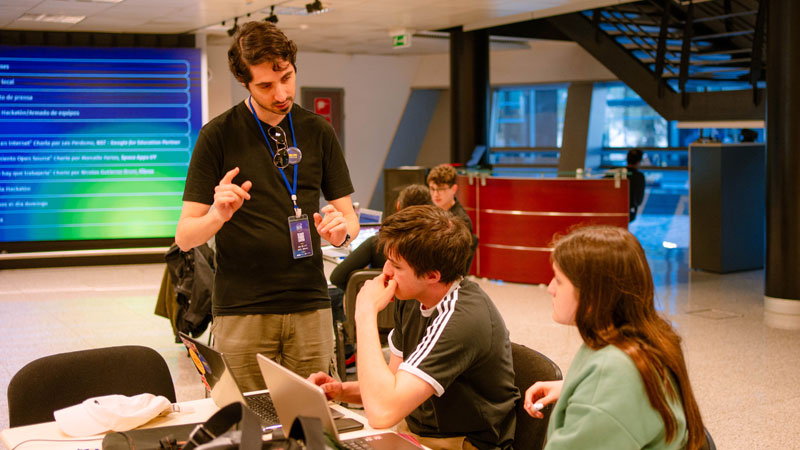
The invitation is extended to both teachers and advanced students who wish to experience this from a different perspective. For teachers, in particular, it is an opportunity to mentor and guide groups of students in a global innovation environment.
You must be available during the weekend of the event (Saturday, October 4, and Sunday, October 5, from 8:00 a.m. to 6:00 p.m.), either in person or online.
Would you like to participate? Sign up here:
www.spaceuruguay.org/spaceapps