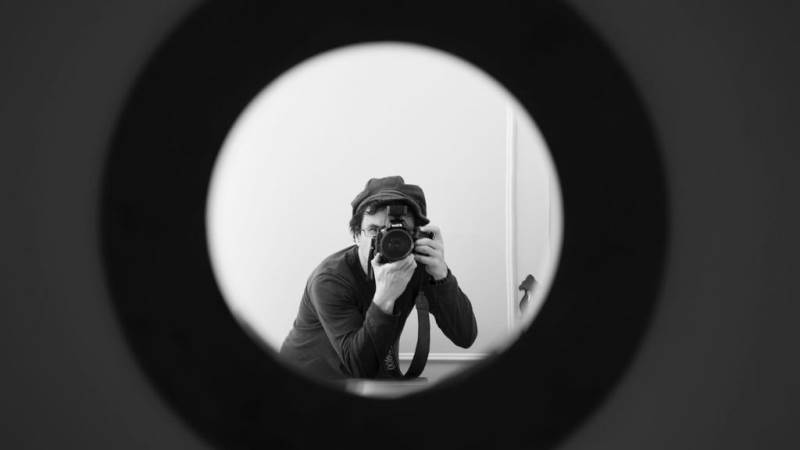
Leo Barizzoni began studying photography in 1993 and started working in the field the following year. He was part of the team at the newspaper La República and the magazine Tres, and served as head of photography for the magazine Galería de Búsqueda.
He has held more than a dozen exhibitions, both in Uruguay and abroad. He has also participated in group exhibitions in Uruguay, as well as in Buenos Aires, New York, Washington, South Korea, and Brussels. In addition, he has published several books: Imágenes caminantes (2005), Boliches montevideanos (2005, co-authored with Mario Delgado Aparaín and Carlos Contrera), Uruguayos (2008), Buitres… el cielo puede esperar (2010), Fútbol (2014), and Escaleras del Uruguay (2021).
Since 2000, he has been a professor at Universidad ORT Uruguay, specifically in the Bachelor of Communication program, where students learn their first visual tools through a combination of theory and practice.
To mark International Photography Day, we invited Barizzoni to take a personal look back at a few of the many photographs he has taken throughout his career—ones that hold special meaning for him, both personally and professionally.
Montevideo
The first photo Barizzoni shares is from his early days as a professional photographer, when he would use his only day off to explore Montevideo on foot with his camera.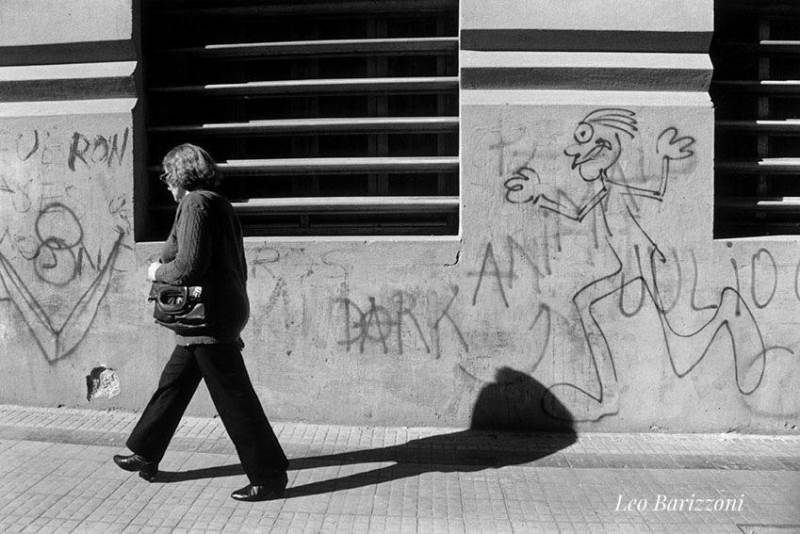
“I took this photo in 1995. I worked six days a week, and on my day off I’d spend practically the whole day wandering around, taking pictures.”
I think there’s an early stage in photography—a very formative one—when you start taking your first photos. I remember being really enthusiastic about photography—luckily, I still am. I’m not just speaking for myself, but in general, I think that at that stage, anyone who goes out to take photos needs to have plenty of time to just walk around. In fact, it’s precisely when you have plenty of time that the images start to emerge.
“Since I spent so much time out on the streets during those early years—both for work and on my days off—I was more likely to come across funny or difficult situations, or whatever else might happen. This photograph takes me back to that early period when I would practically walk all over Montevideo in search of a shot.”
Paris
Captivated by the French capital, he traveled there during the year of the World Cup but wanted to capture the city “as authentically as possible.”
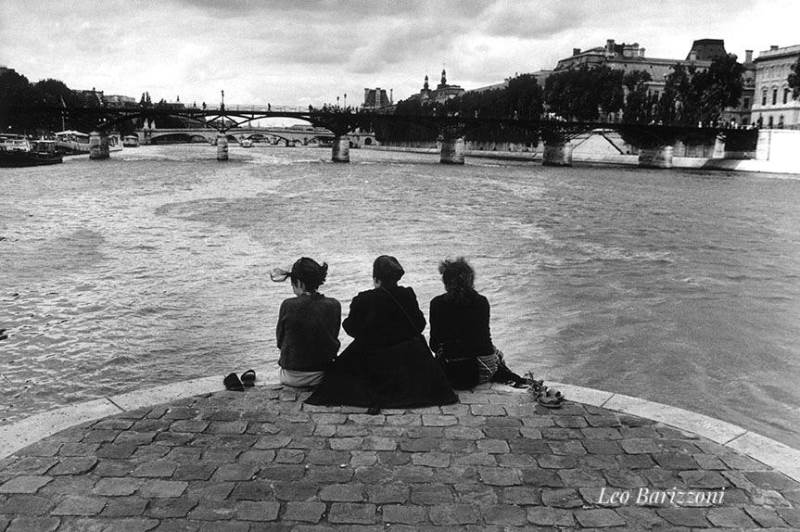
“I went to Paris in 1998 to accompany my father, who was a sports commentator, but not to photograph the World Cup. I went with one thing on my mind: ever since I started studying, the first photographers I met were all French, and although I never had any background in French culture, I immediately felt perfectly at home with that French style of photography. Photography was born in France; it’s a very important country for photography, and I wanted to get to know Paris—I wanted to photograph it.”
I spent two months there, focusing exclusively on photography; the World Cup was happening at the same time. I wanted to capture Paris as authentically as possible. I wanted to photograph the essence of the country; I walked a lot and took a lot of photos. I really feel like I’ve photographed every corner of Paris—even more so than Montevideo.
"That particular photo, with the three girls seen from behind on Île de la Cité, strikes me as a perfect summary of what I've seen in the French capital—the way that, no matter how modern it may be, it still retains that classic charm."
Gardel's Photographer
Driven by a mix of admiration and curiosity, Barizzoni agreed to interview José María Silva. And he managed to get the photo of all photos—or rather, a photo of the photographer who took the most famous picture of Carlos Gardel alongside that very image.
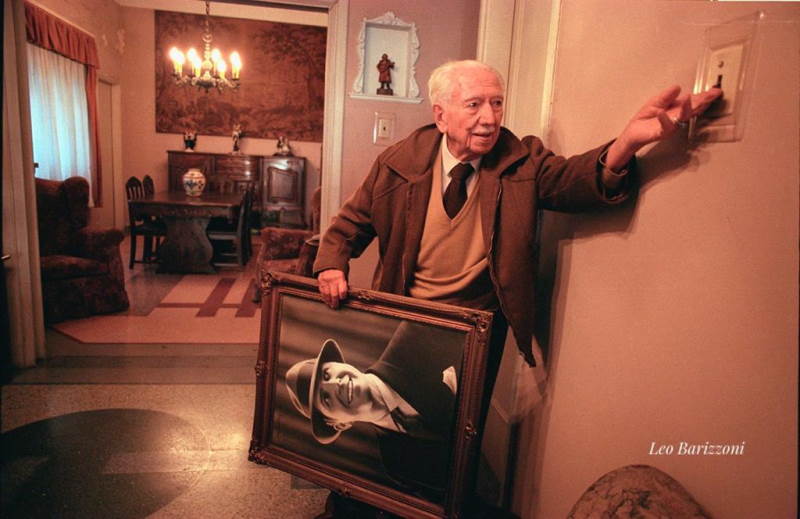
“He was a well-known photographer; he had a studio where he photographed brides and children, but José María Silva is best known for being Gardel’s photographer. He took Gardel’s most famous photo, the one where he’s holding the hat; he was Gardel’s favorite photographer. Whenever Gardel came to Uruguay, he always had his picture taken by him because he did it better than anyone else.”
At the time, I was working at Tres magazine and suggested doing a feature on him, so I visited his home for three weeks. In this photograph, he was 100 years old; he gave me a tour of his entire house, showing me his cameras and his photographs; I was truly fascinated.
At one point, I told him I wanted to take a picture of him with something related to Gardel, and he said, “Well, I’ll see if I have anything in the garage.” I waited for him and heard him go upstairs; when he opened the door, I realized he was carrying a frame with the famous photo of Gardel, so I started taking pictures of him.
"This photo, in which it's unclear whether he's turning the garage light on or off, was a chance snapshot. It means a lot to me because he was truly a very important photographer and such a sweet person."
Soccer
The son of renowned sports journalist Cacho Barizzoni, soccer has always been a part of Leo’s life. He played until he was 21 without ever making his professional debut, and in 2014, he returned to his passion—but this time from behind the lens—by publishing his book *Fútbol*.
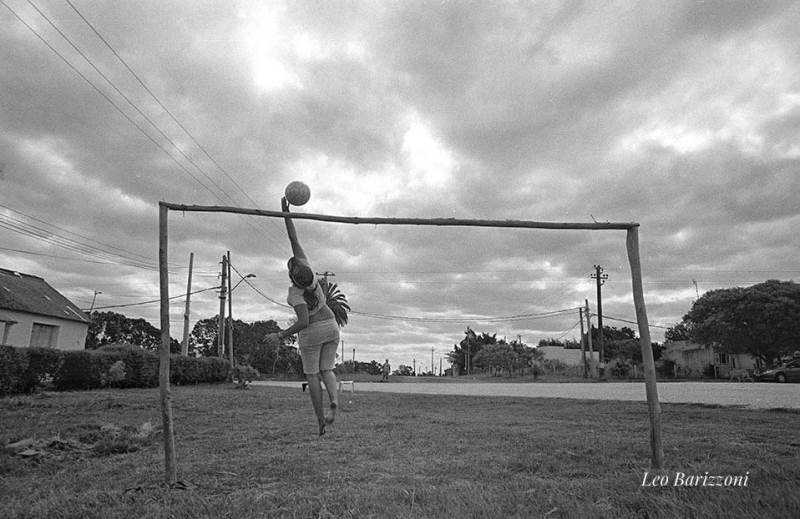
“My whole life, my entire childhood, was tied to soccer. The Centenario Stadium was like a second home to me; I’ve been going there since I was very young, on Saturdays and Sundays, to keep my father company and watch both Peñarol and Nacional play; I know every corner of the stadium.”
I rediscovered soccer to some extent through photography and wanted to create a series, but about soccer in everyday life, in society, in different countries—whether in Montevideo, New York, Paris, Buenos Aires, or Spain—wherever you go, there’s always a ball and someone playing, a boy, a girl, adults, kids; the ball is always the common thread running through this whole story.
"I think I took this photo in Las Flores, and it really captures the essence of soccer. It shows three sticks tied together, a ball, and pure joy."
The Sodre Ballet
When ballet master Julio Bocca took over as artistic director of the Sodre National Ballet in 2010, Leo Barizzoni was there to document it. In fact, throughout Bocca’s seven-year tenure, Barizzoni chronicled the company’s journey through his photography, from its humble beginnings to what it is today.
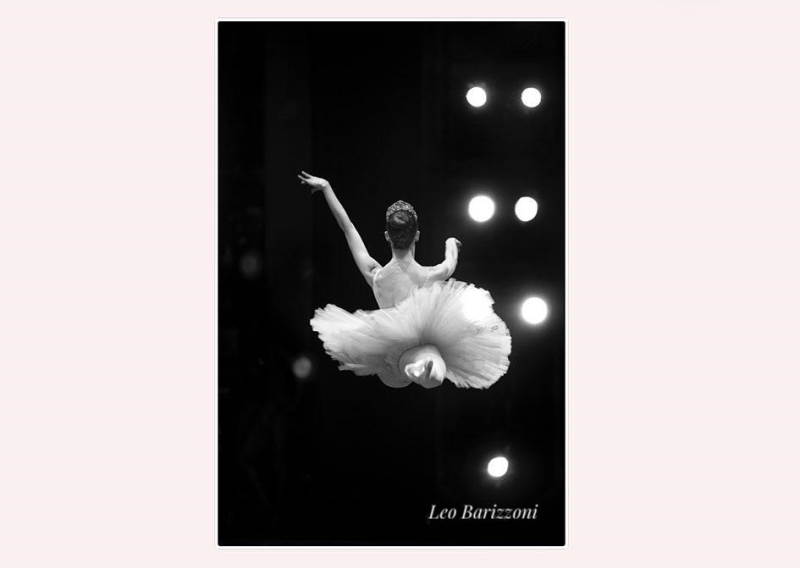
“I’m proud to have followed Julio Bocca’s entire journey while he was here, starting from the time when the Sodre wasn’t even close to being ready—the performance spaces weren’t there yet, it was all concrete and bricks… I began documenting that entire evolution. If you experienced it from the inside, it was a learning experience, working closely with each of the dancers, as we moved toward full professionalization, becoming a world-class company.”
“I’ve always seen this photograph of María Noel Ricceto dancing and leaping as an iconic image that embodies all the perfection Julio Bocca achieved in ballet. What’s more, it was taken the first time the Sodre Ballet performed at the Colón in Buenos Aires. I find it deeply symbolic of Julio Bocca’s time here, during which he elevated Uruguayan ballet to a much higher level—a standard that remains to this day.”
Vultures
First he admired Los Estómagos, and then Buitres. He has no doubt that this is a case where photography allowed him to access places he “never imagined”: photographing the band from the inside.
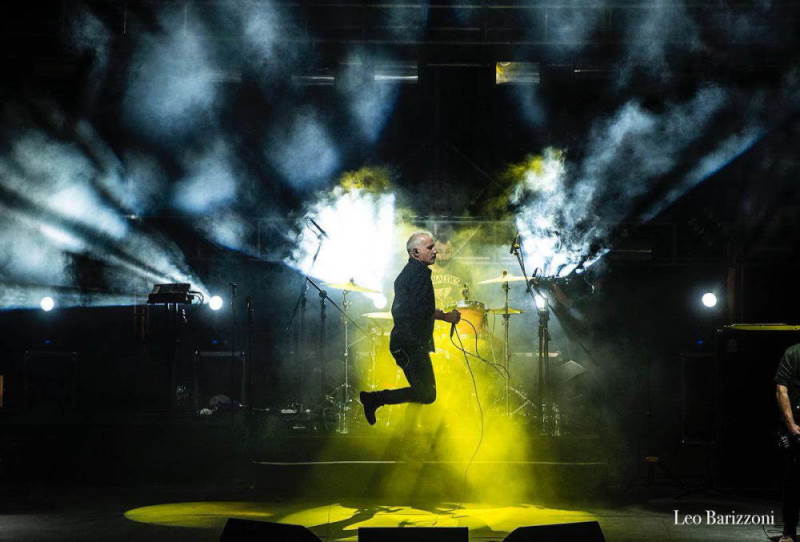
“Photography often gives you the chance to go places I never would have imagined, and this is a perfect example: it’s been 25 years since I started photographing the band from the inside.”
The first photo I have is from 1997; I followed them year after year to shows, rehearsals, tours in the provinces, tours in Buenos Aires, and album recordings in Buenos Aires and Montevideo. I connected with Buitres through photography. For me, it’s a tremendous honor because it combines that sense of total admiration with being part of it—even if just for a few seconds—or doing my small part, but always from the inside; not just at the shows, which is what everyone sees, but the beauty of photography is also in capturing what happens behind the scenes.
“So many years have passed that I feel a certain familiarity and a certain closeness to him. And it was photography that made that possible.”