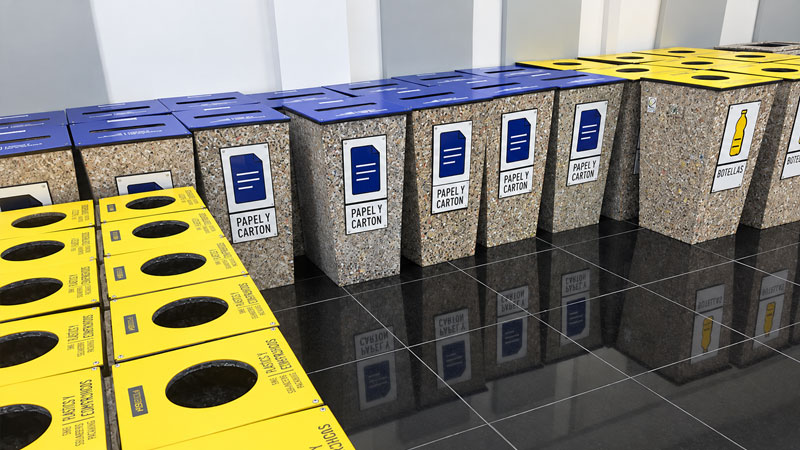
The result represents growth compared to 2024 and reflects sustained improvements in material recovery and responsible waste management.
Universidad ORT Uruguay continues to make progress in responsible waste management and in incorporating circular economy principles into its institutional activities.
In 2025, 77.6 metric tons of waste were generated across all university facilities. Of that total, 14.2 metric tons were sent for recycling and 63.4 metric tons were sent to landfills. The Environmental Management Department compiles the records and monitors the data.
The results show an improvement compared to 2024. The amount of recycled waste increased from 12.9 metric tons in 2024 to 14.2 metric tons in 2025, representing a 10.1% increase.
In 2025, the materials sent for recycling were:
- 10.7 metric tons of paper and cardboard; managed by Fabitech and donated to Repapel.
- 619 kilograms of polyethylene terephthalate (PET) bottles; collected by Taym and managed by Ecopet.
- 2.88 metric tons of waste electrical and electronic equipment (WEEE), collected and managed by Werba.
Source separation and the separate management of these materials make it possible to divert them from final disposal and facilitate their reintroduction into production cycles.
Similarly, the proportion of recycled waste out of the total generated rose from 17.1% in 2024 to 18.3% in 2025. While total waste generation increased by 2.9% compared to the previous year, the amount sent for recycling increased by 10.1%, reflecting an improvement in the relative performance of the waste management system.
Systematic tracking of waste generated, recycled, and sent to final disposal allows the university to evaluate its environmental performance, identify opportunities for improvement, and guide actions to increase material recovery and reduce the amount of waste sent to landfills.
These actions contribute to Sustainable Development Goal 12: Responsible Consumption and Production, particularly Target 12.5, which aims to reduce waste generation through prevention, reduction, recycling, and reuse.
Through its environmental management “programmes ,” the university promotes source separation, recycling, efficient use of resources, and the circular economy, engaging the university community in more responsible production and consumption practices.