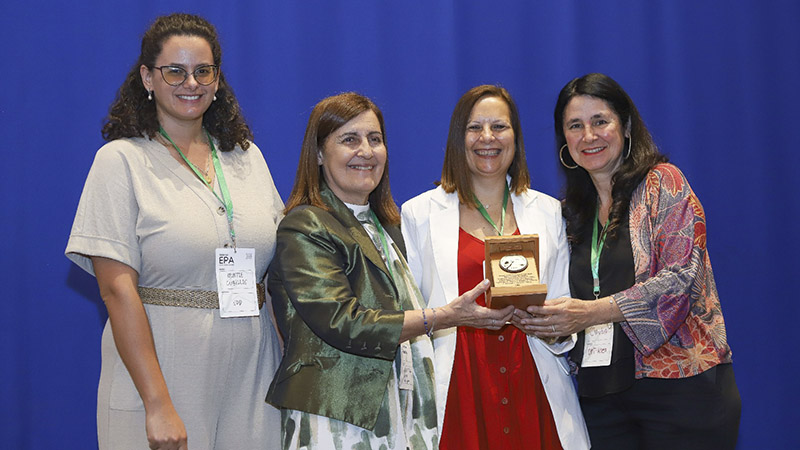
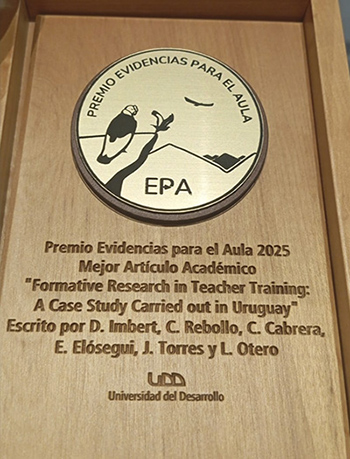
News arrived from Santiago, Chile, that filled the academic community with pride: the article“Formative Research in Teacher Training: A Case Study Carried Out in Uruguay”was named the winner of the 2025 Evidencias para el Aula (EPA) Award in the Outstanding Academic Article category.
The work carried out by Daisy Imbert and Claudia Cabrera Borges —instructors at the Institute of Education at Universidad ORT Uruguayalong with Cristina Rebollo, Eduardo Elósegui, Julia Torres, and Lucía Otero, was recognized among 32 submissions to the call for proposals issued by the Universidad del Desarrollo, which honors research based on evidence aimed at improving teaching.
After receiving the award at the 2025 Evidence for the Classroom (EPA) Conference, Imbert and Cabrera Borges discussed the significance of the award, as well as the article’s contribution to educational research in Uruguay.
The reasons behind the nomination
The call for submissions represented a valuable opportunity for the authors. The novelty of the award, combined with the support of Universidad ORT Uruguay —an international partner of the EPA 2025 conference—gave both Imbert and Cabrera Borges the confidence that it had the “necessary credibility” to warrant their application.
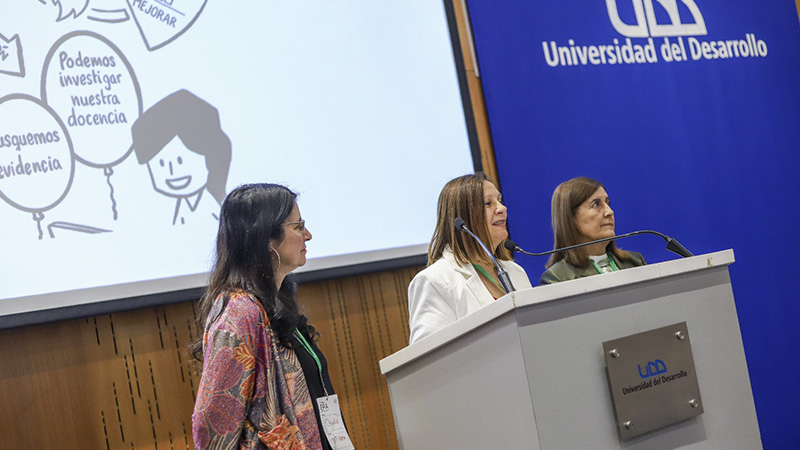
They also saw it as an opportunity to showcase a formative research project that began in 2011, was carried out at the Regional Teachers’ Center, and had previously been recognized with the PASEM Award on two occasions.
Another factor they considered decisive was the article’s publication history. Its publication in the *International Journal of Educational Research* —a Q1 journal indexed in Scopus, meaning it ranks in the top quartile for academic impact in its field— demonstrated its quality and academic standing.
Finally, the award guidelines emphasized collaborative work, a criterion that the team fully met. In addition to the ORT instructors, the project included Cristina Rebollo (Council for Education Training), Eduardo Elósegui (University of Málaga), Julia Torres, and Lucía Otero (Faculty of Chemistry, University of the Republic), resulting in a research effort that drew on contributions from both Spain and Uruguay.
The award-winning article
“Formative Research in Teacher Training: A Case Study Conducted in Uruguay” is one of the contributions made by the Formative Research Group (GIF), part of the Alliance for Collaboration, Research, and Learning (RED ALICIA), of which both Imbert and Cabrera Borges are members.
The article, published in Volume 125 of the International Journal of Educational Research, explores the influence of a formative research approach on the development of research skills.
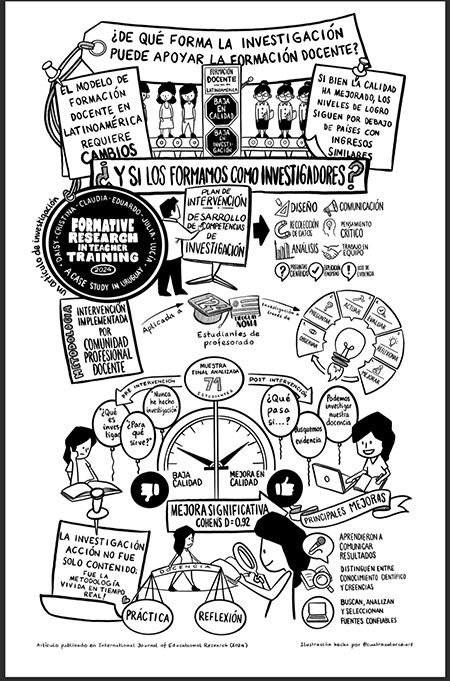
Specifically, it reports the findings of an action research project funded by the National Agency for Research and Innovation and the Council for Teacher Education, carried out by the professional community formed at the Regional Center for Teachers (CeRP) of the Center.
The contribution of the research
 “The study shows that research training of future teachers leads to improvements that drive the transformation of practices”, Imbert and Cabrera Borges stated.
According to him, this study provides “empirical evidence” that formative research “encourages future teachers to communicate findings, distinguish between scientific problems and beliefs, and seek out reliable academic sources with the help of digital technologies.”
At the same time, they noted, the study demonstrates “another approach to the content of didactics, ” based on the theoretical framework of critical didactics, action research, the role of the teacher as a researcher of their own practice, and the fundamentals of formative research.
“This proves that initiatives of this kind are recognized internationally, which is why they should be promoted and strengthened at the national level, ”the instructors noted.
The significance of the award
According to Imbert and Cabrera Borges, pursuing the field of teacher education involves “various obstacles” that prevent it from “moving beyond being a successful local initiative and establishing itself at the national level.” However, it also offers“opportunities to prepare future teachers for a field where change is the only constant.”
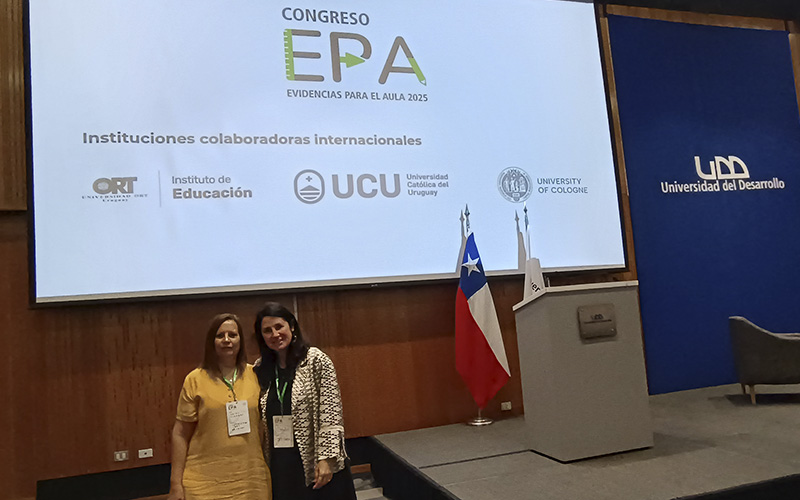
“While we don’t work for the sake of recognition, we feel that by sharing these findings, we are acknowledging an entire professional community that is evolving and taking ownership of its achievements, because it recognizes the tangible benefits of this type of training—and, above all, of collaboration and the sharing of knowledge,” they added.
Another source of pride for both authors is that their article has garnered international recognition. The fact that the award is being presented in Chile is particularly meaningful to them, as it is the “Latin American country with the highest scores on standardized tests, such as the PISA assessments.”
An experience that goes beyond the ceremony
The awards ceremony, held on Wednesday, November 19, at the Universidad del Desarrollo (Santiago, Chile), was a deeply moving experience for Imbert and Cabrera Borges.
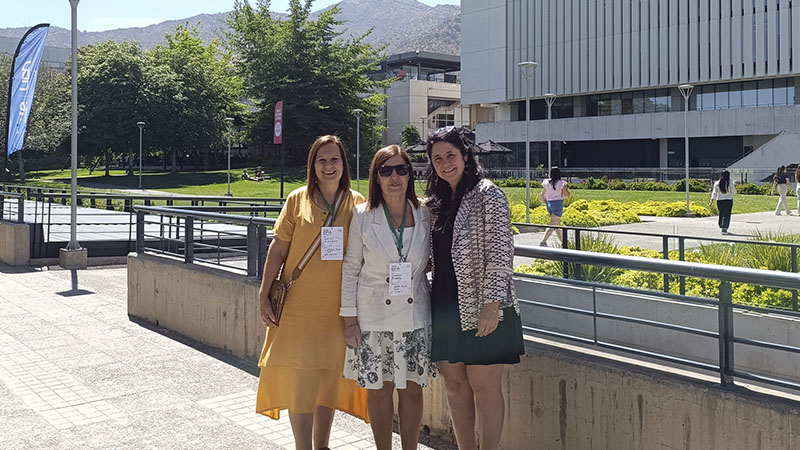
Beyond the personal recognition, they felt that they were the “public faces” of a “group of teachers and students who, day in and day out, devote their work and effort to achieving substantial improvements in their practices.”
“We feel valued for bringing a product from a small country, with wonderful people who are committed to research, even though conditions aren’t always favorable,” concluded Imbert and Cabrera Borges.