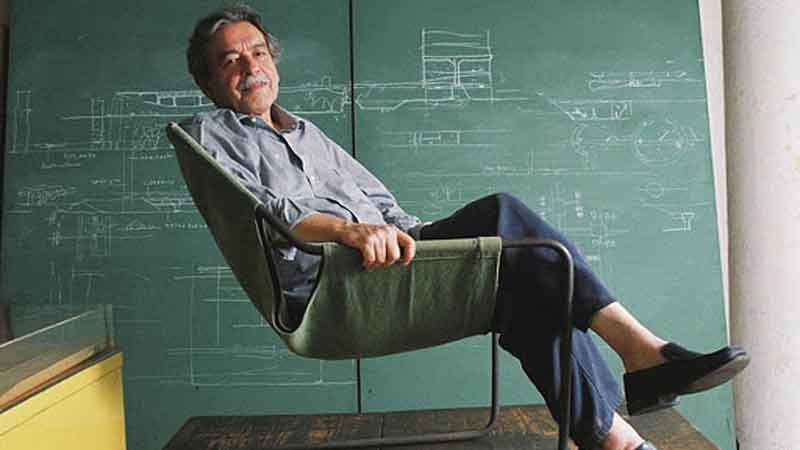
On May 23, 2021, the death was announced of architect Paulo Mendes da Rocha, winner of the 2006 Pritzker Architecture Prize and one of the leading figures in Brazilian and international architecture.
Mendes da Rocha is considered one of the most important Brazilian architects of recent decades, not only for his built work but also for his commitment to education and his profound influence on young architects. He was born in Vitória, Espírito Santo, Brazil, in 1928. He moved to São Paulo in his youth, where he completed his education and earned his degree in architecture from the School of Architecture and Urbanism at Mackenzie Presbyterian University.
He began his career with primarily residential projects, in which he demonstrated a high level of expertise in project management and construction materials, particularly concrete. His career was always accompanied by university teaching. He taught design at the University of São Paulo starting in 1961 and quickly established himself as a leading figure in modern and contemporary architecture. Between 1969 and 1971, he suspended his teaching activities due to political pressure, and in 1999 he retired permanently from academia.
In 2006, he received the Pritzker Architecture Prize, the field’s highest honor. Ten years later, in 2016, he was honored with the Golden Lion at the Venice Architecture Biennale and the Imperial Prize of Japan. In 2017, he was awarded the Gold Medal of the Royal Institute of British Architects.
Mendes da Rocha will be remembered for his profound professional and educational influence. In his architecture, he succeeded in establishing a language of his own, always linked to his experiences with the use of concrete. His ideas, challenges, and the importance he placed on each of his projects led to a unique understanding of the program and architectural form that will endure for posterity.