The FLAVO-GREEN project: Synthetic Biology for Sustainable Development was selected for funding in the 2025 call for proposals of LINCGlobal, an initiative of the CSIC.
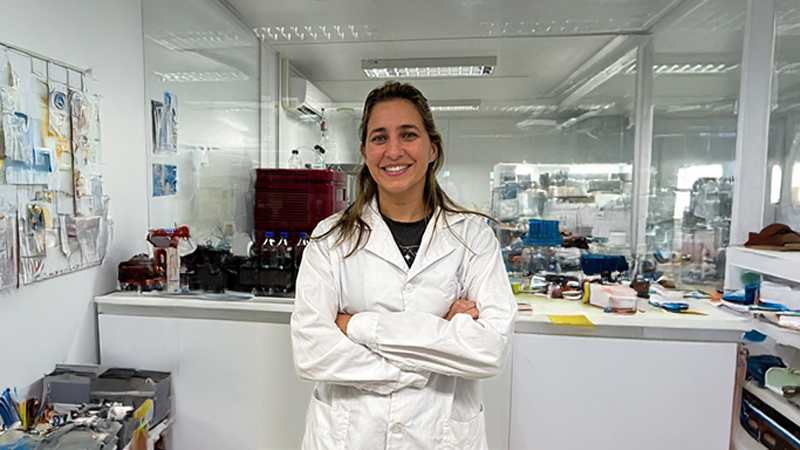
The initiative is led by the National Center for Biotechnology of the Spanish National Research Council (CNB-CSIC), with Dr. Juan Nogales serving as general coordinator. Universidad ORT Uruguay in the Latin American coordination through Dr. Cecilia Ortiz, associate professor of Protein Technology. Also participating in the project are the Ikiam Amazonian Regional University (Ecuador), the Pontifical Catholic University of Valparaíso (Chile), and the Pasteur Institute of Montevideo (Uruguay).
Producing flavonoids sustainably
FLAVO-GREEN aims to develop biotechnology platforms for the sustainable production of flavonoids with bioactive potential that may offer health benefits.
The project combines synthetic biology, microbial biotechnology, omics analysis, bioprocessing, Amazonian biodiversity conservation, and the traditional knowledge of indigenous communities. This synergy aims to generate innovative solutions that not only improve health but also contribute to environmental stewardship.
Science and Indigenous Knowledge: The Roadmap
A key part of the project involves fieldwork in the Amazon. Cecilia Ortiz and her team will collect native species used by indigenous communities in their traditional medicines.
“We’re going to spend time with them to learn from their knowledge in a respectful and collaborative way, and once we return to the lab, we’ll identify and analyze the collected species, record them in collaboration with the teams in Ecuador, and compile this information along with genomic and metabolomic data in the IKIAM University Biobank,” explains Ortiz.
The team will then prepare extracts to analyze their composition and identify compounds—preferably flavonoids—with health-promoting properties.
Using bioinformatics techniques, and in collaboration with the CNB team in Spain, we will seek to identify the enzymatic pathways that produce these compounds so that we can subsequently transfer them to bacteria using synthetic biology.
“We want to reprogram bacteria so they act as mini-factories capable of producing these natural compounds in a sustainable way.”
What does FLAVO-GREEN bring to ORT and the region?
ORT's participation includes:
Internships for graduate students at the CNB-CSIC laboratory in Spain.
- Assessment of the antioxidant activity, polyphenol content, and cytoprotective effect of the extracts at the university’s Biotechnology Laboratory.
- An advanced course/workshop on microbial biotechnology with international participation will be held in Montevideo toward the end of the year.
- Outreach activities in rural and outlying schools, in collaboration with programs such as "More Women in Science."
- Monthly webinars featuring leading international experts in synthetic biology and environmental conservation.
Funding from LINCGlobal will cover researcher mobility, the purchase of supplies, and the organization of these training and awareness-raising activities.
“This project is not only a great opportunity to continue training students in cutting-edge technologies, but also to strengthen the networks and collaborative relationships we have been building over the past few years.”
A dream come true
For the professor, FLAVO-GREEN represents the fulfillment of a long-held dream. “I’ve always wanted my research to have a social and environmental focus. Being able to do that using such cutting-edge technologies is incredible. I believe this project encompasses all three: science, society, and the environment, ”she says.
"I'm happy and excited. There's a lot of work ahead to organize the workshop at the university, shape the research project, and continue expanding and strengthening the network. But this is good news that marks the starting point for beginning to shape this interdisciplinary project, which, by combining biotechnology and traditional knowledge, aims to have a positive impact on health and the environment," she concludes.