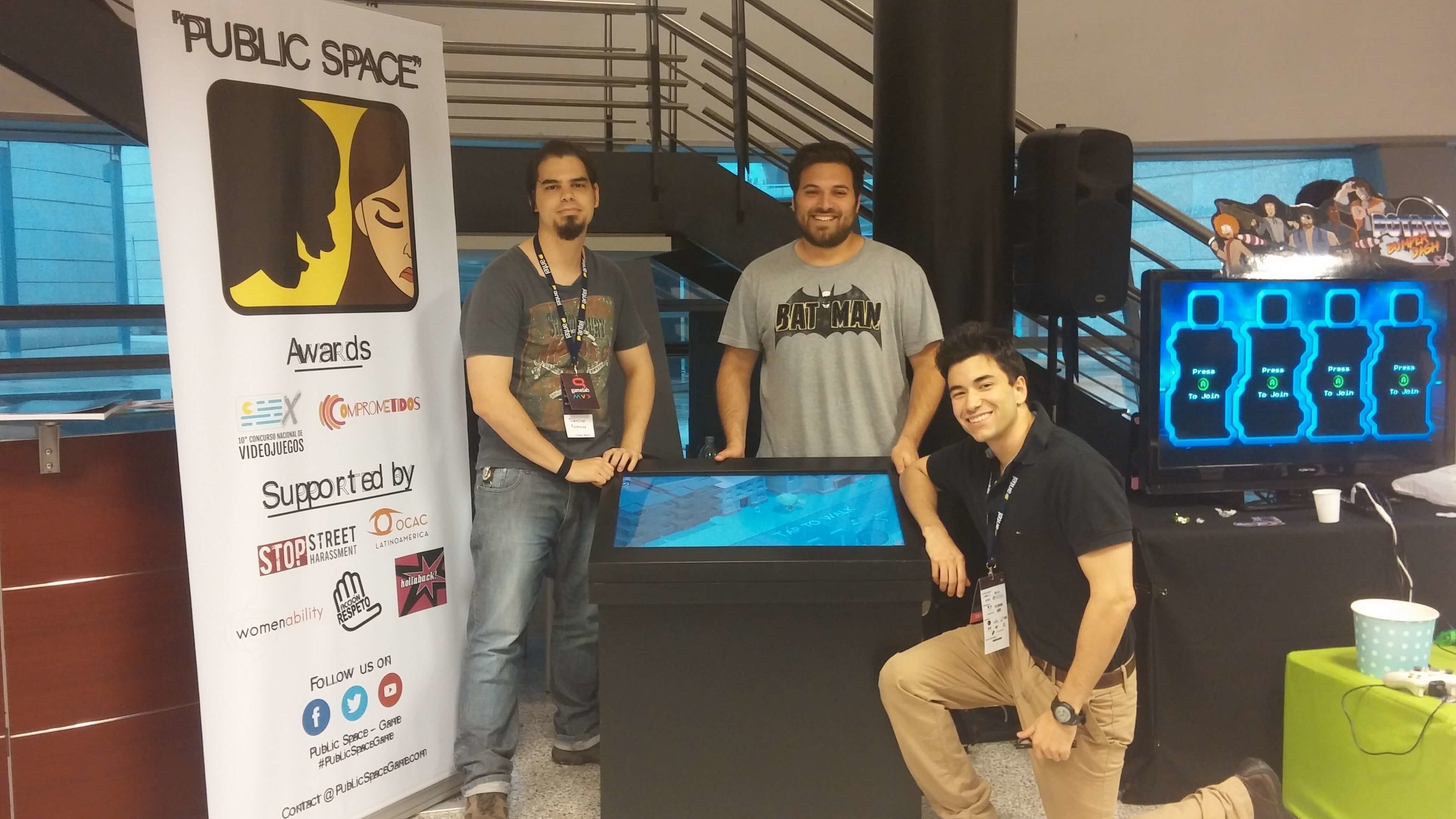
Public Space is a feminist video game that Gioscia—a graduate of the Bachelor’s program in Animation and Video Games at Universidad ORT Uruguaysubmitted as his final thesis project.
https://www.youtube.com/watch?v=PEdqFoUrwFs
What exactly is the game about? What does the player experience?
I started it as my final college project in August 2014. I began developing the game because I was struck by how, whenever my girlfriend at the time or my female friends went out, something would always happen to them, while nothing ever happened to me or my male friends. There was a difference between them and us. They were harassed, and we weren’t. I’ve always been interested in games that convey messages or have a social impact. I decided to make a video game centered on the theme of street harassment.
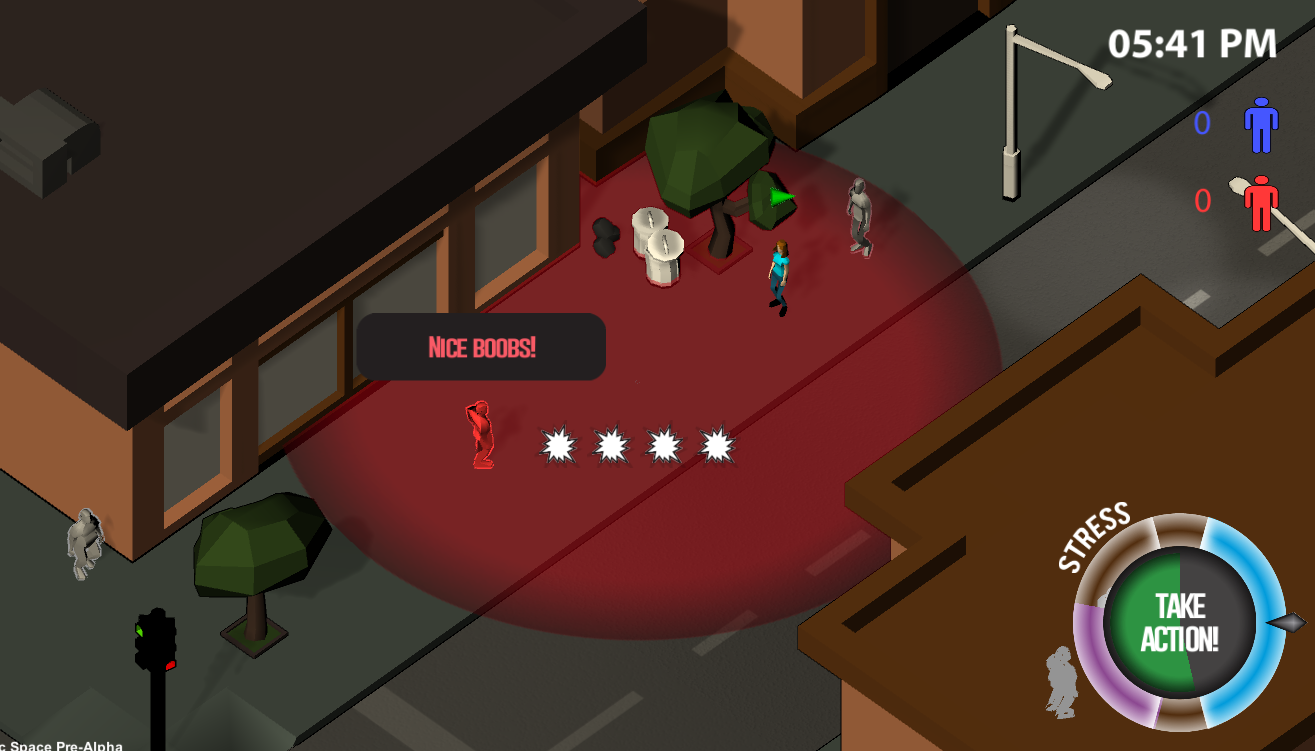
You’re a woman trying to go about your daily life—going to work, going to the gym, visiting a friend, studying. You try to go about your daily life, but there’s always someone harassing you on the street. We want to teach people what to do when faced with street harassment and how to respond so that we can also transform society, so that people take action and, at the end of the day, everyone ends up fighting against street harassment.
How is that done?
Speak up. The worst thing you can do in the face of this problem is to stay silent. Not just as a victim, but also as someone who witnesses it. If a man sees a woman being catcalled on the street, he can’t just turn a blind eye and stay silent. That’s condoning it. Through this game, we aim to convey the message that the way to end this problem is to challenge it by taking action.
Why do they choose that method instead of violence?
A U.S. game developer created a game about street harassment—the only one of its kind on record so far. Instead of responding with words, players shot the harasser. We think it’s good that the issue is being addressed, but a game like this has several problems. It doesn’t convey the message effectively, nor does it offer a solution to the problem. It’s a very childish approach.
Is the female character pre-selected in the game, or can you choose her?
She’s a character we created. You can dress her however you like. No matter what you put on her, people will still say the same thing. We’d also like to create other characters—not just the woman, but also a bystander who witnesses the situation and can react to it.
Are the character's responses pre-programmed?
Exactly. What we’ve been studying with various organizations is that the best way to respond to harassment is assertively. You need to command respect in a clear, concise way, using specific words. It’s not a lukewarm response; rather, you’re making it very clear that what’s happening is wrong and that you’re uncomfortable with it. The player learns what to do and how to respond.
What has been the response from the players?
The game isn't on sale yet, but at every event where we showcase it, there are girls who can relate to it. They also sometimes give us suggestions to make the responses sound more realistic.
We recognize that some things are presented in a very idealized light.
For example, what answers?
"Respect me—this isn't right; this is harassment." For example, if someone whistles at you, tell them you're not a dog—you're a person.
Are the types of harassment limited to catcalls and verbal abuse?
Exactly. In an effort to make the game as inclusive as possible for everyone, the issue of insults is an inherent part of the problem. However, organizations that focus on street harassment do not recommend responding with violence.
Responding with verbal abuse only makes the problem worse and can cause the aggressor to become even more violent.
We give the option to respond violently, but the explicit insult isn't displayed on the screen; instead, we represent it using symbols. The aggressor then responds violently.
In this way, we show them the best way to respond. We give the player three response options: the assertive one, which is the recommended approach, and the two not recommended—the timid and the aggressive ones.
How broad is your target audience? Can children play?
Since this is a sensitive topic, we’re targeting children 13 and older. That said, we’ve tested it with kids at a few exhibitions, and they get it perfectly. When they finish playing, we ask them what they understood, and they say, “They’re harassing a woman.” So, whether you like it or not, that’s the message.
How do you win, and how do you lose?
You win when you earn respect because you transform the community. You lose when you’re indifferent.
How are you preparing for the 10th UNESCO Youth Forum?
In 2016, we participated in the "Comprometidos" contest. That was when I first came into contact with UNESCO.
Our plan is to bring our game prototype so that people there can try it out too. We also hope to find investors or someone who can help us grow the project.
Public Space on social media